Thinking about going solar? Good. But before you spend a single shilling, there is one step that most people skip entirely, and it is the step that makes every other decision cleaner, faster, and far less risky.
That step is understanding solar before you invest in it.
Not understanding it through a sales pitch. Not through a YouTube video or a neighbour’s opinion. Through real, hands-on experience with working equipment, honest data, and guided conversations that are designed to inform, not to close a deal.
In Kenya today, that kind of experience is finally available at the Spenomatic Solar Interactive Center at Sarit Centre in Westlands. And it might be the smartest hour you spend before making one of the biggest home or business decisions of the year.
Why Investing in Solar Without Understanding It Is Risky
Solar is not an impulse buy. A quality home solar system in Kenya typically costs between KSh 300,000 and KSh 700,000. For a business, the investment runs higher. That kind of money deserves serious thought.
Yet many people rush the process. They get one quote, feel reassured by a confident salesperson, and sign without truly understanding what they are buying, how the system is sized, or what realistic savings look like. The result is sometimes a system that underperforms, or one that does not match actual energy needs at all.
The good news is that this is entirely avoidable. Understanding solar before you invest does not require an engineering degree. It requires access to the right information, and the right space to absorb it without pressure.
What Smart Solar Buyers Do Differently
People who make confident, well-informed solar investment decisions tend to share a few habits. They take time to understand their own energy consumption before shopping. They ask uncomfortable questions about system sizing, warranties, and payback timelines. And they seek out neutral, educational environments before entering any commercial conversation.
That last point is crucial. When you learn about solar in a sales setting, every piece of information is filtered through the goal of making a sale. When you learn about solar in an independent educational space, like the Spenomatic Solar Interactive Center, the information serves you, not a closing strategy.
How the Spenomatic Solar Interactive Center Prepares You to Invest Wisely
The solar interactive center at Sarit Centre is built precisely for this moment, the moment before you buy. It gives you everything you need to walk into any solar conversation fully informed and impossible to mislead.
See Real Solar Equipment Up Close
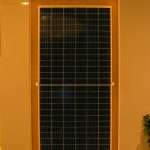
The solar interactive center features working solar panels, inverters, and battery storage systems that you can examine in person. Not diagrams. Not showroom models behind glass. Actual equipment. When you touch a solar panel, study the output labels, and watch a live system operate, something important shifts. The technology becomes real. And once it is real, you can evaluate it honestly.
This matters enormously when you are about to spend hundreds of thousands of shillings. You deserve to know exactly what you are buying.
Simulate Your Own Solar System
This is where the solar interactive center truly earns its value. The simulation tools let you model a solar system based on your actual energy situation. Enter your average electricity consumption. Enter your premises size. The tool generates realistic projections, expected output, estimated monthly savings, and approximate payback timeline.
These numbers come from Spenomatic Group’s 27 years of installation experience and over 162 MWp of solar deployed across Africa. They are not marketing estimates. They are data-grounded projections that give you a real foundation for your investment decision.
For context, Kenya’s commercial electricity tariffs now average between KSh 22 and KSh 28 per kWh. Tariffs have risen sharply in recent years, between 11% and 27% between 2024 and 2025 alone, according to data from the Energy and Petroleum Regulatory Authority. Knowing your potential savings against that backdrop makes the simulation exercise genuinely eye-opening.
Get Honest Answers from Knowledgeable Staff
The guided sessions at the solar interactive center are not sales consultations. They are educational conversations. Staff are trained to explain solar in plain language, covering everything from how panels generate electricity, to what happens on cloudy days, to how battery storage works, to the questions you should always ask any solar installer before signing a contract.
That last point is particularly valuable. Knowing the right questions is half the battle. And the solar interactive center sends you out equipped with exactly that.
The Financial Case for Understanding First
Making a poorly informed solar investment is not just frustrating, it is expensive. A system that is undersized for your needs leaves you still paying high grid bills. A system with low-quality components may degrade fast and carry no meaningful warranty support. And a system installed by an unqualified provider can create safety risks that cost far more to fix than the original installation.
On the other hand, a well-informed solar investment can be transformative. Kenyan businesses that have installed quality solar systems are reporting electricity bill reductions of 30% to 50%. Some commercial solar systems now pay for themselves within five to seven years, after which the savings are essentially free money, year after year.
The difference between a good outcome and a poor one almost always comes down to how well the buyer understood the investment before making it.
Kenya’s Energy Reality Makes Understanding Solar Urgent
It is worth being direct about the context here. Kenya’s grid is under strain. Reserve capacity margins hit a razor-thin 2.3% at the end of 2025, according to published system data. Blackouts are increasingly common. And electricity tariffs continue to climb.
At the same time, Kenya’s solar irradiance is exceptional, averaging 4 to 6 kWh per square metre per day. The country enjoys over 2,000 sunshine hours annually. The conditions for solar to thrive here are genuinely excellent. That combination of grid pressure and solar potential makes now an especially intelligent moment to explore the option seriously.
But exploring it seriously means understanding it properly. And that is exactly what the solar interactive center makes possible.
Visit in Person or Explore the Virtual Tour
If you are in Nairobi, heading to the solar interactive center at Sarit Centre should be your first move before speaking to any solar provider. It is on the lower ground floor, free to enter, and open to everyone, no appointment, no technical background required.
If you are outside Nairobi, or simply want to start your research from home, Spenomatic offers a virtual 360° tour of the entire facility. You can explore the exhibits, get a feel for the technology, and begin building your understanding before you ever set foot in Westlands.
Either way, the principle is the same: understand before you invest. It is the smartest move you can make.
Conclusion
Solar is one of the most rewarding investments available to Kenyan homeowners and businesses right now. But like any major investment, the quality of your outcome depends heavily on the quality of your preparation. The Spenomatic Solar Interactive Center exists to make that preparation accessible, honest, and genuinely useful.
Visit the solar interactive center. Run your numbers. Ask every question on your mind. Then walk into your solar investment decision with the kind of confidence that only real understanding can give you. The technology is proven. The savings are real. And the first step, understanding it properly, has never been easier or more welcoming.
Frequently Asked Questions
1. Where is the Spenomatic Solar Interactive Center?
On the lower ground floor of Sarit Centre, Westlands, Nairobi. No appointment needed, walk in during mall hours.
2. Is it really free, with no pressure to buy?
Yes. The solar interactive center is an open public learning space. There is no sales pressure and no obligation of any kind.
3. Can I model my exact savings before talking to any solar company?
Yes. The simulation tools let you enter your energy usage and generate realistic projections on output, savings, and payback timeline, before any commercial conversation.
4. What if I am not in Nairobi?
Spenomatic offers a free virtual 360° tour of the solar interactive center, accessible from anywhere on any device.
5. What questions should I ask before investing in solar?
The guided sessions at the solar interactive center cover exactly this, from system sizing and warranties to what to look for in a reputable installer. It is one of the most practical parts of a visit.