
The decision to transition a business to solar energy is no longer about following a trend. In 2026, it has become a fundamental move for financial stability and operational resilience. For Kenyan enterprises, the sun is a predictable asset in an otherwise volatile utility market.
When you look at the current economic climate, electricity costs remain one of the most significant line items on a monthly balance sheet. Smart businesses recognize that grid dependence is a variable they can no longer leave to chance.
[caption id="attachment_2716" align="alignnone" width="300"] DCIM100MEDIADJI_0060.JPG[/caption]
Long-Term Financial Predictability
Investing in commercial solar systems allows a company to move from a consumer model to a producer model. This shift is vital for long-term budgeting. When you generate your own power, you are essentially hedging against future inflation and tariff hikes.
The return on investment for these systems has improved significantly. Most commercial installations now pay for themselves within five to seven years. Considering the hardware is designed to last for over 25 years, this leaves nearly two decades of almost free energy.
Furthermore, global market shifts in 2026 suggest that equipment prices may rise later this year. Forward-thinking companies are acting now to lock in current rates and avoid the impact of changing trade policies and raw material costs.
Reliability and Operational Continuity
In the industrial world, downtime is the enemy of profit. Even a brief power fluctuation can lead to damaged machinery or ruined product batches. This is especially true for the manufacturing and agricultural sectors. By integrating commercial solar systems with smart storage, businesses create a reliable energy buffer. This independence ensures that production lines keep moving even when the national grid faces challenges. It provides a level of peace of mind that traditional backup generators cannot match.
Experts at Spenomatic Solar emphasize that a well-engineered system acts as a power stabilizer. It protects sensitive equipment from the voltage surges often associated with grid instability, extending the lifespan of expensive corporate assets.
Meeting Modern Regulatory Standards
Kenya is rapidly updating its energy framework to encourage green transitions. Recent mandates from the Energy and Petroleum Regulatory Authority (EPRA) now require many new commercial developments to incorporate renewable heating and power solutions.
Businesses that invest in solar today are staying ahead of the regulatory curve. They avoid the stress of last-minute compliance and benefit from being seen as leaders in the national energy transition. This proactive stance is often rewarded by investors and financial institutions.
There is also a growing push toward sustainable energy for all within East Africa. Companies that align themselves with these goals often find it easier to secure international partnerships and green financing options that are not available to carbon-heavy competitors.
Enhancing Brand and ESG Standing
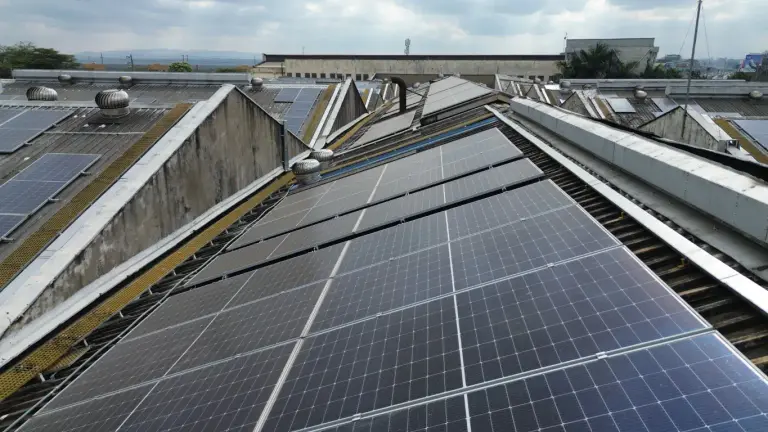
Environmental, Social, and Governance (ESG) criteria are now a standard part of corporate evaluations. Whether you are seeking a loan or bidding for a major contract, your carbon footprint matters. A rooftop covered in solar panels is a visible badge of corporate responsibility.
Consumers are increasingly choosing to spend their money with brands that demonstrate a commitment to the planet. By powering your factory or office with clean energy, you tell a story of innovation. It shows that your business is prepared for the future of global energy. This reputation benefit extends to recruitment as well. The modern workforce, particularly younger professionals, prefers to work for organizations that value sustainability. Investing in solar helps attract and retain top talent who want their work to contribute to a better future.
Practical Steps to Transition
The process of going solar has become much more transparent and data driven. It begins with a professional audit to understand your unique consumption patterns. Every business is different, so the solution must be tailored to fit specific daytime loads. Modern solar interactive centers are popping up across Nairobi to help demystify the technology. These spaces allow business owners to see the hardware in person and speak with engineers about the practicalities of installation and maintenance.
Maintenance is surprisingly simple for the value it provides. With remote monitoring tools, your management team can see production levels from a smartphone. This transparency ensures the system is always working at peak efficiency to maximize your savings.
Conclusion
The question for Kenyan businesses is no longer "why" but "when." The combination of immediate cost savings, long-term energy security, and improved brand value makes solar an unbeatable investment. It is the most effective way to future-proof your operations.
As we move further into 2026, the companies that succeed will be those that take control of their resources. By capturing the energy of the Kenyan sun, your business can build a foundation of resilience that lasts for generations to come.
Frequently Asked Questions
1. Why is 2026 considered a critical year to invest in solar?
Global manufacturing shifts and trade policy changes are expected to increase equipment costs later this year, making early 2026 an ideal window for high ROI.
2. Do commercial solar systems work during the rainy season?
Yes, solar panels still generate electricity on cloudy or rainy days by using diffused sunlight, though production levels will be lower than on bright, sunny days.
3. How does solar impact my company's tax obligations?
In many cases, solar equipment qualifies for capital allowances and VAT exemptions, allowing businesses to recover a portion of the investment through tax savings.
4. Can a business go completely off-grid with solar?
While possible with large battery banks, most smart businesses use a grid-tied system to balance cost-efficiency with the reliability of multiple power sources.
5. What is the typical lifespan of a commercial solar installation?
The primary components, such as solar panels, are usually warrantied for 25 years, while high-quality inverters typically last 10 to 15 years before needing a refresh.