
 DCIM100MEDIADJI_0053.JPG[/caption]
The energetic landscape of East Africa is shifting rapidly as we navigate through 2026. For many enterprises, the traditional reliance on the national grid has become a source of financial stress rather than a steady foundation.
Rising electricity tariffs and the unpredictable nature of power supply have forced a new era of innovation. Today, powerful commercial solar solutions for smart Kenyan businesses are no longer just an environmental choice but a tactical necessity for survival and growth.
The Changing Face of Energy in Kenya
As we look at the current market, the cost of doing business in Nairobi and beyond is heavily influenced by energy expenditures. Many local companies have watched their overheads climb as grid prices fluctuate throughout the year. This is where powerful commercial solar solutions for smart Kenyan businesses step in to provide a much-needed buffer. By generating your own clean power, you effectively lock in your energy costs for decades.
It is a liberating feeling to know that while others are worrying about the next utility bill hike, your facility is powered by the abundant Kenyan sun. This stability allows for much more accurate long-term financial planning. The beauty of modern solar technology lies in its precision. Organizations like Spenomatic Solar have spent years refining the art of industrial energy evaluations. They do not just throw panels onto a roof; they conduct deep-dive audits to ensure the system is perfectly scaled to the specific load requirements of a factory or a flower farm. This bespoke approach ensures that every shilling invested translates into maximum kilowatt-hour production.
Engineering Excellence with Spenomatic Solar
When you decide to transition your operations, the quality of engineering becomes the most important factor in your long-term return on investment. High-quality components are the backbone of any successful installation. Powerful commercial solar solutions for smart Kenyan businesses require Tier 1 equipment that can withstand the unique environmental conditions of our region. Reliability is the most critical metric for industrial applications. Whether it is the dust of the Rift Valley or the humidity of the coast, the hardware must be resilient. Spenomatic Solar distinguishes itself by partnering with global leaders in PV technology to deliver systems that offer high efficiency and robust guarantees.
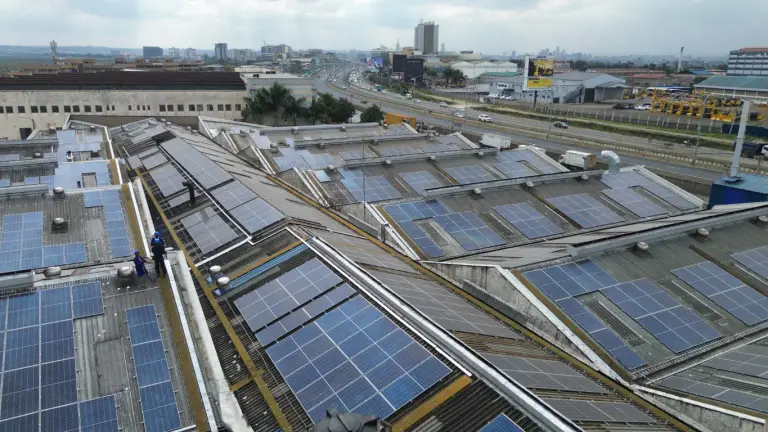
It is inspiring to see how large-scale installations are transforming the manufacturing sector. For instance, a major plastic manufacturing plant in Nairobi recently adopted a massive rooftop system that generates millions of units of electricity annually. This transition allowed them to save millions of shillings, which in turn kept their product prices competitive for the end consumer. This is a perfect example of how powerful commercial solar solutions for smart Kenyan businesses create a ripple effect of economic benefit.
Bridging the Financial Gap
One of the most common hurdles for local entrepreneurs has always been the upfront capital required for such infrastructure. However, the financial landscape of 2026 has evolved significantly to support green transitions.
Financing solar in Africa has become more accessible through creative models like Power Purchase Agreements (PPAs) and specialized leasing options. These tools remove the barrier of high entry costs for growing companies.
These allow companies to enjoy the benefits of solar energy without a heavy initial investment. You can start saving from day one while the system essentially pays for itself over the course of its operational life.
Strategic energy management also involves looking beyond just the panels. Smart businesses are now integrating battery storage and power stabilization to ensure 100% uptime regardless of external factors.
This is especially critical for industries with sensitive equipment or 24/7 production cycles, such as the horticulture and hospitality sectors. You need a system that works as hard as your team does.
By pairing powerful commercial solar solutions for smart Kenyan businesses with advanced storage, you effectively become your own utility provider. This shields your brand from the frustrations of blackouts and voltage fluctuations.
Impact on Sustainability and Brand Reputation
Beyond the financial spreadsheet, there is a powerful human story in the transition to green energy. Consumers today are more conscious than ever about the carbon footprint of the products they buy. When a business implements powerful commercial solar solutions for smart Kenyan businesses, it sends a clear message of responsibility. It tells your partners, investors, and customers that you care about the planet.
It signals that you are committed to a sustainable future for Kenya. This type of social proof is becoming increasingly valuable in the modern global marketplace. Large-scale solar projects, like the ground-mounted solutions seen in Nakuru's rose farms, have proven that even remote locations can thrive with the right technology. These projects empower local communities as well.
These installations reduce thousands of tons of CO2 emissions over their lifetime. This contributes to the global fight against climate change while strengthening the local economy through job creation and technical training. It is a win-win scenario that elevates the brand status of any forward-thinking Kenyan company. Green energy is no longer a niche luxury; it is the new standard for excellence.
Maintenance and Long-Term Reliability
The journey does not end with the installation of the last panel on your roof. To keep the energy flowing efficiently, comprehensive maintenance is vital for every kilowatt produced.
Professional solar partners provide ongoing monitoring and technical support to ensure the plant operates at peak performance. This proactive care prevents minor issues from becoming major downtime events. Powerful commercial solar solutions for smart Kenyan businesses are long-term assets, and treated as such, they provide reliable power for 25 years or more. Think of it as a quarter-century of energy independence.
Modern systems now include remote monitoring platforms where business owners can track their energy production in real-time via their smartphones. You can see your savings accumulate in real-time. This transparency is empowering for management teams. It allows for quick identification of any issues and ensures that the system is always meeting its production targets.
Conclusion
Embracing the sun is the smartest move a local enterprise can make in today's volatile economy. It is a decision that pays dividends both financially and ethically. By investing in powerful commercial solar solutions for smart Kenyan businesses, you are securing a future of lower costs, higher reliability, and a cleaner environment. The path forward is illuminated by sustainable technology.
The technology is proven, the financing is available, and the results are visible in every sector of our economy. It is time to step out of the shadows of energy uncertainty and into the bright potential of solar power.
Frequently Asked Questions
1. How much can my business save by switching to solar energy?
Most commercial entities in Kenya see a reduction in their daytime electricity bills of 30% to 50% depending on system size and usage patterns.
2. Is there a way to install solar without a large upfront cost?
Yes, many providers offer financing packages, leasing, or PPAs that allow you to pay for the power produced rather than the equipment.
3. What happens to my business operations during a grid blackout?
If your system includes battery storage or is a hybrid setup, your operations can continue seamlessly without relying on the grid.
4. How long does a typical commercial solar installation take to complete?
While energy audits and designs happen quickly, the physical installation for a large commercial site usually takes between two to four months.
5. Do solar panels require a lot of maintenance in dusty areas?
Regular cleaning and occasional technical check-ups are necessary to maintain peak efficiency, especially during the dry seasons in Kenya.