
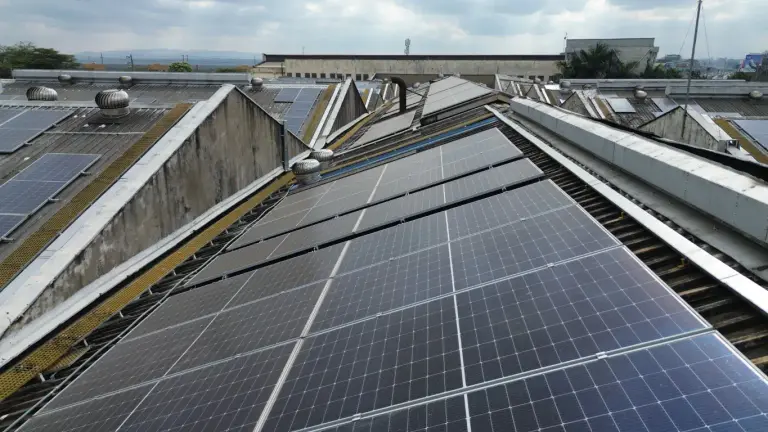
Across Africa, businesses are facing a new reality.
Energy is no longer just a utility.
It is a major cost center and risk factor.
Next, many companies are turning to solar.
But one question remains:
"What does a commercial solar system actually look like at different scales?"
Let's break it down — from 100kW to multi-megawatt systems.
How Commercial Solar Installation in Africa Works
Before the examples, here's the simple process:
- Energy audit  understand consumption
- System design  size based on usage
- Installation  rooftop or ground-mounted
- Monitoring  track savings
After that, the real impact comes from scale.
REAL-WORLD SYSTEM SCENARIOS
1. 100kW SYSTEM (Small Commercial)

Suitable For:
- Medium office buildings
- Retail centers
- Small manufacturing units
Machines / Load:
- Lighting systems
- Office equipment
- Small compressors
- POS & refrigeration units
Impact:
- Covers 40 – 70% of daytime usage
- Monthly bill reduction: 30 – 50%
Space Required:
- ~600 – 800 m▓ rooftop
Battery:
- ÔØî Not necessary
-  Optional for backup only
2. 500kW SYSTEM (Large Commercial)

Suitable For:
- Large warehouses
- Food processing plants
- Hospitals
Machines:
- HVAC systems
- Refrigeration
- Medium production lines
Impact:
- Covers 50 – 80% of energy needs (daytime)
- Savings: KSh millions annually
Space:
- ~3,000 – 4,000 m▓ rooftop or hybrid
Battery:
- Optional
- Used for critical backup systems
3. 1MW SYSTEM (Industrial Standard)


Suitable For:
- Steel plants
- Beverage factories
- Textile industries
Machines:
- Production lines
- Motors
- Conveyor systems
Impact:
- Offsets 10 – 30% of total energy use
- Reduces peak demand costs
Space:
- ~6,000 – 10,000 m▓
Battery:
- ÔØî Not required
- Grid-tied systems preferred
á4. 5MW SYSTEM (Heavy Industry)


Suitable For:
- Cement factories
- Mining operations
- Large industrial complexes
Machines:
- Heavy motors
- Kilns
- Crushers
Impact:
- Covers 20 – 40% of total consumption
- Huge diesel reduction
Space:
- Ground-mounted (preferred)
- ~25 – 40 acres
Battery:
- Optional
- Used for stability and peak shaving
5. 10MW SYSTEM (Mega Industrial)

Suitable For:
- Integrated steel plants
- Large-scale manufacturing zones
- Industrial parks
Machines:
- Full-scale production
- Smelting
- Continuous processing systems
Impact:
- Covers 15 – 35% of total load
- Saves millions annually
Space:
- ~60 – 100 acres
- Fully ground-mounted
Battery:
-  Recommended (optional)
- Supports:
- Load balancing
- Grid stability
ROI & PAYBACK
Typical across Africa:
- Payback: 2 – 5 years
- Lifespan: 20 – 25 years
After that: Energy becomes a long-term cost advantage
KEY INSIGHTS
- Bigger systems = lower cost per kW
- Solar offsets daytime loads best
- Batteries are not always necessary
- ROI improves with higher tariffs