
Manufacturing remains one of the most important drivers of economic growth across Africa. It creates jobs, supports local supply chains, increases exports, and contributes significantly to industrial development. As governments and private investors continue pushing for industrial expansion, manufacturers are under growing pressure to improve efficiency, control costs, and remain competitive in both local and international markets.
One of the biggest challenges facing manufacturers today is energy.
Electricity is essential for production processes, machinery operation, quality control systems, lighting, cooling, heating, and countless other activities within a manufacturing facility. However, rising electricity costs and concerns about energy reliability continue to affect industrial productivity across many African markets.
This is why more businesses are turning to solar energy.
Far beyond its environmental benefits, solar power is becoming a strategic business tool that helps manufacturers lower operating costs, improve energy security, and strengthen their competitive position. For many organizations, manufacturing with solar is no longer simply a sustainability initiative, it is a competitive advantage.
The Growing Energy Challenge for Manufacturers
Energy costs have a direct impact on manufacturing profitability.
Unlike some business expenses that can be adjusted quickly, electricity is often a fixed requirement. Production lines, processing equipment, refrigeration systems, automation technologies, and industrial machinery all depend on reliable power.
When electricity prices rise, operating costs increase. When power disruptions occur, productivity suffers.
Manufacturers may face challenges such as:
- Higher production costs
- Reduced profit margins
- Equipment downtime
- Delayed deliveries
- Increased operating risks
- Reduced competitiveness
In highly competitive industries, even small increases in production costs can affect market position.
This makes energy management a critical business priority.
Why Solar Makes Sense for Manufacturing
Manufacturing facilities are often excellent candidates for solar energy systems.
Many factories operate during daylight hours, which aligns well with solar energy production. In addition, manufacturing facilities frequently have large rooftop areas or available land that can accommodate solar installations.
This combination creates an opportunity to generate significant amounts of electricity directly on-site.
Solar energy allows manufacturers to offset a portion of their electricity consumption, reducing dependence on utility providers and improving cost control.
Unlike fuel-based energy sources, solar energy offers predictable long-term performance with relatively stable operating costs.
This predictability is becoming increasingly valuable in today’s business environment.
Lower Energy Costs Improve Competitiveness
One of the most immediate benefits of manufacturing with solar is reduced electricity expenditure.
Energy is often a major component of production costs. By generating power on-site, manufacturers can decrease the amount of electricity purchased from the grid.
The savings generated can support several business objectives:
- Improving profit margins
- Increasing operational efficiency
- Supporting expansion plans
- Funding equipment upgrades
- Enhancing pricing competitiveness
In industries where profit margins may be tight, reducing energy costs can create a meaningful competitive advantage.
Over time, the cumulative savings from solar energy can be substantial.
Protection Against Rising Electricity Prices
Many businesses develop budgets and long-term growth plans based on expected operating costs. However, electricity prices can fluctuate due to market conditions, infrastructure investments, and broader economic factors. These increases can place pressure on manufacturing operations.
Solar energy helps reduce exposure to future electricity price increases by allowing businesses to generate a portion of their own power. This creates greater cost predictability and improves financial planning. For manufacturers focused on long-term growth, predictable energy costs can be just as valuable as immediate savings.
Improving Energy Reliability
Reliable power is essential for efficient manufacturing. Unexpected interruptions can lead to production delays, equipment shutdowns, product losses, and missed delivery deadlines. The financial impact of downtime can be significant. When paired with battery storage systems, solar energy can improve energy resilience by supporting critical operations during power disruptions.
Benefits may include:
- Reduced downtime
- Improved operational continuity
- Enhanced equipment protection
- Better production planning
- Increased business resilience
For manufacturers that rely on continuous operations, energy reliability becomes a strategic advantage rather than simply a utility concern.
Supporting Sustainable Manufacturing
Sustainability is becoming increasingly important in global manufacturing. Customers, investors, regulators, and supply chain partners are paying greater attention to environmental performance. Businesses that demonstrate a commitment to sustainability often strengthen their reputation and improve access to new opportunities.
Solar energy supports sustainable manufacturing by reducing reliance on conventional electricity sources and lowering carbon emissions. Organizations such as the International Renewable Energy Agency (IRENA) continue to emphasize the critical role renewable energy plays in supporting industrial development and economic growth.
For manufacturers seeking to align profitability with sustainability, solar provides a practical solution.
Meeting Customer and Supply Chain Expectations
Many international buyers now evaluate suppliers based on environmental and sustainability criteria. Manufacturers that invest in renewable energy may be better positioned to meet these expectations. This can be particularly important for exporters serving international markets where environmental performance is becoming a larger part of procurement decisions.
Solar energy demonstrates a commitment to:
- Sustainable operations
- Responsible resource management
- Carbon reduction initiatives
- Long-term environmental stewardship
These factors can strengthen business relationships and improve competitiveness in global supply chains.
Turning Factory Roofs Into Productive Assets
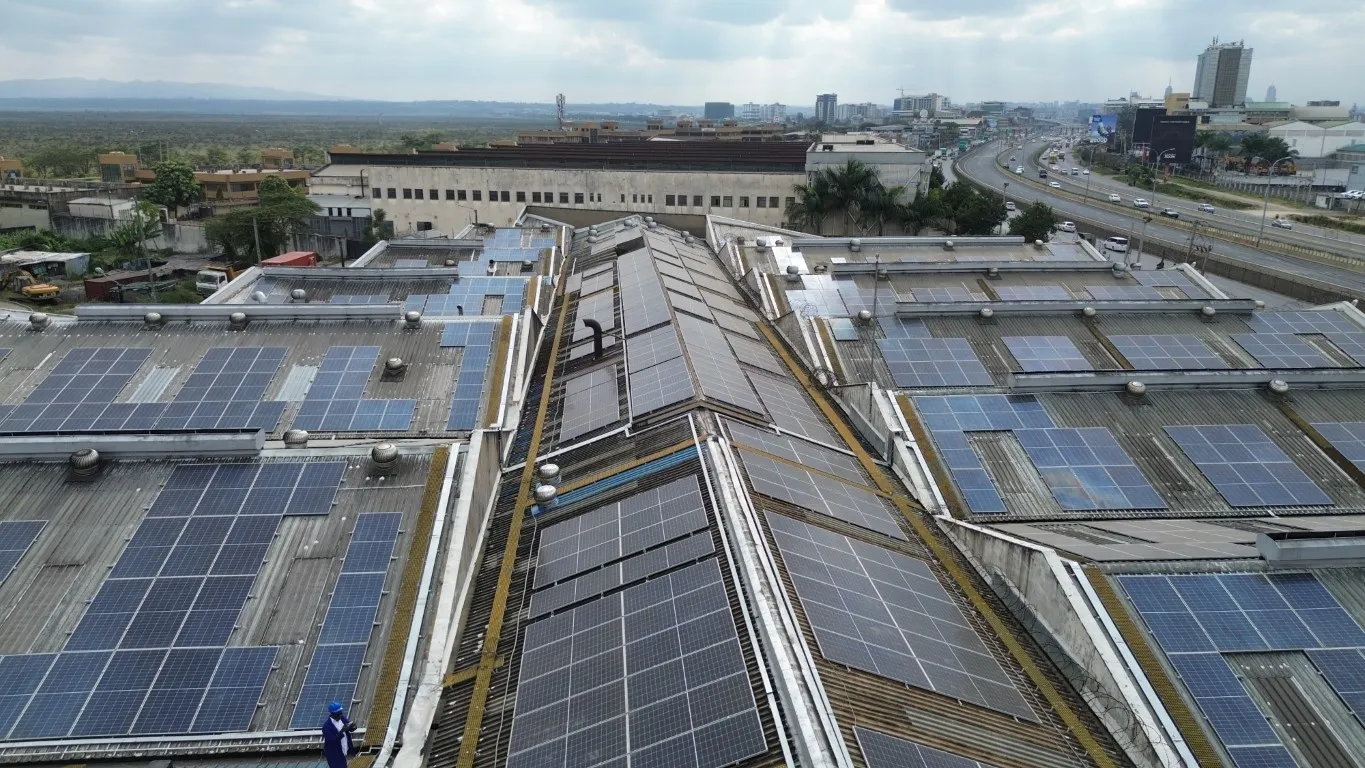
One of the most overlooked opportunities in manufacturing facilities is roof space. Large factory roofs often remain unused despite representing valuable real estate. Solar installations transform these surfaces into energy-generating assets. Rather than sitting idle, the roof contributes directly to operational efficiency by producing electricity that supports manufacturing activities.
This approach allows businesses to generate additional value from existing infrastructure without disrupting production operations. For facilities with substantial roof space, the potential benefits can be significant.
Supporting Industrial Growth Across Africa
Africa’s manufacturing sector is expected to continue expanding as governments invest in industrialization, infrastructure, and economic development. At the same time, energy demand is increasing. Meeting this demand sustainably will require innovative solutions that support both growth and efficiency. Solar energy is uniquely positioned to help address this challenge.
Resources from the International Energy Agency (IEA) consistently highlight renewable energy as a key component of future industrial and economic development. Manufacturers that adopt solar today are positioning themselves to compete more effectively in tomorrow’s economy.
The Importance of Strategic Solar Planning
Not all solar installations deliver the same results.
The effectiveness of a manufacturing solar project depends on careful planning, accurate energy assessments, and proper system design.
Key considerations include:
- Production schedules
- Energy consumption patterns
- Facility size
- Future expansion plans
- Peak demand management
- Battery storage opportunities
A tailored approach ensures the solar system aligns with operational objectives and delivers maximum value.
Strategic planning is essential for achieving both financial and operational success.
Conclusion
Manufacturing with solar offers far more than lower electricity bills. It provides manufacturers with a powerful tool for improving competitiveness, increasing operational efficiency, strengthening energy security, and supporting long-term sustainability goals.
As energy costs continue to influence production economics across Africa, businesses that generate their own power gain a valuable advantage. Reduced operating expenses, greater cost predictability, improved resilience, and stronger sustainability performance all contribute to a more competitive manufacturing operation.
Across the continent, forward-thinking manufacturers are increasingly viewing solar energy as a strategic investment rather than simply an alternative power source. Spenomatic Solar supports industrial organizations by delivering solar solutions designed to reduce energy costs while supporting reliable and efficient manufacturing operations.
For African manufacturers seeking sustainable growth and stronger market positioning, solar energy is becoming more than an option. It is becoming a competitive necessity.
Frequently Asked Questions (FAQs)
1. Why is solar energy beneficial for manufacturing facilities?
Solar energy helps manufacturers reduce electricity costs, improve energy reliability, support sustainability goals, and strengthen long-term competitiveness.
2. Can solar power support large industrial operations?
Yes. Commercial and industrial solar systems can be designed to meet substantial energy demands and support a wide range of manufacturing activities.
3. Does solar energy reduce production costs?
By reducing electricity expenses, solar energy can help lower overall operating costs and improve manufacturing profitability.
4. Can solar improve energy reliability for factories?
When combined with battery storage, solar systems can help support critical operations during power disruptions and reduce downtime risks.
5. How does solar support sustainable manufacturing?
Solar energy reduces dependence on conventional electricity sources, lowers carbon emissions, and helps manufacturers meet growing sustainability expectations from customers and stakeholders.