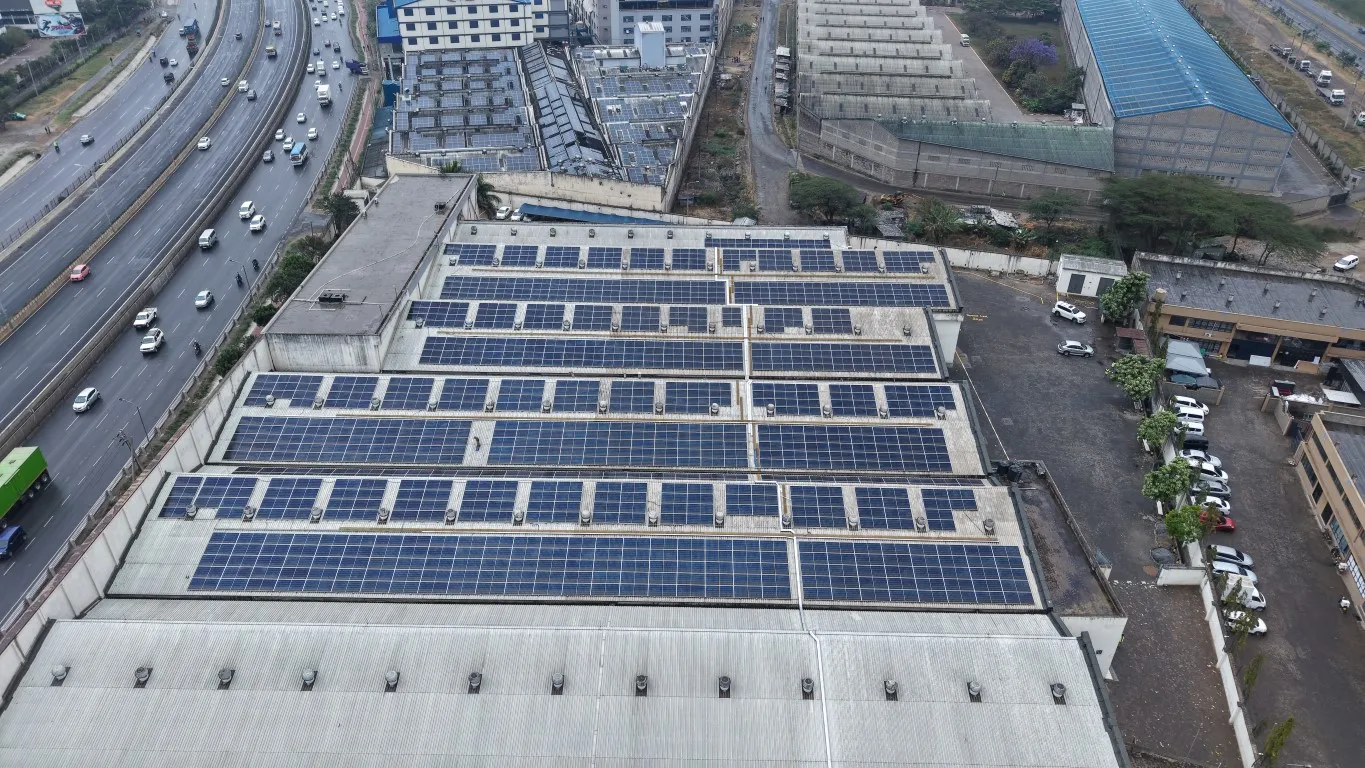
Spenomatic installed rooftop solar PV on the factory roofs of a highly secure industrial assembly and printing company. The client’s name is withheld for security reasons.
| Client | High-security industrial printing and assembly company (name withheld) |
|---|---|
| Sector | Secure printing and industrial assembly |
| System type | Rooftop solar PV |
| Roofs used | Multi-bay factory roof |
| Scope | Solar PV engineering, procurement and installation on a secure operating site |
Printing and assembly plants run power-hungry equipment through the working day: printing presses, finishing and assembly lines, compressed-air systems, and climate control that keeps paper and other materials stable during production.
With most of that demand falling in daylight hours, rooftop solar can supply a large share of daytime electricity directly to the production floor, reducing grid purchases while the factory is busiest.
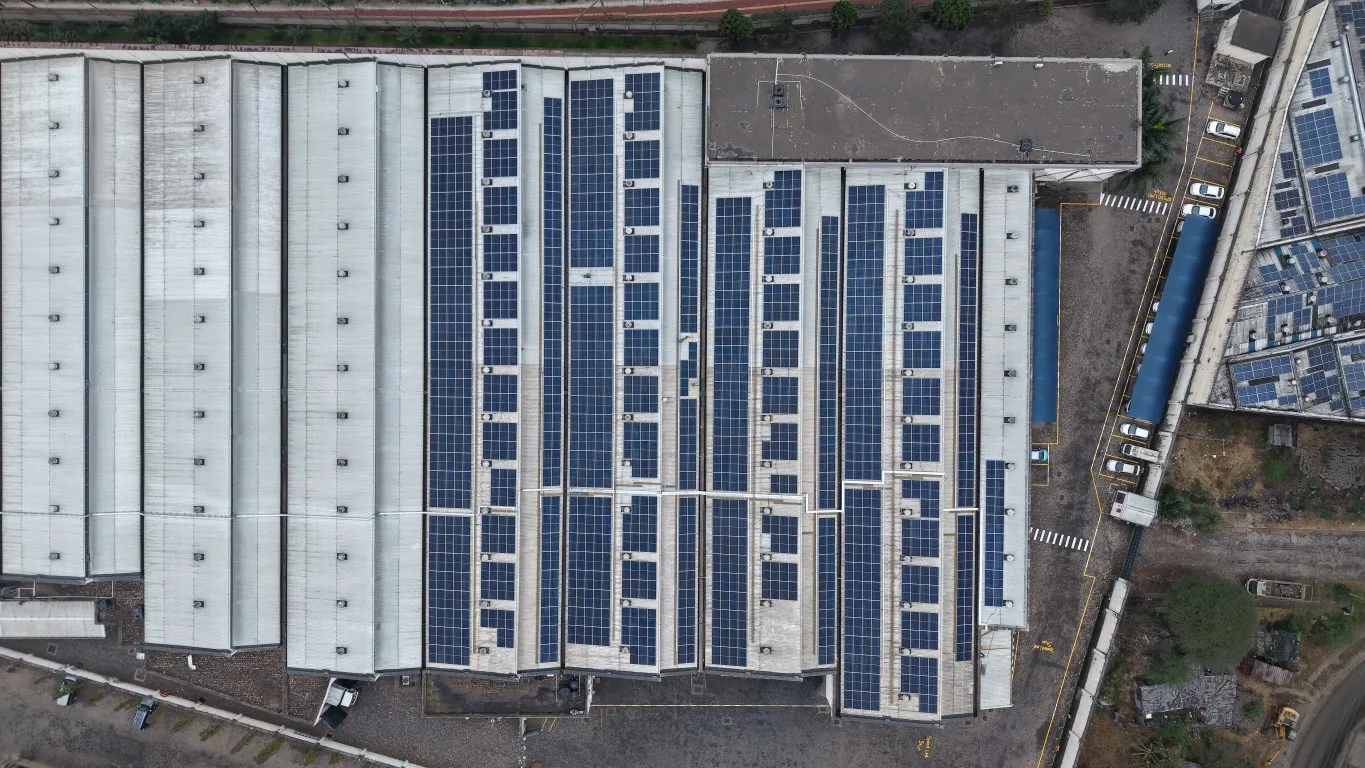
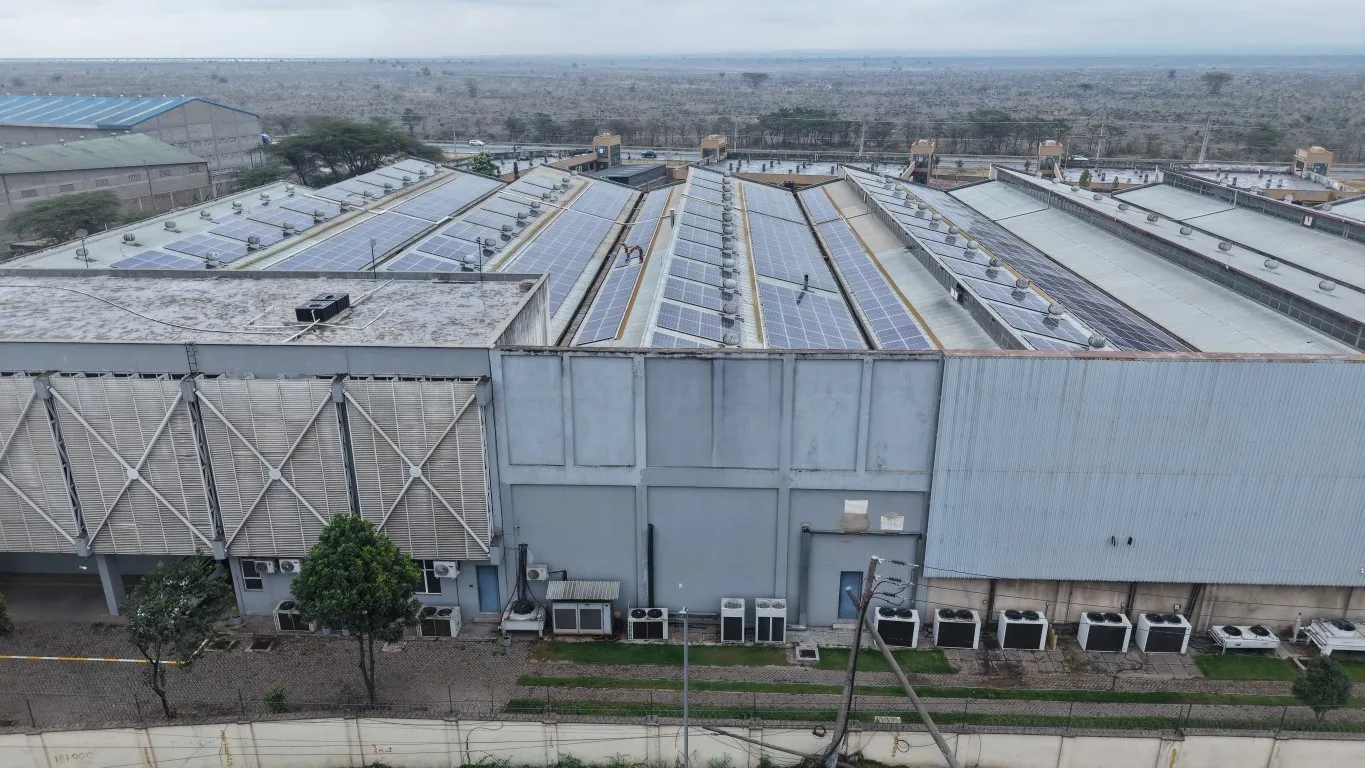
The factory’s long, multi-bay roof gives plenty of unshaded space. The aerial photos show parallel rows of panels running the length of each bay, with consistent spacing between rows for inspection and cleaning access.
Kenyan manufacturers increasingly generate their own power. EPRA statistics for the year to June 2025 put Kenya’s installed solar capacity at 514.1 MW, with 300.5 MW of that installed by businesses and institutions for their own use.
Yes. Roof work is phased and electrical connections are scheduled for planned windows, so production continues during installation.
A properly designed grid-tied system works alongside the existing supply. Inverter settings and protection are configured to maintain power quality on site.
Remote monitoring tracks performance continuously, so site visits for cleaning, inspection or repairs can be planned in advance and carried out under the client’s access procedures.
See related manufacturing projects, including our 2.2 MWp rooftop installation for a rubber manufacturer in coastal Kenya and our 625 kWp system for a plastic products manufacturer in Nairobi, or explore our commercial and industrial solar EPC services.
Contact our engineering team to schedule a technical audit and feasibility assessment for your facility.
Request an Engineering Assessment ➔