
Guide

Residential Solar Energy, Engineered around your home energy needs
Reliable, affordable power for homes, villas and residential communities across Africa.
Our home solar installation services combine load and location analysis, design, procurement, professional solar panel installation, commissioning and project management around the way your property actually uses power.
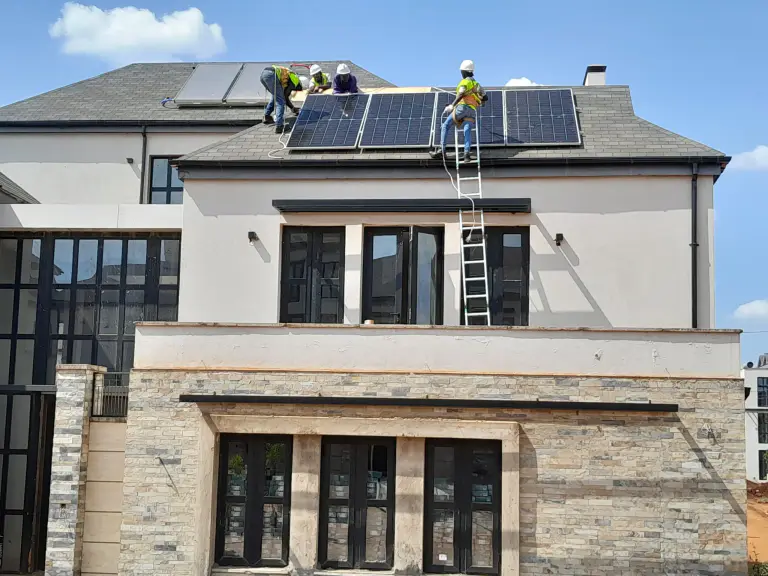
Service: Residential & Home Solar Engineering, Procurement and Construction
Delivery Model: Turnkey EPC
Solutions: Grid-tied, hybrid, off-grid, solar + battery storage and whole-home solar systems
Applications: Homes, villas, residential estates, apartment developments and gated communities
Engineering Scope: Load analysis → site and location analysis → system sizing → development → engineering → design → procurement → supply → installation → project management
Primary Outcomes: Lower electricity costs, backup power, greater energy independence and reduced dependence on grid electricity and generators
Regional EPC Network: Kenya, Uganda, Tanzania, Mauritius, Zambia, South Africa, Rwanda, South Sudan, Ghana, Côte d’Ivoire, Cameroon, Nigeria, Democratic Republic of Congo and Tunisia
Delivery Positioning: Premium, engineering-led, value-based residential solar solutions
A Residential Solar EPC solution is an end-to-end approach in which one engineering partner takes responsibility for developing the home solar project from energy analysis and system design through procurement, supply, construction and installation.
Instead of requiring a homeowner to separately source solar panels, an inverter, batteries, electrical components, mounting systems and different contractors, the EPC approach integrates the complete system around a defined engineering requirement.
For Spenomatic Group, residential solar EPC begins with a simple question:
What does this particular home actually need from its energy system?
The answer determines the technology.
A household primarily concerned with reducing daytime electricity costs may require a different architecture from a villa that needs overnight battery autonomy. A property experiencing frequent outages requires a different design from a grid-connected home primarily seeking energy-cost optimization. A remote residence without dependable utility power may require an entirely different off-grid configuration.
That is why effective residential solar system design should begin with the load, location and required outcome—not with a predetermined package.
Africa has extraordinary renewable-energy potential, yet reliable electricity remains a major challenge across the continent.
The International Energy Agency reported that, as of 2024, approximately 600 million people in Sub-Saharan Africa—47% of the population—did not have access to electricity. At the same time, grid expansion alone will not solve the continent's energy challenge. The IEA identifies grid extension, mini-grids and stand-alone systems as complementary parts of the electrification solution.
For households that already have grid connections, the issue is often different: reliability, electricity costs and resilience.
This creates a strong case for distributed residential energy systems that can generate electricity at the point where it is consumed.
Solar economics have also changed dramatically. According to the International Renewable Energy Agency, the global weighted-average levelised cost of utility-scale solar PV fell by approximately 90% between 2010 and 2024, from USD 0.417/kWh to USD 0.043/kWh.
While utility-scale generation costs should not be interpreted as residential installation prices, the trend demonstrates how profoundly PV technology economics have changed.
For African homeowners, the strategic question is therefore increasingly shifting from:
“Can solar generate electricity?”
to:
“What solar and battery architecture gives my home the best combination of savings, reliability and energy independence?”
That is an engineering question.
And it is the question Spenomatic's Residential Solar EPC approach is designed to answer.
Residential solar is rarely purchased for one reason alone.
The strongest home solar systems solve several energy problems simultaneously.
A correctly sized solar system can replace part of the electricity that would otherwise be purchased from the utility.
The actual savings depend on the home's consumption profile, local electricity tariff, available solar resource, system configuration, equipment performance and how much solar electricity is consumed directly or stored for later use.
Spenomatic therefore evaluates the home's energy profile before recommending system capacity.
The objective is not to install the maximum number of panels possible. It is to engineer the appropriate system for the home's actual demand and economic objectives.
Solar panels alone do not automatically provide backup electricity during a blackout.
For homeowners who require uninterrupted or resilient power, Spenomatic can engineer a hybrid solar system with battery storage that allows selected critical loads—or, where technically and economically appropriate, much of the home—to continue operating when utility electricity is unavailable.
Critical residential loads may include:
The backup strategy is determined during solar load analysis.
Where homes depend on diesel or petrol generators during outages, solar and battery storage can reduce generator operating hours.
That can mean less fuel consumption, noise, maintenance and manual intervention.
For some properties, the generator remains part of the resilience architecture. In such cases, Spenomatic can evaluate a hybrid power configuration in which solar PV, batteries, utility electricity and generator power work together according to the site's requirements.
Residential solar allows households to generate a greater proportion of their electricity directly at the property.
Adding battery storage extends that capability beyond daylight hours by storing surplus electricity for later use.
Energy independence does not necessarily mean disconnecting from the grid.
For many homeowners, the best solution is a carefully engineered hybrid system that retains the grid while reducing dependence on it.
Solar PV generates electricity without combustion at the point of generation.
Replacing a portion of grid or generator electricity with solar can therefore help households pursuing lower-carbon energy consumption and broader sustainability objectives.
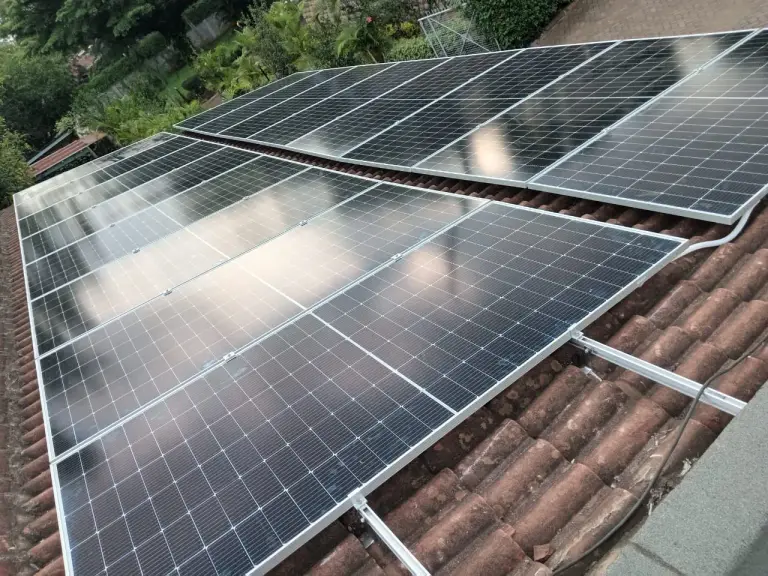
Mounting, cabling, protection and equipment integration are completed around the approved engineering design.
There is no single “best” solar system for every home.
The correct architecture depends on the household's objectives, electricity supply, load profile and location.
Spenomatic engineers multiple residential solar configurations.
A grid-tied solar system for home operates alongside the utility grid.
Solar electricity generated during the day is used to serve household loads, reducing the amount of electricity purchased from the utility.
Grid-tied residential solar is particularly suitable where the primary objective is electricity-cost reduction and the grid is reasonably dependable.
Depending on applicable local regulations, system architecture and utility requirements, export arrangements may also be considered where permitted.
Homes with dependable grid supply that want to reduce electricity consumption from the utility.
Energy savings.
A conventional grid-tied system normally shuts down during a grid outage for electrical safety unless appropriate backup architecture has been incorporated.
A hybrid solar system for home combines solar PV with battery storage and typically maintains a connection to the utility grid.
The system can use solar electricity during the day, store excess energy in batteries, draw from storage when required and use the grid as another energy source.
This creates a flexible residential energy architecture.
A hybrid system can be engineered to prioritize:
Solar → battery → grid
or another operating strategy depending on the homeowner's objectives and equipment configuration.
Homes experiencing outages while also seeking electricity-cost reduction.
Savings + backup + resilience.
For many urban and suburban African households, hybrid residential solar offers one of the most practical routes toward greater energy independence without completely disconnecting from the grid.
An off-grid solar system for home is designed to operate independently of the utility network.
The architecture typically combines solar PV generation, battery storage, power conversion and appropriate electrical protection. Depending on required resilience, another generation source may also be integrated.
Off-grid design requires particularly careful engineering because the system must meet household energy requirements without assuming that grid electricity will be available when solar production is low.
Remote homes, rural residences, lodges, farms or properties where grid connection is unavailable, unreliable or economically impractical.
Energy autonomy.
Correct battery sizing and load management become especially important in an off-grid system.
Some homeowners are less concerned about maximizing solar generation than they are about keeping essential loads operating during outages.
Spenomatic can engineer a home solar battery system around defined backup requirements.
Rather than attempting to back up every electrical appliance indiscriminately, our engineers identify critical and non-critical loads and develop an appropriate storage strategy.
A battery system may support:
The result is a home battery backup system designed around required autonomy, not an arbitrary battery capacity.
Large residences, villas and premium homes may require substantially more sophisticated power-system engineering.
A whole-house solar system can be designed to serve a much broader portion of household electricity demand and may integrate solar PV, large-format battery storage, intelligent inverter systems, grid supply, generators and automated energy management.
These projects require detailed consideration of high-load appliances such as:
For these properties, Spenomatic approaches residential solar as a power-system engineering project, rather than a collection of solar products.
Premium residences often have complex electrical profiles.
They may contain three-phase loads, pumps, HVAC systems, extensive lighting, entertainment infrastructure, electric gates, security equipment, multiple buildings and sophisticated automation.
A solar system for a luxury home or villa therefore requires more than selecting an inverter based on the monthly electricity bill.
Spenomatic evaluates load behaviour, peak demand, critical circuits, roof availability, battery autonomy, equipment integration and future requirements before finalizing the system architecture.
The objective is seamless integration with the property—not merely installing solar equipment on it.
Spenomatic's EPC capability also extends beyond individual homes.
We develop solar solutions for residential estates, gated communities, apartment buildings and residential developments where developers, property owners and management companies require a coordinated engineering approach.
Possible applications include:
Our EPC model allows solar to be considered alongside the wider electrical infrastructure of the development.
A monthly electricity bill tells us how much electricity a household has purchased.
It does not, by itself, tell us enough to engineer the optimal solar system.
Two homes with the same monthly electricity bill can require very different solar solutions.
One may consume most electricity during daylight hours.
Another may consume heavily after sunset.
One may require only four hours of critical-load backup.
Another may need overnight autonomy.
One property may have substantial unobstructed roof area.
Another may experience shading or structural constraints.
This is why Spenomatic combines solar load analysis, location analysis and engineering design before equipment selection.
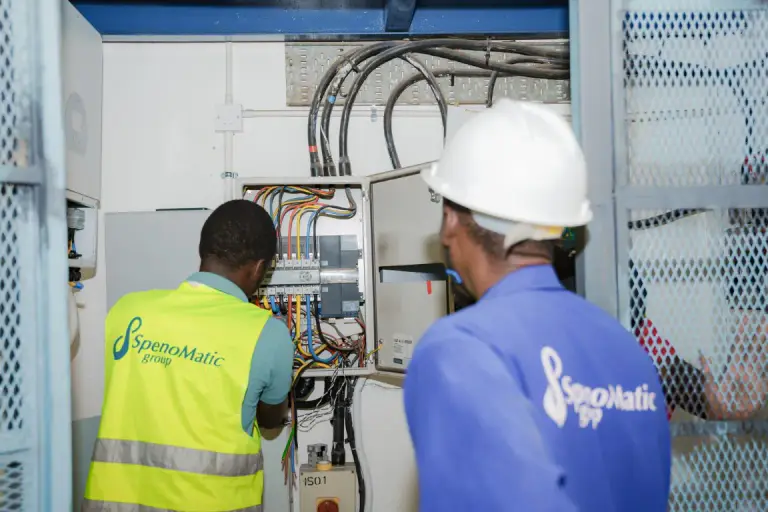
Testing and commissioning verify inverter operation, protection, monitoring and integration with the home electrical network.
The process begins with understanding what the homeowner wants the system to accomplish.
Is the priority:
Clear objectives allow the system to be engineered against measurable requirements.
We assess household electricity consumption and the appliances the system is expected to support.
This can include examining:
Load analysis creates the foundation for solar system sizing for the home.
Solar performance depends heavily on location and site conditions.
The assessment considers factors such as:
A strong residential solar design therefore combines energy analysis with physical site analysis.
Our engineers determine the appropriate system configuration.
Depending on the project, this may include:
This is where a collection of components becomes an integrated residential solar power system.
Spenomatic is not restricted to a single residential solar architecture.
Our engineering approach allows technology to be selected according to the project requirement.
The system may incorporate:
Solar PV modules for electricity generation.
Hybrid, grid-tied or off-grid inverters for power conversion and system control.
Lithium battery storage where energy storage and backup are required.
Electrical protection and distribution equipment to integrate the system safely with household infrastructure.
Monitoring technology to provide visibility into generation, consumption and battery operation.
Mounting infrastructure engineered for the installation environment.
Technology serves the design—not the other way around.
Once the design is finalized, Spenomatic coordinates procurement and supply of the required equipment and balance-of-system components.
Our broader involvement in engineering, technology, electrical infrastructure and the energy value chain provides an important distinction from businesses operating only as installation contractors.
Installation is completed according to the approved engineering design.
Scope can include:
A quality home solar installation is not defined simply by whether the panels generate electricity.
It should also be safe, maintainable, correctly protected and integrated into the home's wider electrical system.
Spenomatic manages the interfaces between design, equipment, installation and electrical integration.
This EPC responsibility reduces the fragmentation that can arise when engineering, equipment supply and installation are handled by unrelated parties.
Many residential solar businesses begin with equipment.
Spenomatic begins with engineering.
Our Residential Solar Division draws on wider Group capabilities in renewable energy, electrical infrastructure, power systems, transmission, distribution, hybrid power, engineering, technology and EPC project delivery.
That creates a fundamentally different proposition:
utility- and industrial-level engineering thinking applied appropriately to residential energy.
Spenomatic Group's differentiator is not simply the ability to install solar panels.
It is the depth of capability surrounding the installation.
Our wider capabilities span:
Electrical infrastructure Transmission Distribution Renewable energy Hybrid power Power-system engineering Technology Manufacturing and private-label capability Engineering, Procurement and Construction
This vertical integration gives Spenomomatic deeper involvement across the chain from engineering and technology selection to procurement, electrical integration and construction.
For homeowners, that matters because a solar system is ultimately an electrical power system.
Panels are only one component.
The long-term performance of the installation depends on how generation, storage, power conversion, protection, controls and the home's electrical infrastructure work together.
Spenomatic Group has operated in Africa's energy and environmental engineering sector for more than 27 years.
Across the wider Group, Spenomatic reports 162 MWp+ of Commercial & Industrial solar PV installed across 150+ sites in Africa and more than 12.5 MWh of battery energy storage system capacity.
These figures represent Spenomatic's broader solar and energy engineering experience—not residential-only deployment.
That distinction matters.
Residential customers gain access to a solar partner whose engineering capability extends well beyond small rooftop installation into larger power, energy and electrical infrastructure projects.
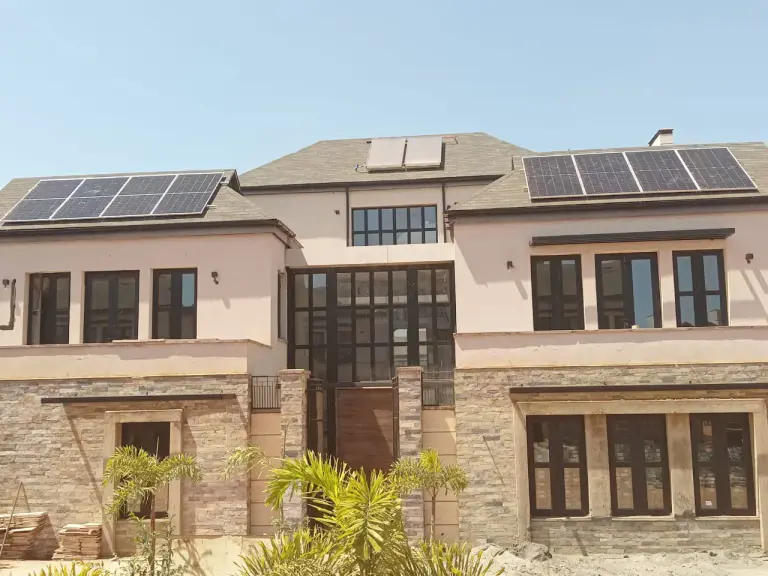
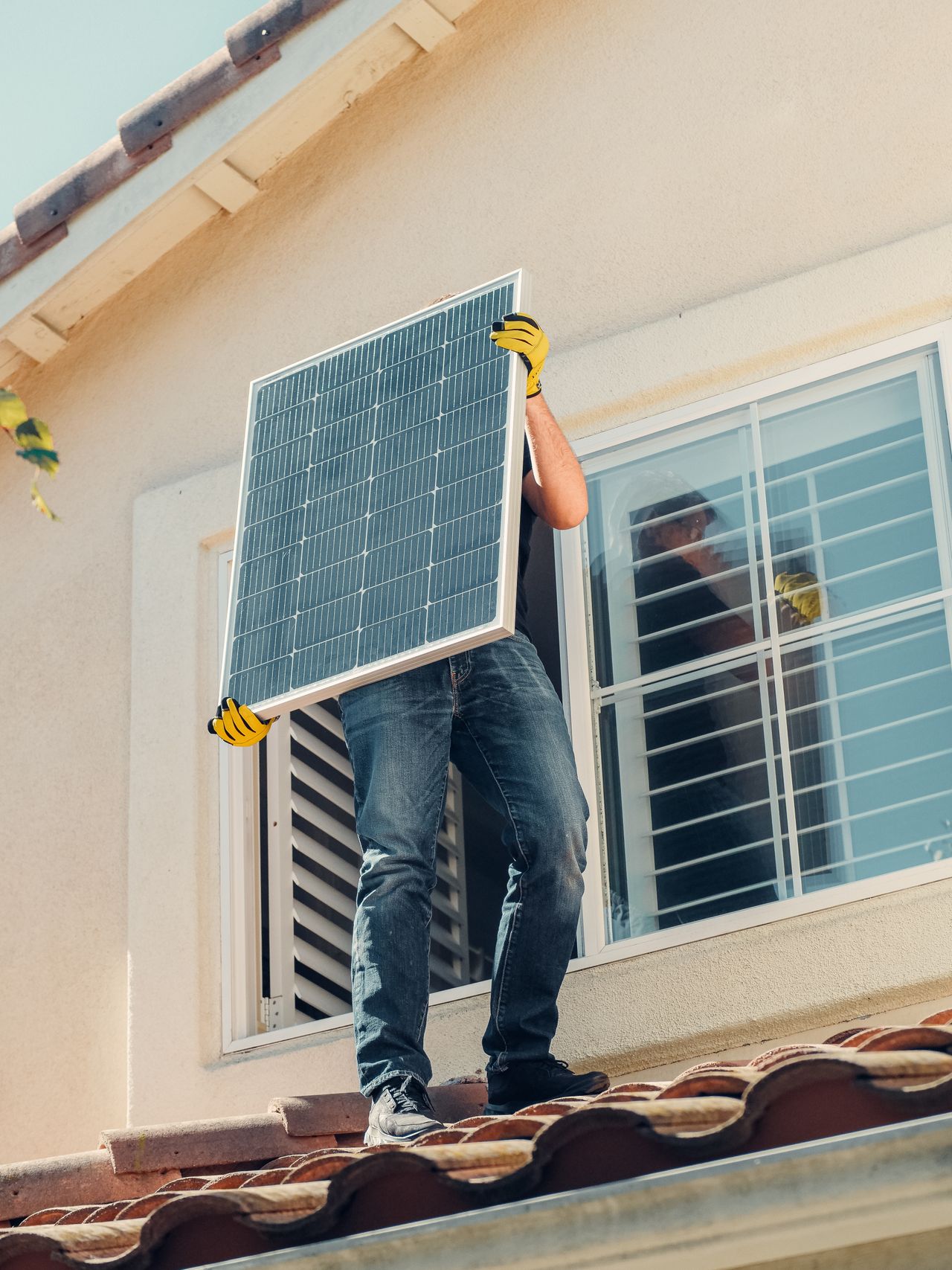
Roof geometry, shading, access, structure and cable routes are assessed before the system layout is finalized.
Spenomatic Group is building residential solar capability through a regional EPC network spanning:
Kenya | Uganda | Tanzania | Mauritius | Zambia | South Africa | Rwanda | South Sudan | Ghana | Côte d’Ivoire | Cameroon | Nigeria | Democratic Republic of Congo | Tunisia
This African footprint is important because residential solar cannot be engineered from a universal template.
Solar resource, electricity tariffs, grid conditions, permitting requirements, environmental conditions, available technology and household consumption patterns differ by market.
Spenomatic combines regional EPC capability with project-specific engineering to develop residential solar solutions appropriate to local conditions.
Spenomatic provides home solar installation and residential solar EPC solutions in Kenya, supported by its Nairobi headquarters and wider engineering infrastructure.
Solutions can include grid-tied solar, hybrid solar systems, battery backup, whole-house solar and engineered solutions for villas, residential estates and gated communities.
Through its regional presence, Spenomatic serves residential solar requirements across Kenya, Uganda, Tanzania, Rwanda and South Sudan, supporting homeowners and residential developments seeking reliable and affordable distributed energy systems.
Spenomatic's regional EPC network extends to Zambia, South Africa and Mauritius, supporting residential and property-sector solar requirements across diverse energy markets.
Our network also extends across Ghana, Côte d’Ivoire, Cameroon, Nigeria and the Democratic Republic of Congo, bringing engineering-led solar and hybrid power capability closer to residential customers and property developments across West and Central Africa.
Spenomatic's network includes Tunisia, extending the Group's African EPC capability into North Africa.
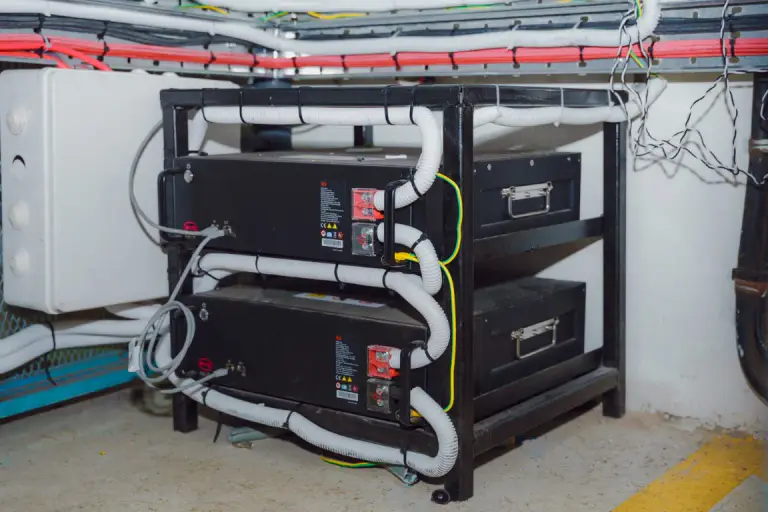
Battery cost and capacity are evaluated against critical circuits, outage duration, operating strategy and the homeowner’s energy objectives.
There is no technically responsible single answer to the question “How much does a home solar system cost?”
The price of a complete solar system for a home depends on what the system is expected to accomplish.
Major cost drivers include:
| Cost Factor | Why It Matters |
|---|---|
| Household electricity consumption | Determines required generation capacity |
| Peak electrical load | Influences inverter sizing |
| Solar PV capacity | Determines panel quantity and associated infrastructure |
| Battery capacity | Strongly affects hybrid and backup-system cost |
| Required backup duration | Determines usable storage requirement |
| Grid-tied vs hybrid vs off-grid | Changes system architecture |
| Roof/site conditions | Affects mounting and installation |
| Electrical infrastructure | May require upgrades or integration work |
| Equipment specification | Technology quality and performance affect investment |
| Monitoring and controls | Vary according to required functionality |
| Future expansion | Can influence initial architecture |
A lower-priced system is not automatically a better investment.
An undersized system may fail to meet backup requirements. An oversized system can tie up capital in capacity that is poorly utilized.
Spenomatic therefore follows a value-based engineering approach.
We first establish the requirement.
Then we engineer the system.
Then we price the solution.
Home solar sizing should consider both energy and power.
Energy, measured in kilowatt-hours, tells us how much electricity the household consumes over time.
Power, measured in kilowatts, tells us how much electricity appliances may require at a particular moment.
Battery capacity introduces another variable: how long the homeowner wants selected loads to operate without grid or solar input.
That means a responsible sizing process considers at least:
Daily energy demand + peak load + critical loads + solar production window + battery autonomy + system losses + location + future demand.
This is why simply matching an inverter to a monthly electricity bill can produce poor results.
If the primary objective is to reduce electricity purchases during daylight hours and the grid is dependable, a grid-tied solar PV system may be appropriate.
If the homeowner also wants electricity during blackouts or after sunset, solar panels and battery storage become more relevant.
A hybrid system provides another advantage: energy can be managed across multiple sources.
The appropriate decision therefore depends on whether the homeowner prioritizes:
Savings only
or
Savings + backup
or
Maximum energy independence.
Spenomatic determines this during the initial energy assessment.
| System | Grid Connection | Battery | Primary Goal | Best Application |
|---|---|---|---|---|
| Grid-Tied Solar | Yes | Usually optional | Reduce utility consumption | Reliable-grid homes |
| Hybrid Solar | Yes | Yes | Savings + backup | Homes with outages |
| Off-Grid Solar | No | Yes | Energy autonomy | Remote or unserved properties |
| Whole-Home Solar + Battery | Usually | Yes | High resilience + independence | Villas and premium homes |
The correct choice should follow the property's requirements rather than a standardized product package.
Residential solar ROI should not be evaluated only by dividing installation cost by monthly electricity savings.
A more complete assessment can consider:
Avoided utility electricity purchases
plus
avoided generator fuel and maintenance
plus
the value of backup power
plus
reduced exposure to future electricity-cost increases
plus
the strategic value of greater energy independence.
Some of these benefits are directly measurable in currency. Others are household resilience benefits and should not be presented as guaranteed financial returns.
Spenomatic therefore evaluates residential solar according to the homeowner's specific economic and operational priorities rather than promising a universal payback period.
Residential solar performs best when engineering begins with the property's actual demand.
This means asking:
What consumes electricity?
When is electricity consumed?
Which loads are essential during an outage?
How long must those loads remain powered?
How much usable solar resource and installation space is available?
What is the existing electrical configuration?
What might change over the next several years?
Only after answering those questions should equipment capacity be finalized.
That principle sits at the centre of Spenomatic's Residential & Home Solar EPC model.
There is no single best solar system for every home. The right system depends on electricity consumption, peak demand, available solar resource, roof space, outage frequency, required backup duration, budget and whether the goal is savings, backup or energy independence. Spenomatic sizes the system after load and site analysis.
Yes, a properly engineered whole-house solar system can supply a substantial portion—or potentially all—of a home's electrical requirements, depending on system capacity, solar resource, consumption patterns and storage. High-load appliances significantly influence the required PV, inverter and battery capacities.
The correct size depends on your daily electricity consumption, peak demand, daytime and nighttime usage, critical loads, location, available installation area and required battery autonomy. Historical electricity bills provide useful information but should not be the only sizing input.
Not necessarily. Grid-tied solar can reduce utility electricity consumption without batteries. Batteries become important when you need backup during outages, want to use stored solar electricity after sunset or require greater energy independence.
A hybrid solar system combines solar PV, an appropriate hybrid inverter, battery storage and usually the utility grid. It can use and manage electricity from multiple sources, allowing the household to reduce grid consumption while maintaining stored energy for backup or nighttime use.
An off-grid solar system operates without depending on the utility grid. It generally combines PV generation, batteries, inverter technology and system controls and may include another backup source where required. Off-grid systems require careful load and storage engineering.
A conventional grid-tied solar system normally shuts down during an outage. A properly designed hybrid solar and battery system can continue supplying designated loads, subject to inverter capacity, battery state of charge and system configuration.
Battery runtime depends on usable battery capacity and the amount of power being consumed. A battery supporting lighting, Wi-Fi and refrigeration can last much longer than the same battery powering air conditioning, water heating or other high-demand equipment.
Home solar installation cost varies according to PV capacity, inverter rating, battery capacity, system architecture, equipment specification, roof conditions, electrical work and backup requirements. A site and load assessment is the most reliable basis for developing an accurate proposal.
The complete project price extends beyond the panels themselves. It includes the inverter, battery where applicable, mounting structure, protection equipment, cables, controls, engineering, installation and electrical integration.
In some system architectures, yes. If future battery storage is anticipated, however, it is better to consider that requirement during initial design so that inverter selection, electrical architecture and expansion capacity are compatible.
It may be technically possible in some situations to offset a very large proportion of household electricity consumption, but a zero bill should not be universally promised. Results depend on consumption, system size, solar resource, tariff structure, storage, export rules and unavoidable utility charges.
Yes. A correctly engineered solar and battery system can reduce generator runtime by using solar generation and stored energy to serve household loads. Actual fuel savings depend on system design and how frequently the generator would otherwise operate.
No. Roof orientation, shading, structural condition, usable area and environmental conditions must be assessed. Where rooftop installation is unsuitable, alternative configurations may be evaluated where space and site conditions permit.
Solar can power a wide range of residential loads, but the system must be sized accordingly. Lighting, refrigeration, electronics and communications typically require less capacity than electric water heaters, cookers, pumps, air conditioners and other high-power appliances.
It can be highly valuable where households face high electricity costs, unreliable grid supply, expensive generator operation or a strong need for energy independence. However, project economics differ by country, tariff, property, solar resource and system configuration, so each installation should be evaluated individually.
Yes. Battery storage can form part of Spenomatic's engineered residential solar solutions where the homeowner requires backup power, nighttime solar utilization or greater energy independence.
Yes. Spenomatic Group's regional EPC network covers Kenya, Uganda, Tanzania, Mauritius, Zambia, South Africa, Rwanda, South Sudan, Ghana, Côte d’Ivoire, Cameroon, Nigeria, Democratic Republic of Congo and Tunisia.
Yes. Spenomatic can engineer residential solar solutions for individual properties as well as villas, gated communities, apartment buildings, estates and residential developments.
An EPC company integrates engineering, procurement and construction responsibility. For complex homes, premium residences and larger residential developments, this provides a coordinated approach to load analysis, design, technology selection, electrical integration, procurement and installation.
A homeowner does not ultimately need solar panels.
A homeowner needs reliable electricity at an acceptable long-term cost.
Solar panels, batteries, inverters and electrical infrastructure are the technologies used to achieve that outcome.
This distinction shapes the Spenomatic approach.
We do not begin with:
“Which package would you like?”
We begin with:
“What does your home need its energy system to accomplish?”
Then we engineer the answer.
Whether your priority is reducing a high electricity bill, maintaining power through outages, reducing generator dependence, building a whole-home solar and battery system, or moving toward greater energy independence, the first step is understanding your actual energy demand.
Spenomatic Group provides the engineering, technology, procurement, supply, installation and project-management capability to turn that requirement into a complete residential solar solution.
From load and location analysis to an engineered home energy system.
From equipment selection to installation.
From solar panels to integrated power.
Tell us:
Your location Average monthly electricity bill Main appliances Typical outage frequency Required backup duration Property type Primary objective: savings, backup or energy independence
Our engineering team can use this information as the starting point for evaluating the appropriate residential solar architecture.
Guides and insights
Practical, source-referenced guidance for engineers and procurement teams.
Start with your energy requirement
Share your site, load and project goals with Spenomatic's engineering team. We will help define the right next assessment.