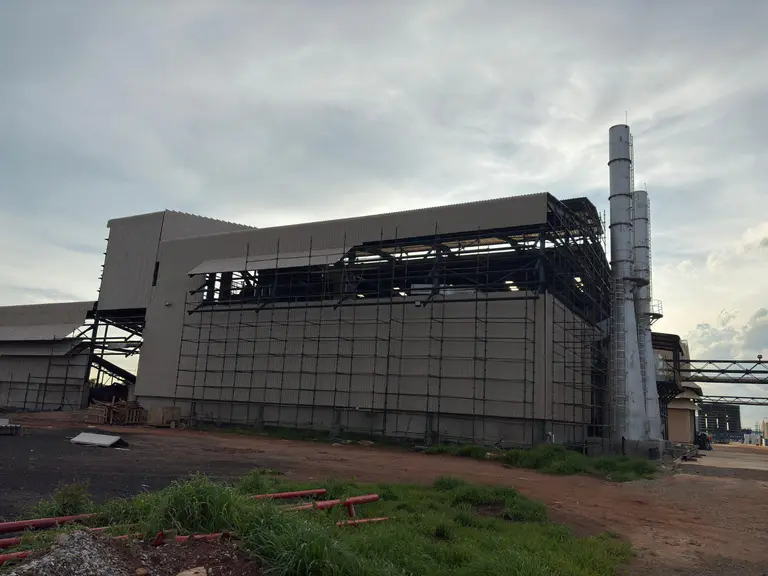
Case study

Industrial heat and steam infrastructure
Turnkey boiler, biomass, cogeneration, steam-system and waste-heat recovery engineering.
We connect process demand, fuel strategy, thermal generation, steam distribution, water, electrical systems and operations into one accountable project lifecycle.
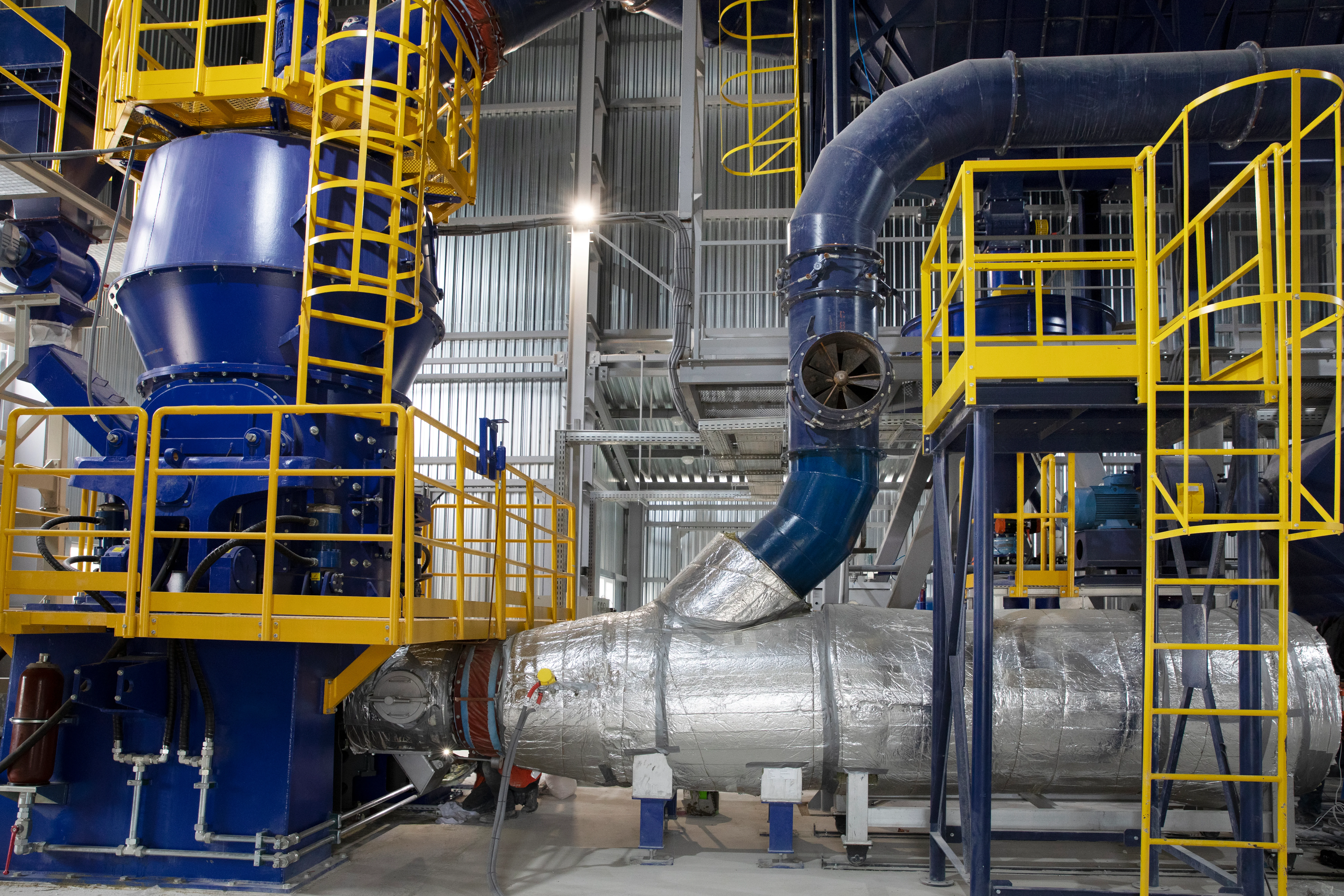
Industrial thermal energy sits at the centre of manufacturing.
Steam and process heat enable production across food and beverage processing, agro-processing, tea, textiles, chemicals, pharmaceuticals, pulp and paper, sugar, cement and other process industries.
The scale of the challenge is substantial.
According to the International Energy Agency, heat accounted for almost half of global final energy consumption in 2024 and approximately 37% of energy-related CO₂ emissions. Renewable energy, excluding traditional biomass, supplied only about 14% of global heat consumption.
Industry itself accounts for nearly 40% of global final energy demand, and energy-intensive industries represent approximately three-quarters of industrial energy consumption.
For African manufacturers, the engineering question therefore extends beyond:
“Which boiler should we buy?”
The more important questions are:
These are system-level engineering questions.
Spenomatic Group's Industrial Thermal EPC model is designed to answer them as one interconnected engineering, commercial and operational problem.
Industrial Thermal EPC is the end-to-end engineering, procurement and construction of infrastructure that generates, recovers, distributes, controls and optimises heat and steam for industrial processes.
A complete Industrial Thermal EPC project can include:
Load Analysis → Feasibility → Technology Selection → Engineering → Procurement → Supply → Construction → Installation → Electrical Integration → Controls → Testing → Commissioning → Training → Operations & Maintenance → Optimisation
Depending on the facility, the solution may integrate:
This distinction is important.
An equipment supplier sells equipment. An Industrial Thermal EPC partner engineers the entire system required to make that equipment deliver reliable process energy.
Spenomatic's approach starts with the industrial process rather than with a predetermined technology.
The objective is to determine what combination of thermal generation, fuel, steam infrastructure, power integration, controls, water treatment, heat recovery and O&M strategy best supports the plant's production requirements.
Every successful thermal project starts with understanding demand.
Spenomatic evaluates the facility's existing and projected energy requirements, including:
For boiler projects, this includes boiler load analysis and steam load analysis before final equipment selection.
Output: a demand profile that establishes the engineering basis of design.
Next, technical possibilities become investable project options.
Spenomatic evaluates potential configurations against:
Technical feasibility + CAPEX + OPEX + fuel availability + efficiency + reliability + maintainability + environmental impact + scalability + financing
This stage may compare options such as:
The objective is not to recommend the most complicated technology.
It is to identify the configuration that best supports the client's production, energy-cost, reliability and investment objectives.
Industrial thermal projects should not begin with a favourite technology. They should begin with the operating requirement.
| Operating Requirement | Engineering Question | Potential Solution Path |
|---|---|---|
| High continuous steam demand | Is the base load stable enough for dedicated generation? | High-efficiency industrial boiler plant |
| Accessible sustainable biomass | Can feedstock quantity, quality and logistics support continuous operation? | Biomass boiler / biomass energy system |
| Simultaneous electricity and heat demand | Are thermal and electrical loads sufficiently coincident? | Cogeneration / CHP |
| High-temperature exhaust or rejected heat | Is there sufficient recoverable thermal energy? | Waste-heat recovery |
| Expensive or unstable grid supply | What combination improves production resilience? | Captive / hybrid power infrastructure |
| Ageing boiler infrastructure | Is replacement or rehabilitation more economical over lifecycle? | Boiler EPC / plant modernisation |
| High steam losses | Where is energy being lost between generation and process? | Steam-system optimisation |
| Poor condensate return | What heat, water and chemical value can be recovered? | Condensate recovery |
| Expansion project | What future load should be designed into today's infrastructure? | Modular/scalable thermal plant |
| Capital constraints | Can project economics support an alternative financing structure? | Financing-partner assessment |
This framework changes procurement from “buying a boiler” into designing an industrial energy system around the process.
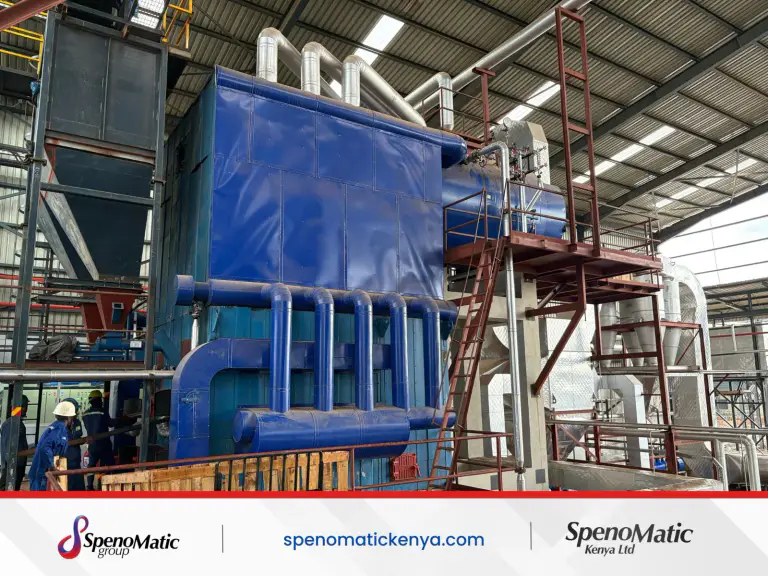
A dependable plant connects heat generation, water treatment, controls, distribution, recovery and safe operation.
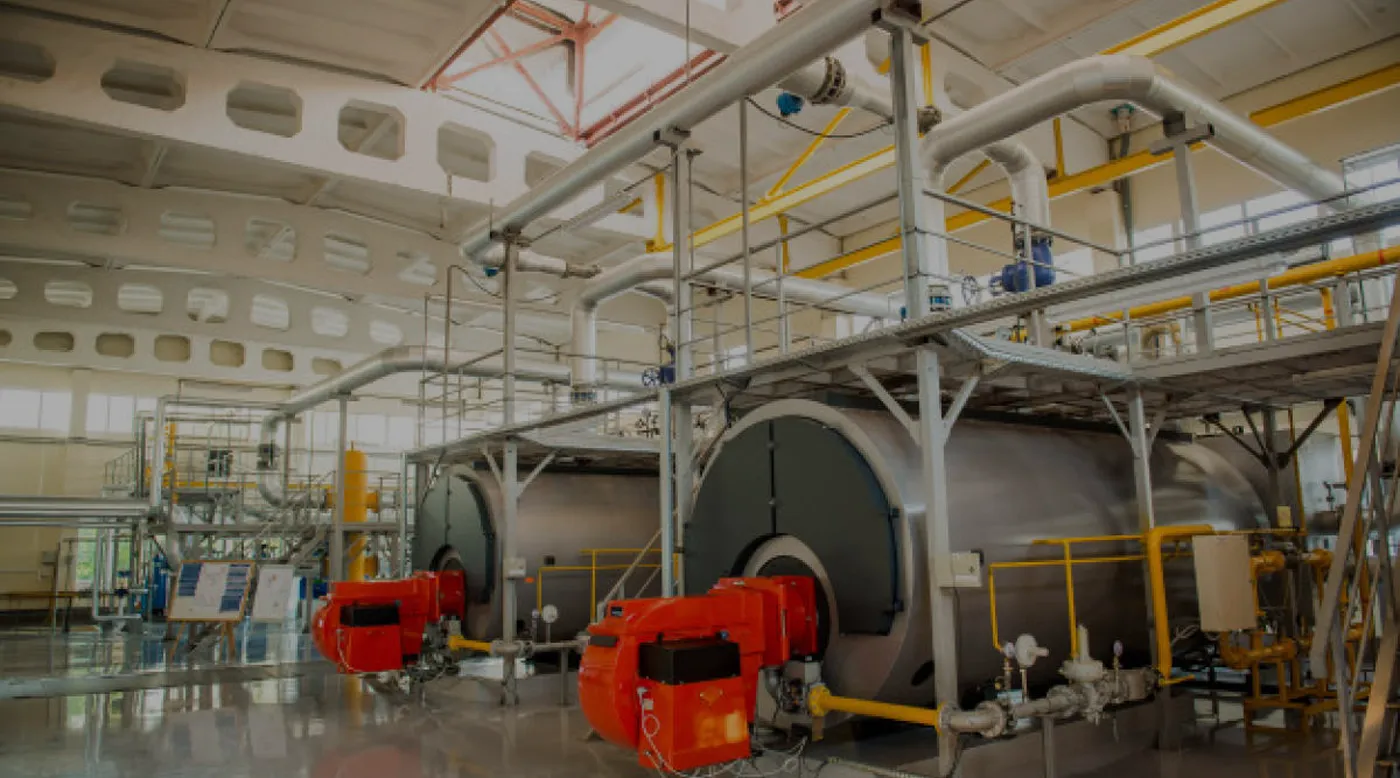
Spenomatic delivers Industrial Boiler EPC solutions in Africa for new facilities, capacity expansion, replacement and thermal-plant modernisation.
Our boiler EPC scope can cover:
Load Analysis → Boiler Design → Equipment Procurement → Supply → Civil & Mechanical Works → Piping → Electrical & Controls → Installation → Testing → Commissioning → O&M
Supporting infrastructure may include:
The result is a turnkey boiler solution designed around process demand rather than an isolated pressure vessel.
Spenomatic combines industrial boiler engineering services with procurement, construction, installation, commissioning and lifecycle support.
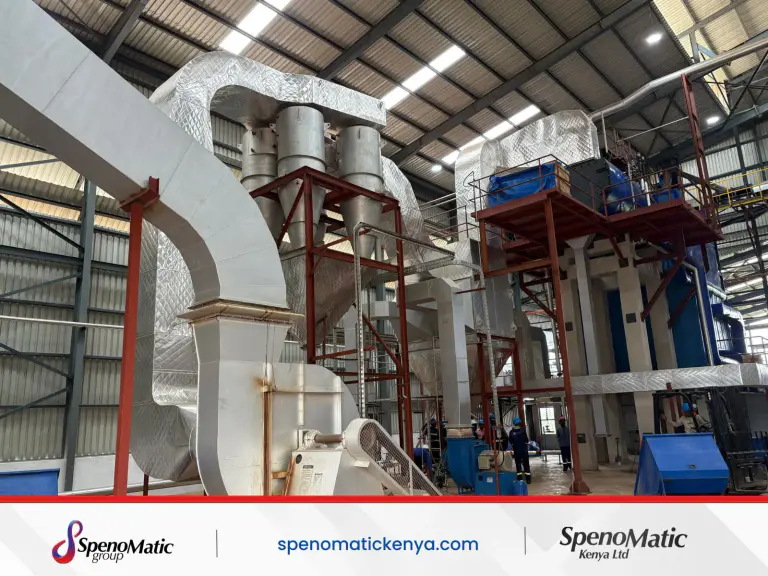
Biomass projects integrate combustion, fuel logistics, emissions control, thermal recovery and the process load.
For industries with access to appropriate biomass resources, biomass can provide an alternative route to industrial steam and process heat.
Potential feedstocks may include locally available agricultural and industrial biomass residues where technically, economically and environmentally appropriate.
A biomass project, however, cannot be designed around fuel price alone.
Successful biomass thermal infrastructure depends on understanding:
Fuel availability → Moisture → Particle size → Calorific value → Storage → Handling → Feeding → Combustion → Ash → Emissions → Boiler design → Operational capability
Spenomatic's Biomass Boiler EPC approach therefore examines the complete fuel-to-steam chain.
Capabilities can include:
International energy research continues to identify bioenergy as an important renewable heat pathway, particularly in industry. The strategic opportunity for African manufacturers is therefore not simply to “switch fuels”, but to engineer a reliable biomass supply and thermal-conversion system capable of supporting continuous production.
Industrial facilities frequently require electricity and thermal energy at the same time.
Where the load profile supports it, cogeneration — also known as Combined Heat and Power or CHP — can integrate these requirements within one engineered system.
Instead of evaluating electricity and process heat as separate utilities, cogeneration examines the plant's total energy balance.
Spenomatic's Cogeneration EPC capability can span:
Potential applications include:
A strong candidate typically has substantial simultaneous thermal and electrical demand.
The correct decision requires detailed engineering because the economic case depends on variables including operating hours, thermal demand, electrical demand, fuel cost, grid tariffs, technology efficiency, utilisation and financing.
Industrial plants frequently reject useful energy through:
A waste-heat recovery study asks a simple question:
Can part of this rejected energy be captured and productively reused?
Potential applications include:
The commercial opportunity depends on the quantity, temperature, consistency and accessibility of the waste-heat source, together with the plant's useful heat demand.
Spenomatic evaluates waste heat as part of the wider industrial energy balance rather than as an isolated add-on.
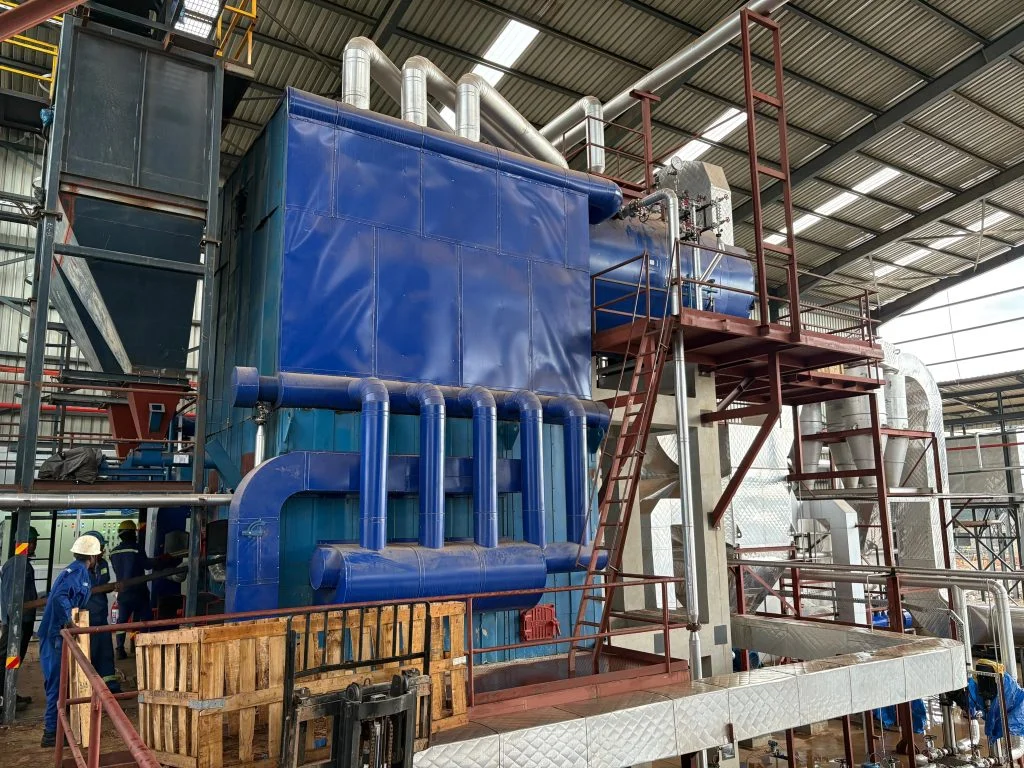
Distribution, insulation, pressure control, condensate return and end-use equipment determine how efficiently steam reaches the process.
Generating steam efficiently is only part of the problem.
The steam must then reach the production process at the required:
Pressure + Temperature + Quality + Flow + Reliability
A poorly engineered distribution network can undermine the performance of an efficient boiler plant.
Spenomatic's industrial steam engineering scope can include:
The engineering objective is to treat the system as a chain:
Fuel → Boiler → Steam Header → Distribution → Process → Condensate → Feedwater → Boiler
Every avoidable loss along that chain ultimately affects operating cost.
A plant experiencing steam shortages does not automatically need a larger boiler.
The underlying problem may instead involve:
Spenomatic can assess the whole thermal-energy chain before recommending additional generation capacity.
This creates a simple hierarchy:
That sequence can prevent capital from being committed to capacity that better engineering could have recovered from the existing system.
Once the preferred solution is selected, Spenomatic develops the engineering package required to transform the concept into a buildable industrial asset.
Depending on project scope, engineering may cover:
Engineering decisions are coordinated across disciplines because changes in one system frequently affect several others.
Industrial thermal procurement should not be reduced to finding the lowest equipment price.
Equipment must match:
Spenomatic integrates engineering and procurement so equipment is selected against the project design rather than the other way around.
Regional procurement scale and supplier relationships can also improve commercial competitiveness on large projects.
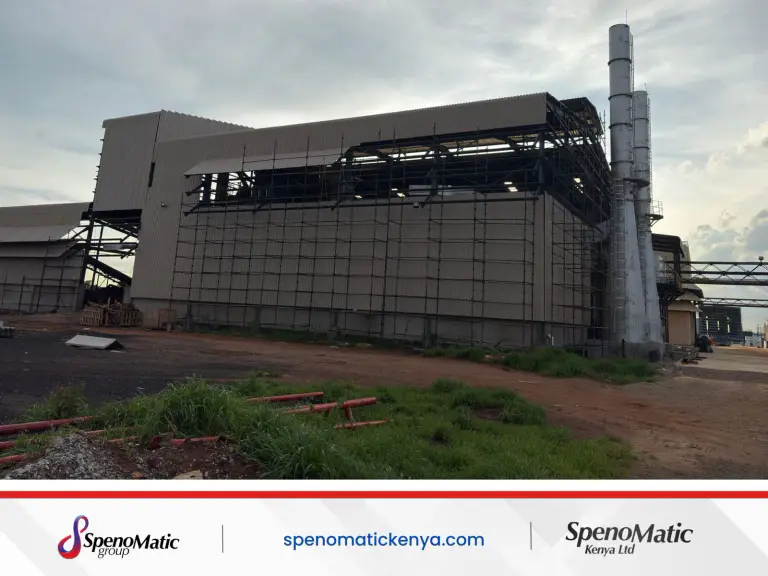
Equipment placement, structural works, ducting, piping, insulation, controls and safety systems are coordinated during construction.
Spenomatic coordinates the transition from engineered design to operating infrastructure.
Project execution may involve:
The advantage of EPC delivery is accountability across interfaces.
Instead of leaving the client to coordinate separate boiler, electrical, piping, controls and commissioning contractors, the project can be managed as one integrated system.
A thermal plant is not complete because the equipment has been installed.
It is complete when the system has been demonstrated to operate as engineered.
Commissioning may include:
Commissioning converts construction into operational infrastructure.
Industrial thermal assets operate for years or decades.
Their lifecycle economics therefore depend heavily on operation and maintenance.
Spenomatic's Industrial Thermal O&M capability can support:
The objective is not simply to keep equipment running.
It is to protect availability, efficiency, safety and lifecycle value.
Industrial production depends on more than steam.
Pumps, motors, fans, conveyors, fuel-handling systems, controls, compressors, treatment systems and process equipment all depend on electrical infrastructure.
World Bank research covering firms in developing economies found that firms exposed to power outages showed approximately 9% lower unconditional average revenue-based total factor productivity than firms not exposed to outages.
This illustrates why industrial energy strategy should address both thermal reliability and electrical reliability.
Spenomatic's broader capabilities allow industrial thermal infrastructure to be considered alongside:
This is especially important for facilities where an interruption to either steam or electricity can interrupt production.
The industrial-energy value chain is fragmented.
A typical project can involve one consultant for feasibility, another for design, several equipment vendors, a mechanical contractor, electrical contractor, controls integrator, commissioning engineer, O&M provider and financier.
Every additional interface creates another coordination point.
Spenomatic's strategic advantage is vertical integration across a larger part of this value chain.
Project Development ↓ Load & Location Analysis ↓ Engineering ↓ Technology Selection ↓ Procurement ↓ Supply ↓ Construction ↓ Electrical & Thermal Integration ↓ Commissioning ↓ Operations & Maintenance ↓ Optimisation
Supporting capabilities extend into:
Renewable Energy | Electrical Infrastructure | Transmission | Distribution | Hybrid Power | Power-System Engineering | Water & Environmental Engineering | Technology | Manufacturing/Private Label | Financing Relationships
This reduces the number of disconnected technical interfaces the client must manage.
Industrial thermal systems do not operate independently from water, electricity and environmental infrastructure.
A boiler requires treated feedwater.
A biomass system requires fuel logistics and ash management.
Cogeneration requires electrical integration.
Process expansion can increase water demand.
Steam generation creates blowdown and water-treatment requirements.
Fuel changes can affect emissions infrastructure.
Spenomatic's wider engineering capability therefore creates the opportunity to design:
Energy + Water + Electrical + Environmental Infrastructure
as interconnected plant systems.
That systems-level approach becomes increasingly valuable as industrial facilities become larger, more automated and more energy intensive.
Large industrial thermal infrastructure can require significant capital investment.
A technically strong project can still be delayed if its capital structure does not fit the client's investment priorities.
Spenomatic works through financing relationships that can be explored for qualifying projects, including structures designed to reduce initial capital pressure where commercially available and appropriate.
Potential financing considerations can include:
Financing availability and terms are project-specific and subject to technical assessment, commercial evaluation and financier approval.
This capability is particularly relevant for large energy-infrastructure projects where strong technical economics exist but upfront capital remains a constraint.
Industrial thermal assets should be evaluated over their useful operating life.
A more meaningful commercial framework is:
Lifecycle Cost = Capital Cost + Fuel + Electricity + Water + Chemicals + Maintenance + Labour + Downtime + Replacement + Financing – Recoverable Energy Value
For an industrial plant operating continuously, a small difference in thermal efficiency can compound over thousands of operating hours.
Similarly, poor reliability can have costs far beyond the energy plant itself if lost steam stops production.
Spenomatic therefore positions industrial thermal EPC around lifecycle value, balancing:
Pricing is consequently value-based and project-specific, while procurement scale and financing relationships can create competitive economics on major projects.
For executive decision-makers, a useful way to evaluate a thermal infrastructure project is:
This is broader than a simple equipment payback calculation.
For a production facility, the value of reliable steam may include:
This is why thermal infrastructure should be evaluated as productive industrial infrastructure, not simply a utility expense.
Our Industrial Thermal Engineering solutions are designed for organisations where heat, steam and reliable power directly influence production.
Facilities with substantial continuous or batch process-heat requirements.
Steam and hot-water infrastructure for processing, heating, cleaning and production.
Industrial thermal solutions for value addition and processing of agricultural products.
Integrated thermal, electrical and energy-efficiency infrastructure for processing facilities.
Opportunities for biomass steam generation and cogeneration where feedstock and plant economics support deployment.
High thermal-load industrial environments requiring reliable steam infrastructure.
Steam and thermal systems for process applications.
Controlled process-heat and steam infrastructure engineered around production requirements.
Development and EPC support for thermal, biomass, cogeneration and integrated energy infrastructure.
Engineering and project-delivery capability for large energy infrastructure requiring multidisciplinary integration.
Centralised or distributed energy infrastructure for multiple industrial loads.
From feasibility to O&M, one partner can manage more of the project lifecycle.
Solutions are designed around process requirements, not simply equipment catalogues.
Spenomatic is positioned for complex industrial and infrastructure projects requiring multidisciplinary coordination.
Boilers, biomass, steam systems, cogeneration, CHP, waste-heat recovery and integrated energy infrastructure allow technology selection to follow the application.
Engineering, procurement, supply, construction, commissioning and O&M reduce fragmented project interfaces.
Thermal systems can be coordinated with electrical infrastructure, renewable energy, hybrid power and power-system engineering.
Industrial thermal infrastructure can be engineered alongside water-treatment and supporting environmental requirements.
Spenomatic combines regional reach with project-development and execution capability across multiple African markets.
Qualifying projects can be evaluated alongside financing structures instead of separating technical development from capital strategy.
The project does not end at commissioning. O&M and optimisation help protect long-term asset performance.
Spenomatic Group provides a regional platform for industrial thermal and energy infrastructure across:
Kenya | Uganda | Tanzania | Rwanda | South Sudan
Zambia | South Africa | Mauritius
Ghana | Côte d’Ivoire | Nigeria
Cameroon | Democratic Republic of Congo
Tunisia
This network supports organisations seeking an Industrial Thermal EPC Company in Africa capable of working across multiple markets and coordinating regional industrial-energy programmes.
For multinational industrial groups, this creates the potential to standardise engineering principles, technology strategies and project-delivery approaches across several facilities while adapting each installation to local loads, fuels, regulations and operating conditions.
Spenomatic provides Industrial Thermal EPC engineering and project-development capability from Kenya for industrial boiler, biomass, cogeneration, steam, power and integrated energy projects.
Industrial clients can engage Spenomomatic for boiler engineering, procurement, installation, commissioning and O&M requirements in Uganda.
For facilities with suitable biomass resources, Spenomatic can assess and develop biomass-based industrial thermal infrastructure in Tanzania.
Industrial thermal projects can integrate boilers, steam infrastructure, biomass, electrical systems and energy optimisation.
Industrial facilities with simultaneous heat and electrical loads can evaluate cogeneration and CHP opportunities through an integrated engineering approach.
Spenomatic's regional model supports development of large industrial thermal, captive-power and integrated energy infrastructure for energy-intensive operations.
Across its regional network, Spenomatic can support steam-generation, steam-distribution, condensate-recovery and industrial steam-system projects.
Site assessment Load analysis Steam profiling Fuel analysis Electrical assessment Existing-system review
Feasibility Technology comparison Concept design Commercial modelling Financing assessment
Process design Mechanical design Electrical engineering Controls Civil requirements Plant integration
Equipment specification Supplier coordination Procurement Manufacturing oversight Logistics
Civil works Mechanical installation Piping Electrical works Controls Balance of plant
Testing Start-up Performance verification Training Handover
Operations support Preventive maintenance Monitoring Troubleshooting
Performance analysis Energy optimisation Heat recovery Steam optimisation Capacity planning
Providing the following information can accelerate initial engineering assessment:
Where this information is incomplete, the engineering assessment can establish the missing baseline.
An Industrial Thermal EPC company designs, procures, constructs, installs and commissions infrastructure used to generate, distribute, recover and optimise industrial heat and steam. A full-service EPC partner may also provide project development, O&M, electrical integration, energy optimisation and financing support.
Spenomatic Group's industrial thermal offering covers load and location analysis, project development, engineering, design, procurement, supply, construction, installation, project management, commissioning, Operations & Maintenance, energy optimisation and financing relationships for qualifying projects.
Yes. Spenomatic's Industrial Boiler EPC model can integrate load analysis, engineering, procurement, supply, installation, steam infrastructure, electrical and control systems, testing, commissioning and O&M into a turnkey project scope.
Yes. Biomass projects can include resource and fuel assessment, boiler engineering, fuel storage and handling, combustion, steam generation, emissions-related infrastructure, controls, commissioning and O&M.
Spenomatic's industrial thermal capability includes cogeneration and Combined Heat and Power project development and EPC. Feasibility depends on the relationship between a facility's electrical and thermal loads, fuel options, operating hours and project economics.
A boiler supplier primarily supplies equipment. A boiler EPC company can take responsibility for engineering, procurement, construction, installation, balance-of-plant integration, testing and commissioning of the complete boiler plant.
Yes. Industrial thermal optimisation can evaluate steam generation, distribution, condensate recovery, pressure management, insulation, steam traps, blowdown, feedwater, combustion and other potential system losses.
Yes. O&M can include preventive maintenance, performance monitoring, optimisation, troubleshooting, inspection, steam-system maintenance, water-treatment monitoring and reliability improvement.
Yes. Spenomatic's wider capabilities include electrical infrastructure, power-system engineering, renewable energy, hybrid power, transmission and distribution, allowing thermal projects to be considered within a wider industrial energy system.
Potentially. Spenomatic maintains financing relationships that can be explored for qualifying projects. Financing structure, availability and terms depend on project economics, client requirements, risk assessment and financier approval.
Spenomatic Group's Regional EPC Network covers Kenya, Uganda, Tanzania, Mauritius, Zambia, South Africa, Rwanda, South Sudan, Ghana, Côte d’Ivoire, Cameroon, Nigeria, Democratic Republic of Congo and Tunisia.
The decision depends on steam demand, electrical demand, operating hours, fuel availability, fuel price, site conditions, environmental requirements, capital cost, operating cost, reliability requirements and lifecycle economics. Technology selection should follow engineering analysis rather than precede it.
In many facilities, potentially yes. Feasibility depends on the temperature, volume, consistency and accessibility of the waste-heat stream and whether the plant has a useful destination for the recovered energy.
Boiler sizing should be based on measured or carefully established steam demand, peak load, base load, pressure requirements, load variation, redundancy, process requirements and expected future growth. Simply replacing an existing boiler with equipment of identical capacity may reproduce historic oversizing or undersizing.
Returned condensate can retain useful thermal energy and treated water value. The actual economic benefit depends on the plant's steam system, condensate quality, recovery rate, water costs, treatment requirements and operating conditions.
Typical users include food and beverage processors, agro-processors, tea factories, sugar producers, textile manufacturers, pulp and paper plants, chemical and pharmaceutical manufacturers, other heavy process industries, IPPs and utilities.
The next generation of African industrial-energy projects will not be defined by a single technology.
Manufacturers are simultaneously confronting the need for:
reliable production + competitive energy cost + efficient heat + resilient electricity + responsible fuel use + scalable infrastructure + access to capital.
That combination changes what industrial clients should expect from an engineering partner.
The traditional model of buying equipment independently — one boiler here, one solar system there, another contractor for electricity, another for water and another for controls — can create technically fragmented infrastructure.
The alternative is integrated industrial energy engineering.
That means understanding the plant's total energy demand and determining how thermal generation, steam distribution, electricity, renewables, biomass, cogeneration, waste heat, water treatment, controls and financing can work together.
For Spenomatic Group, this is the larger opportunity behind Industrial Thermal EPC.
Not simply supplying industrial equipment.
Engineering the infrastructure that keeps African industry producing.
Whether you are developing a new manufacturing facility, replacing an ageing boiler plant, converting to biomass, investigating cogeneration, recovering waste heat, expanding production or improving steam efficiency, the first step should be an engineering assessment.
Spenomatic Group can evaluate the requirement from:
Load → Technology → Engineering → Procurement → Construction → Commissioning → Operations → Optimisation → Financing
Tell us:
Where is the plant? What does it manufacture? How much steam or process heat does it require? What fuel does it currently use? What problem are you trying to solve?
Tertiary CTA: Explore EPC Financing Options
See it in action
Explore our latest published case studies.
Guides and insights
Practical, source-referenced guidance for engineers and procurement teams.
Start with your energy requirement
Share your site, load and project goals with Spenomatic's engineering team. We will help define the right next assessment.