
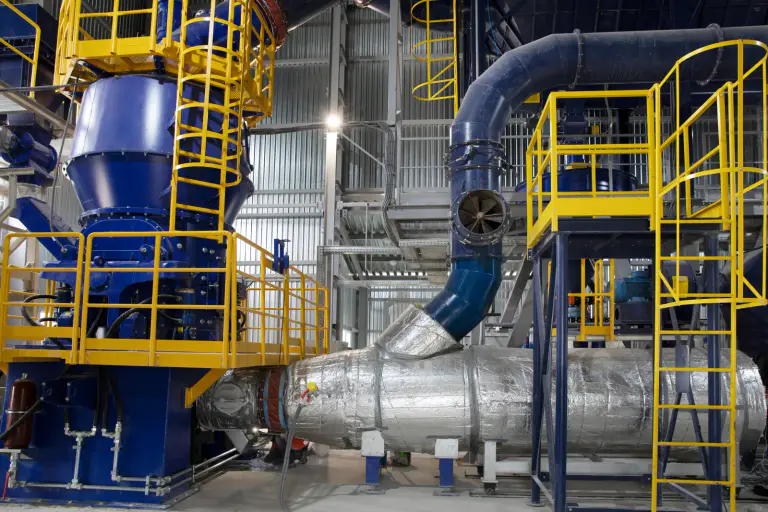
Condensate recovery means collecting the hot water that steam turns into after it heats a process and pumping it back to the boiler feed tank instead of draining it. Returned condensate is hot and already treated. It cuts fuel, make-up water, water-treatment chemicals and blowdown losses. The U.S. Department of Energy notes that the energy left in condensate can be more than 10% of the steam's total energy content.
Key takeaways
- Every kilogram of condensate returned replaces a kilogram of cold, untreated make-up water that the boiler would otherwise have to heat and treat.
- Savings come from four places: fuel, make-up water, treatment chemicals and reduced blowdown, plus less hot effluent to dispose of.
- A working system needs correctly selected steam traps, properly sized return lines, a receiver and pump unit, flash steam management and contamination protection.
- Payback depends on how much condensate is currently lost, its temperature, operating hours and your fuel and water costs. Measure these before buying equipment.
What is condensate, and why recover it?
When steam gives up its latent heat in a heat exchanger, jacketed vessel, dryer or heating coil, it condenses back into water, called condensate. That water is still hot, and it has already been treated for the boiler. Sending it to drain throws away heat, water and chemicals the plant has already paid for.
The U.S. Department of Energy's Steam Tip Sheet #8, Return Condensate to the Boiler, sets out the benefits. As more condensate is returned, less make-up water is required, saving fuel, water, and chemical and treatment costs. Less condensate discharged to the sewer reduces disposal costs. Returning high-purity condensate also reduces energy lost through boiler blowdown. The tip sheet notes that returned condensate is typically 130–225 °F (about 54–107 °C), compared with make-up water at 50–60 °F (about 10–16 °C).
How much energy is in the condensate?
The share of steam energy remaining in condensate can be estimated from steam tables:
Heat remaining (%) = (hcondensate − hmake-up) ÷ (hsteam − hmake-up) × 100
The DOE example — steam at 100 psig, condensate returned at 180 °F and make-up water at 55 °F — gives 11.0%. In metric terms, for steam at about 7 bar(g) (enthalpy roughly 2,769 kJ/kg), condensate returned at 80 °C (about 335 kJ/kg) and make-up water at 20 °C (about 84 kJ/kg):
(335 − 84) ÷ (2,769 − 84) × 100 ≈ 9.3%
The hotter the condensate when it gets back to the feed tank, the higher the saving. That is why insulating return lines and recovering flash steam both matter.
| Saving | Why it happens | What to measure |
|---|---|---|
| Fuel | Feedwater starts hotter, so less fuel is needed per tonne of steam | Condensate flow and temperature, boiler efficiency, fuel price |
| Make-up water | Returned condensate replaces raw water | Make-up water meter, water tariff or abstraction cost |
| Treatment chemicals | Condensate is already treated and low in dissolved solids | Chemical consumption per m³ of make-up water |
| Blowdown | Purer feedwater means less blowdown to control dissolved solids | Blowdown rate and feedwater conductivity |
| Effluent | Less hot water sent to drain or treatment | Effluent volume and disposal or treatment cost |
Hot condensate sent to drain can also cause compliance problems. Kenya's Water Quality Regulations limit the temperature of effluent discharged to the environment to within 3 °C of ambient. Our guide to NEMA effluent discharge standards explains the full limits.
Flash steam: the part most plants waste
Condensate leaving a steam trap at high pressure partly re-evaporates when its pressure drops. The DOE tip sheet calls this the flash steam loss. The fraction that flashes can be estimated as:
Flash fraction = (hf, high pressure − hf, low pressure) ÷ hfg, low pressure
For condensate at about 7 bar(g) flashing to atmospheric pressure: (721 − 419) ÷ 2,257 ≈ 13% of the condensate mass becomes steam. Flash steam vented from a receiver or drain is lost energy, and the plume is often the first visible sign of a leaking system. A flash vessel can recover this steam and feed it into a low-pressure header, a feedwater heater or a process that needs low-pressure steam.
What does a condensate recovery system include?
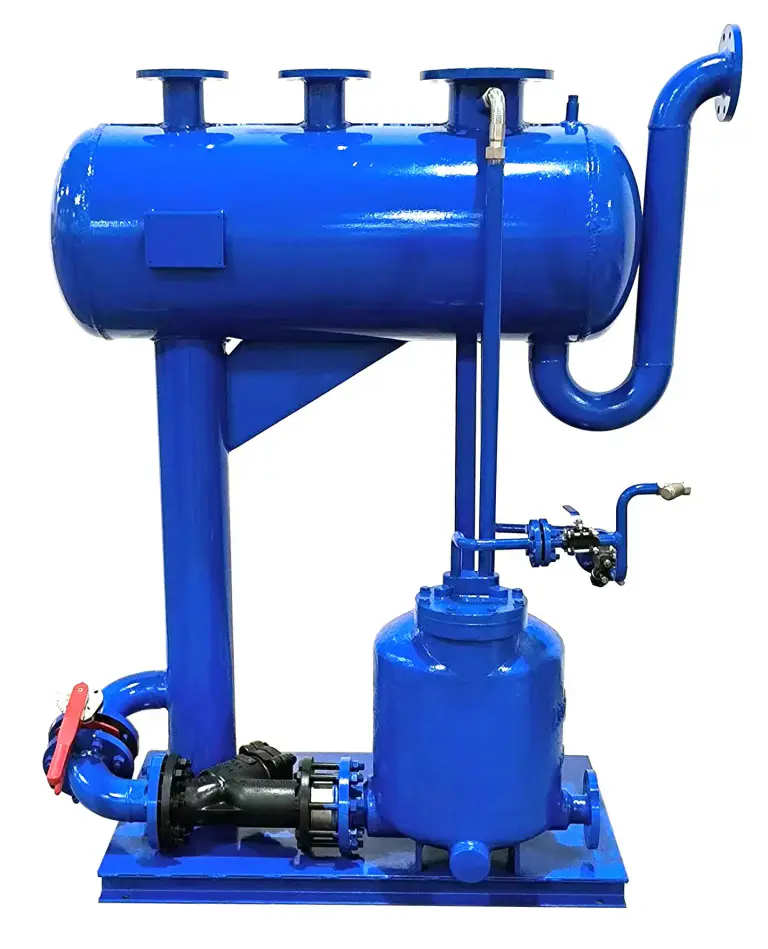
- Steam traps remove condensate from steam equipment without letting live steam escape. Thermodynamic, inverted bucket, float-and-thermostatic and thermostatic traps suit different loads and pressures. The wrong type, or a failed trap, either floods equipment or blows steam into the return.
- Return pipework must be sized for a mix of condensate and flash steam, laid to fall towards collection points, and insulated. Undersized or waterlogged returns cause back-pressure and water hammer.
- Flash vessels separate flash steam from condensate so the steam can be used at low pressure.
- Receivers and pumps collect condensate and pump it to the feed tank. Electric pumps are common; pressure-powered pumps driven by steam suit hot condensate and hazardous areas.
- Contamination protection is essential where a heat-exchanger leak could let product, oil or process chemicals into the condensate. Conductivity or turbidity monitoring with an automatic dump valve keeps contaminated condensate out of the boiler.
- Insulation on return lines and receivers keeps the condensate hot and protects personnel from burns.
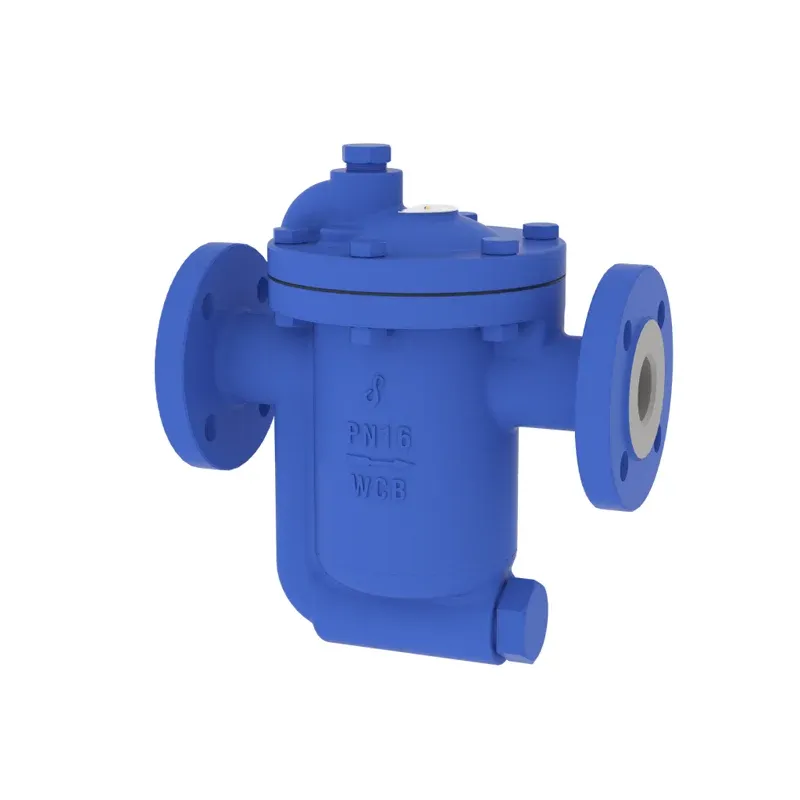
Traps, valves and accessories fail gradually and silently. A regular programme to audit steam system accessories is usually the first step before designing a recovery system.
How to estimate the payback
- Find the losses. Survey where condensate goes today. Look for open drains, vented receivers, failed traps and equipment that drains to waste. Measure or estimate flow and temperature at each point.
- Check the feed tank. Record make-up water flow and feed tank temperature. A low tank temperature with high make-up usually means condensate is being lost.
- Calculate the fuel saving. Multiply returned condensate (kg/h) by operating hours and by the temperature rise it avoids (about 4.19 kJ per kg per °C). Divide by boiler efficiency and multiply by your fuel cost per unit of energy. The DOE example also deducts the flash steam fraction that would be lost.
- Add water, chemical and effluent savings using your own tariffs and treatment costs.
- Subtract running costs — pump electricity, maintenance and monitoring — and compare with the installed cost.
Do not borrow payback figures from other sites. Condensate volumes, temperatures, operating hours and fuel prices differ too much. Your fuel type changes the value of every recovered kilowatt-hour — see biomass vs diesel vs HFO boiler lifecycle cost.
Common condensate recovery problems
- Water hammer from poorly drained lines, lifts after traps or undersized returns.
- Back-pressure that stops traps from discharging and waterlogs heat exchangers.
- Pump cavitation when very hot condensate reaches electric pumps without enough suction head.
- Corrosion in return lines from dissolved oxygen and carbon dioxide. This is controlled through feedwater and condensate treatment — see boiler feed water treatment.
- Contaminated condensate reaching the boiler because monitoring was left out to save cost.
Frequently asked questions
How much condensate should a plant return?
As much as can be returned safely. Some condensate is legitimately lost, for example where steam is injected directly into product or condensate may be contaminated. Measure your make-up water as a share of steam production to see how far you are from that practical limit.
Is condensate recovery worth it for a small boiler?
Often, yes, because the equipment can be small and simple. The deciding factors are the volume of condensate currently lost, hours of operation, and fuel and water prices.
Can condensate be returned from every process?
Not always. Where a leak could contaminate condensate with product, oil or chemicals, either install monitoring and automatic dumping, or recover only the heat through a heat exchanger and drain the water.
What is the difference between condensate recovery and flash steam recovery?
Condensate recovery returns the water and its sensible heat to the boiler. Flash steam recovery captures the low-pressure steam produced when hot condensate drops in pressure, and uses it instead of venting it.
Recover the heat you already paid for
Spenomatic designs and supplies steam traps, condensate return systems, flash recovery and steam accessories. Explore our steam systems, traps and condensate recovery solutions and our boiler and thermal systems, or request a steam system assessment to find where condensate and flash steam are being lost at your site.