
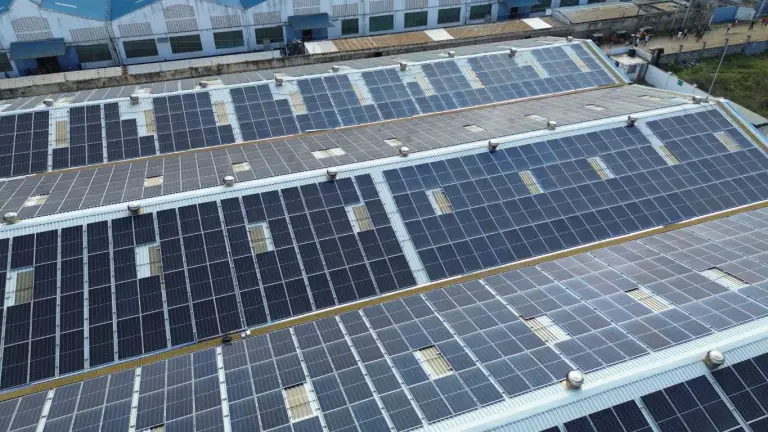
Net metering in Kenya lets a commercial or industrial customer export surplus renewable electricity to the grid and receive a bill credit of 50% of each exported unit. Under the Energy (Net-Metering) Regulations, 2024, the system must be under 1 MW and no larger than the site's maximum demand over the previous twelve months. It needs a signed agreement with the distribution licensee. Because exports earn only half-value credits, commercial solar should be sized mainly for on-site use.
Key takeaways
- The rules are the Energy (Net-Metering) Regulations, 2024 — Legal Notice 104 of 2024, commenced 18 July 2024.
- Commercial and industrial systems must not exceed 1 MW and are capped at the maximum demand (kW) recorded in the twelve months before applying.
- Each exported kWh earns a credit of half a kWh. Surplus credits carry forward, but unused credits are forfeited at the end of the licensee's financial year.
- Systems above 10 kW need a feasibility study by a registered engineer. The licensee must decide within sixty days, and the agreement runs for a renewable five years.
- Operating a net-metered system without an agreement is an offence. Reported changes in 2026 also tighten charges for unauthorised exports.
What is net metering in Kenya?
The Regulations define net metering as a mechanism that allows consumers to supply electricity to the grid in times of over-production and to use the credited energy at other times. A bi-directional "net meter" records both imports from the grid and exports to it. The stated purpose of the Regulations is to promote renewable energy by providing consumers with energy storage on the grid (regulation 4).
Net metering applies to consumers supplied by a licensee who generate electricity from a renewable source on their side of the meter, mainly for their own consumption. In practice, most commercial applications are rooftop or ground-mounted photovoltaic systems.
Who is eligible, and how big can the system be?
| Customer | Capacity limit | Regulation |
|---|---|---|
| Domestic, single-phase | Up to 4 kW | 6(1)(a) |
| Domestic, three-phase | Up to 10 kW | 6(1)(a) |
| Commercial and industrial | Not more than 1 MW, and capped at the maximum load demand (kW) achieved in the twelve months before the application. Where maximum demand is not on the bill, the cap is the contracted load demand. | 6(1)(b) |
| C&I with several meters at one facility | Maximum demand is the sum recorded by all meters, provided total installed capacity does not exceed 1 MW | 6(2) |
| National programme | Aggregate of 100 MW in the first five years, then reviewed | 6(3)–(4) |
Two practical consequences follow. First, the demand cap means a site cannot oversize solar simply to export more. Second, each licensee sets how much net-metered capacity its network can accept in an area. It does this from equipment ratings and stability studies, and publishes the limits on its website (regulation 6(6)–(7)). A feeder that is already full may limit what you can connect.
How are exports credited?
This is the part that most changes the business case. Under regulation 10:
- The consumer receives a credit for each unit exported in a billing period, and the credit is fifty percent of the exported unit (10(2)–(3)).
- Billing is monthly. The licensee credits exported kWh and charges for the net energy supplied at the applicable retail tariff (10(4)–(5)).
- If credits exceed the energy supplied, the surplus carries forward to the next billing period, but unused credits are forfeited at the end of the licensee's financial year (10(6)).
- There is no compensation for capacity, reactive power, voltage or frequency support, or for deemed generation during downtime (10(7)).
- The licensee may not estimate consumption or generation for net-metered customers (10(9)).
- Terminating the agreement forfeits remaining credits, unless they pass to a new occupier through a transferred agreement (10(11)).
Illustrative example: a factory that exports 2,000 kWh on a Sunday, when production stops, receives 1,000 kWh of credit to offset later imports. If the same 2,000 kWh had been used on site on a weekday, it would have displaced 2,000 kWh of purchases. That is why a well-designed commercial system matches its size to daytime consumption. It treats exports as a way to recover weekend and holiday surpluses, not as a source of income.
If regular surpluses are large, compare the value of a half-rate credit with the cost of storing the energy on site. Our guide to commercial battery energy storage in Kenya explains how to size storage for solar shifting and demand-charge reduction.
How to apply for net metering, step by step
- Collect your demand data. Twelve months of bills showing maximum demand, or your contracted load demand, set your capacity ceiling.
- Commission a feasibility study. For systems above 10 kW, the application must include a feasibility study by an engineer registered under the Engineers Act (regulation 7(4)). The Second Schedule requires it to cover the supply system, a study from the consumer side to the connection point, and a power-flow analysis of the effect on network voltage, current, fault level and power factor. It must also cover protection requirements and environmental impact. The licensee provides network data on request, under a non-disclosure agreement.
- Apply to the licensee on Form 001. For a company, the application is accompanied by certified copies of the study, incorporation documents, a recent CR12 or CR13, directors' details, the lease or title, and PIN, VAT and tax compliance certificates (First Schedule).
- Wait for the decision. The licensee considers the study and its own power-flow studies, and must communicate its decision within sixty days of application (regulation 8(2)). A rejection must state reasons.
- Sign the agreement and pay the approved fees. The net-metering system agreement follows the Third Schedule. The consumer pays a non-refundable deposit and the fees approved by EPRA (regulation 8(4)).
- Install and commission within six months. Otherwise the application is deemed withdrawn (regulation 8(5)). Give the licensee fourteen days' written notice so it can witness testing and commissioning (regulation 9(7)–(8)).
- File the agreement with EPRA within thirty days of signing (regulation 8(6)).
Technical requirements for the installation
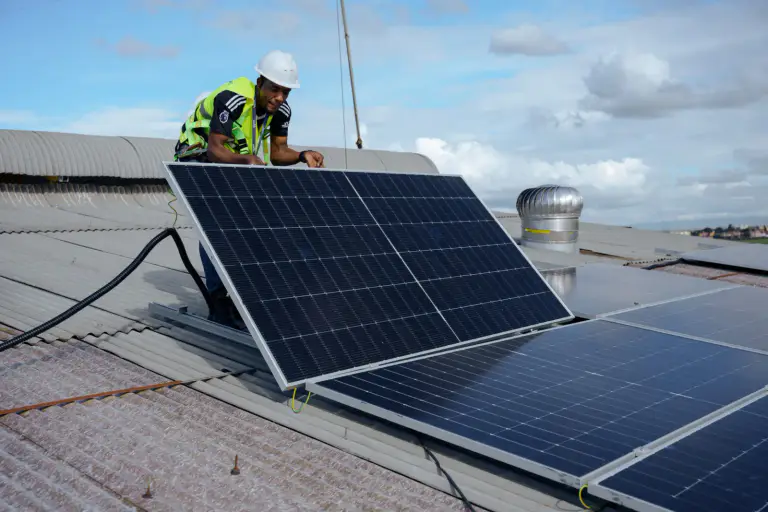
- Authorised installer. Installation, interconnection, maintenance and operation must be done by an authorised person. The system must meet the Kenya Electricity Distribution Grid Code, relevant Kenya Standards and EPRA guidelines (regulation 9(1)). Solar PV design and installation work also requires EPRA licensing under the Energy (Solar Photovoltaic Systems) Regulations, 2012.
- Smart net meter. The meter must be smart and bi-directional, with two-way communication, recording of peak supply in different periods, and time-of-use capability (regulation 9(3)). It is fixed in a separate meter box and calibrated by an institution accredited by the Kenya National Accreditation Service (Third Schedule).
- Consumer pays for the connection. The consumer bears the costs of the meter and the interconnection (regulation 9(6)).
- Anti-islanding and isolation. A clearly labelled, visibly open, lockable manual disconnect switch accessible to the licensee is required. It can be waived only where the system automatically disconnects on loss of grid, is warranted to do so by the manufacturer, and is properly installed and tested (regulation 9(9)–(10)).
- No changes without approval. Replacing or modifying the system or connection point needs the licensee's prior approval (regulation 9(11)). Output that violates the grid code can lead to disconnection after 24 hours' notice (regulation 9(12)).
Inverters must be configured for the licensee's protection settings. Our glossary entry on the inverter explains its role in grid-tied systems.
What changed in 2026: unauthorised exports
In September 2026, trade press reported a notice from EPRA taking effect retroactively from 1 July 2025. It defines unauthorised injection of electricity into the network, without approval or a valid net-metering agreement, as "dumping", billed at the standard base tariff. The notice also restates the 50% export credit within the tariff framework (pv magazine, 22 September 2026). Operating a net-metering system without an agreement was already an offence under regulation 14. The practical message: any grid-connected system that can export needs either a net-metering agreement or export limitation. Confirm the current position with EPRA and your licensee.
Is net metering worth it for a commercial site?
Net metering is valuable as a safety valve for surpluses. It rarely justifies a project on its own. Assess it alongside:
- Self-consumption ratio. The share of solar used directly on site, which is valued at the full tariff.
- Demand charges. Solar lowers daytime energy purchases, but may not reduce maximum demand. See peak demand charges and solar.
- Payback and lifecycle cost. Our guide to commercial solar payback covers the full financial picture.
- Network capacity. Whether your feeder can accept the export at all.
Before comparing quotes, work through our checklist for evaluating a commercial solar proposal. It covers load data, export assumptions and warranties.
Frequently asked questions
What is the maximum net metering capacity for a factory in Kenya?
1 MW, and no more than the maximum demand in kW recorded in the twelve months before the application, or the contracted load demand if maximum demand is not billed (regulation 6(1)(b)).
Does Kenya Power pay cash for exported solar?
No. Exports earn bill credits of 50% of each exported unit, carried forward month to month. Unused credits are forfeited at the end of the licensee's financial year (regulation 10).
How long does approval take?
The licensee must communicate its decision within sixty days of the application (regulation 8(2)). After signing, the meter must be installed and commissioned within six months (regulation 8(5)).
How long is a net metering agreement valid?
Five years, renewable (regulation 7(6)). If the premises change hands, the agreement can be assigned to the new occupier for the rest of the term.
Who owns carbon credits from a net-metered system?
The consumer, unless another written law specifies otherwise (regulation 12).
Plan a compliant commercial solar system
This article summarises the Regulations for planning purposes and is not legal advice. Spenomatic designs and installs commercial and industrial solar systems sized from each site's load profile, including the engineering needed for grid connection. Request a solar assessment to size a system for self-consumption, with net metering or export control as appropriate.