
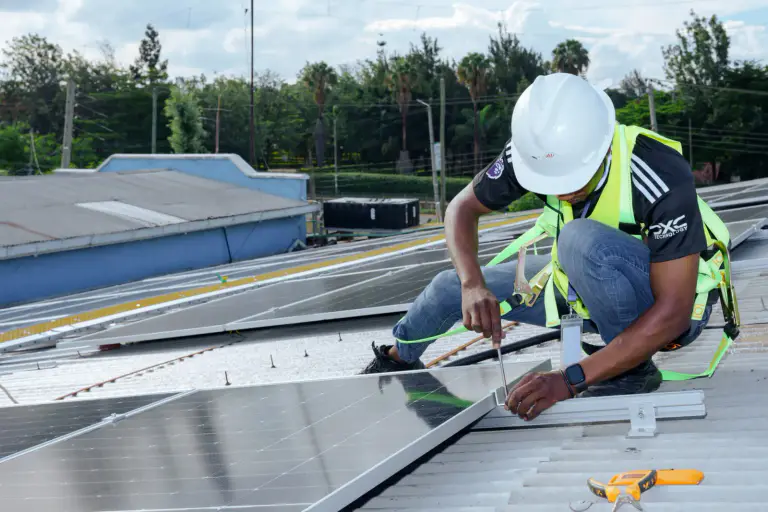
To evaluate a commercial solar proposal, check five things before comparing prices. Is the system sized from your interval load data? Does the production model disclose its assumptions and losses? Is self-consumed energy valued separately from exports? Are equipment, warranties and maintenance clearly assigned? And is the installer licensed, with comparable, verifiable references? A cheap proposal that fails these tests is usually the expensive one.
Key takeaways
- Start with operating data, not a supplier quotation. System size should follow a defensible load analysis.
- Annual production is not annual benefit. Energy used on site, exported and curtailed must be valued separately.
- Test the financial case against downside scenarios, and include the full lifecycle and financing costs.
- Equipment should be judged as a complete system, with warranty responsibilities and local support made explicit.
- Use the decision-gate checklist at the end before approving any project.
1. Is the project objective written down?
Solar can serve several objectives, and they are not interchangeable. A facility may want to:
- reduce the cost of electricity consumed during daylight hours;
- make energy costs more predictable;
- reduce exposure to grid interruptions, which needs storage or generator integration, not panels alone;
- support an emissions-reduction programme or customer sustainability requirements;
- add capacity for an expanding production line.
Rank these objectives before discussing size. A design meant to cut daytime grid purchases looks very different from one meant to keep critical equipment running during outages. Grid-tied solar without backup capability does not provide power when the grid fails. That objective needs suitable inverters, controls and battery energy storage, or coordinated generator operation. A written objective also gives the project a measurable test of success.
2. Was the system sized from your load profile?
Monthly bills are useful, but they rarely give enough detail for industrial design. Two factories with the same monthly consumption can have very different daily patterns. A credible proposal should be based on interval data showing:
- normal daytime baseload, and weekday versus weekend differences;
- short-duration demand peaks and the equipment causing them;
- seasonal production changes, shutdowns and maintenance periods;
- large motors, compressors or heaters that cycle on and off;
- loads you plan to add.
The strongest case is usually substantial, consistent daytime consumption, because more solar is consumed directly on site. If generation regularly exceeds demand, the proposal depends on curtailment or on an export arrangement whose value must be verified. In Kenya, exports under net metering earn a credit of half the exported unit. System size is also capped by the site's maximum demand — see net metering in Kenya for commercial solar.
For the overall process of assessment, design and commissioning, see how commercial solar installations from 100 kW to 10 MW are delivered.
3. Has the site been properly assessed?
Available area is only one part of site suitability. Look for evidence that the proposal considered:
- Structure: a structural engineer's confirmation that the roof and supports can carry the system, including wind loading, existing damage and any planned roof replacement.
- Access and safety: safe routes for inspection, cleaning, firefighting and roof maintenance; no obstruction of drainage, vents or plant.
- Environment: shading, dust, humidity, and corrosion protection in coastal or chemically aggressive areas.
- Electrical route: cable routes, the connection point, transformer capacity and protection.
- Ground-mounted options: land use, soil, drainage, security and vegetation management.
4. Does the production model disclose its assumptions?
A credible energy model shows expected production by month and, ideally, by hour. It states every assumption behind it. Ask for these in writing:
| Assumption | What to check |
|---|---|
| Solar resource data | Source and location of the irradiance data used |
| Temperature and soiling losses | Values used, and the cleaning regime they assume |
| Shading | Whether a shading analysis was done for nearby structures and equipment |
| Electrical losses | DC and AC wiring, transformer and inverter efficiency |
| Availability | Expected downtime for faults and maintenance |
| Degradation | Annual module degradation applied over the project life |
| Self-consumption | Share of generation consumed on site, exported and curtailed — shown separately |
Finance teams can then value each category correctly instead of treating every generated kWh as if it offset purchases at the full tariff.
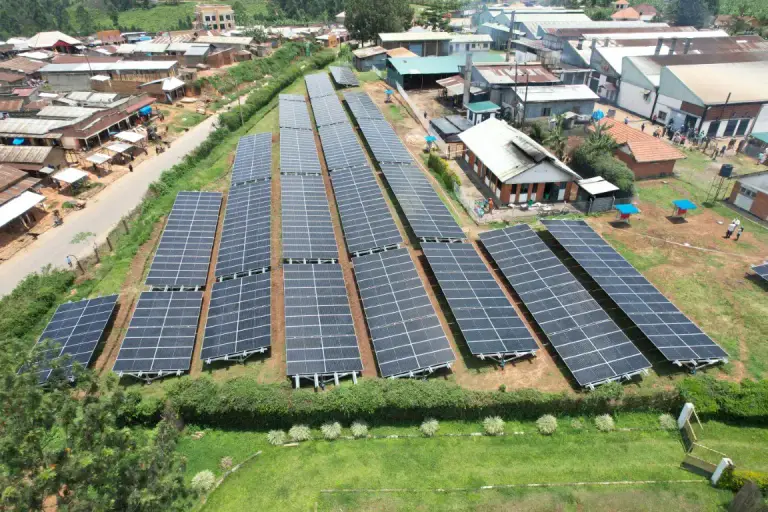
Scale varies widely. Our 17.2 MWp solar installation for a steel manufacturer in Kisumu and Mombasa shows what energy-intensive operations can support. It is not a benchmark for another factory: each project must be sized against its own demand, connection limits and site.
5. Does the financial case survive realistic downside scenarios?
Simple payback is a useful first measure, but not the only one. A complete evaluation may include net present value, internal rate of return, levelised cost of energy and annual cash flow under the proposed financing structure. Our guide to commercial solar payback explains these measures.
The cost side should include more than equipment and installation:
- design, permitting and approvals;
- structural or civil works and grid-interconnection work;
- finance costs, insurance, monitoring and communications;
- scheduled maintenance and cleaning, and component replacement during the project life;
- taxes, duties or incentives that genuinely apply.
Then test downside cases. What if production is below forecast, tariffs change differently from the assumed rate, a roof repair interrupts generation, or daytime production falls? A project that stays acceptable under reasonable downside assumptions is more robust than one that depends on every optimistic assumption. If a proposal is structured as a power purchase agreement or lease, compare the contracted tariff, escalation, term and buy-out terms against the cost of owning the system.
Any value claimed for avoided downtime must be handled separately and transparently. Grid-connected solar without designed backup capability should not be credited with outage protection it cannot deliver.
6. Does the design fit your process?
Factories are not generic electricity consumers. The proposal should identify critical loads and whether they need continuous supply, controlled shutdown or staged restart. It should also address protection coordination, harmonics, voltage behaviour, transformer capacity and interaction with existing generators.
Sector conditions matter. Tea processing has seasonal, process-specific demand, as our 2.4 MW solar project for tea processing illustrates. Food manufacturers may face hygiene, continuity and maintenance-window constraints; see our 1 MWp rooftop installation for a Nairobi food manufacturer. The lesson that transfers is not the project size. It is the need to align the design with actual production patterns.
7. Is the equipment evaluated as a complete system?
Panel efficiency attracts attention because it is easy to compare. Overall performance depends on modules, inverters, mounting structures, cables, switchgear, protection, monitoring and workmanship. Confirm:
- which technical standards apply, and whether certifications are valid for the Kenyan market;
- how warranties are split between manufacturers and the contractor, and who processes a claim;
- whether replacement parts and qualified support are available locally;
- how the design copes with heat, dust, humidity and wind at your site.
A long product warranty has limited value if exclusions are unclear or support is slow. Review the warranty language and the practical claims process.
8. Are monitoring and maintenance defined before construction?
Commissioning starts the operating period; it does not end the project. The proposal should state how performance will be measured against expected output, allowing for weather. It should also say who responds to alarms, and what operations and maintenance work is included. Look for inspection intervals, cleaning criteria, electrical testing, safety procedures, reporting, response times and escalation routes. Training should cover normal system behaviour, shutdown and emergency isolation, and which tasks are reserved for qualified technicians.
9. Are licensing and grid requirements covered?
- Licensed installer: in Kenya, solar PV design and installation work requires EPRA licensing under the Energy (Solar Photovoltaic Systems) Regulations, 2012. Ask for the contractor's licence and the licensed technicians assigned to your project.
- Grid connection: if the system can export, it needs a net-metering agreement under the Energy (Net-Metering) Regulations, 2024, or export limitation. Systems above 10 kW need a feasibility study by a registered engineer.
- Standards: equipment and installation should comply with the Grid Code and relevant Kenya Standards.
10. Can the contractor prove comparable delivery?
References are useful only when they are comparable and verifiable. Ask:
- Which work was done directly, and which was subcontracted?
- Was the project commissioned under the applicable requirements?
- Can the owner describe availability, after-sales support and issue resolution?
- Is operating performance data available, with its measurement period and assumptions?
- Who remains responsible after handover?
Photographs and installed capacity give context. They do not replace operating evidence or, where permitted, a conversation with the asset owner.
Red flags in a commercial solar proposal
| Red flag | Ask for |
|---|---|
| Size chosen from roof area or budget alone | Sizing justified by interval load data |
| A single annual kWh figure with no loss assumptions | Monthly or hourly model with disclosed assumptions |
| Every kWh valued at the full tariff | Separate values for self-consumed, exported and curtailed energy |
| Outage protection claimed for a grid-tied system | A backup design, or removal of the claim |
| Warranty described only as a number of years | Warranty documents, exclusions and the local claims process |
| No maintenance scope or response times | A priced O&M plan with response times |
| No licence details or references | EPRA licence, named technicians and comparable references |
Decision gate: questions to answer before approval
- Is the project objective written and measurable?
- Is the proposed capacity supported by interval load data?
- Have structural, electrical and environmental site conditions been assessed?
- Does the production model disclose its assumptions and losses?
- Are self-consumed, exported and curtailed energy treated separately?
- Does the financial model include lifecycle and financing costs, and survive downside scenarios?
- Are interconnection, protection and backup limitations understood?
- Are equipment responsibilities and the warranty process clear?
- Is there a funded monitoring, maintenance and training plan?
- Has the contractor supplied its licence and relevant, verifiable references?
- Are safety, permitting and commissioning responsibilities assigned?
If several answers are incomplete, the project is not ready for approval, even if the price looks attractive.
Frequently asked questions
How many quotes should we compare?
Enough to compare like with like. Give every bidder the same load data, objectives and site information, and ask them to state assumptions in the same format. Otherwise you are comparing different projects.
Should we choose the lowest cost per kWp?
Not on its own. Cost per kWp ignores yield, self-consumption, equipment quality, warranties and maintenance. Compare lifecycle value under the same assumptions.
Do we need battery storage?
Only if your objective needs it — backup during outages, demand-charge reduction or storing regular surpluses. See our guide to sizing commercial battery storage.
Get a proposal built from your data
Spenomatic designs commercial and industrial solar systems from each site's load profile, structural and electrical assessment. Request a solar assessment and hold our proposal to every question on this checklist.