
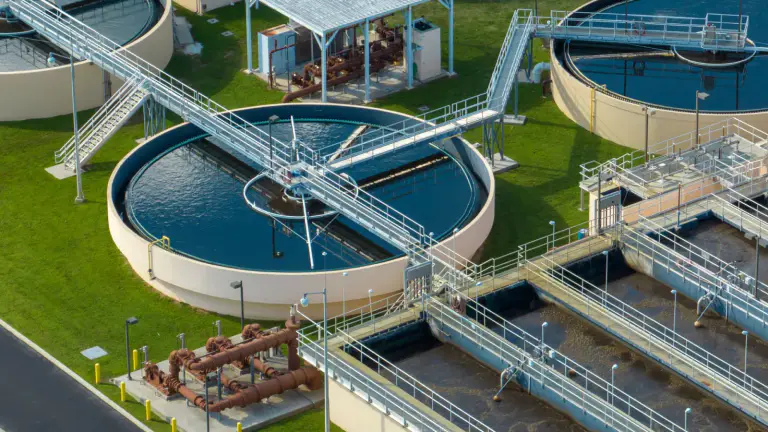
In Kenya, a factory that discharges treated effluent into a river, stream, lake or the ground needs a valid effluent discharge licence (EDL) from the National Environment Management Authority (NEMA). The effluent must meet the Third Schedule limits of the Water Quality Regulations, 2024, and monitoring records must go to NEMA at least every six months. Discharges into a public sewer follow separate limits and are licensed by the county government or sewerage service provider.
Key takeaways
- The governing rules are the Environmental Management and Co-ordination (Water Quality) Regulations, 2024 — Legal Notice 177 of 2024, amended in 2025.
- Discharge into the environment requires a NEMA effluent discharge licence (regulation 6) and must meet the Third Schedule standards (regulations 11 and 12).
- Discharge into a public sewer requires a licence from the county government or sewerage service provider and must meet the Fifth Schedule standards (regulation 13).
- Licensed dischargers must monitor quality and quantity and submit records to NEMA at least once every six months (regulation 14).
- Limits for discharge to the environment are strict — including 30 mg/l BOD5, 50 mg/l COD and 2 mg/l each for total nitrogen and total phosphorus — so the treatment plant must be designed for them from the start.
Which law sets effluent discharge standards in Kenya?
Effluent discharge is regulated under the Environmental Management and Co-ordination Act through the Environmental Management and Co-ordination (Water Quality) Regulations, 2024 (Legal Notice 177 of 2024). The Regulations commenced on 4 November 2024 and have since been amended by Legal Notice 23 of 2025 and Legal Notice 63 of 2025. NEMA publishes guidance, application guidelines and the licence application form on its Water Quality Regulations page.
The Regulations draw one important line: where the effluent goes.
- Into the environment (a river, stream, lake, wetland, the sea or the ground): licensed by NEMA; Third Schedule standards apply.
- Into a public sewer: licensed by the county government or the sewerage service provider; Fifth Schedule standards apply, and the sewer operator may prescribe additional parameters.
Do I need an effluent discharge licence?
If your site discharges effluent from sewage treatment works, an industrial process or any other point source into the aquatic environment, yes. Regulation 6(a) prohibits that discharge without a valid effluent discharge licence issued in accordance with the Act. The licence holder must then comply with the Third Schedule standards (regulation 12(1)) and be guided by the monitoring guide in the Fourth Schedule (regulation 12(2)).
Key licence rules in the Regulations:
| Topic | What the Regulations say | Regulation |
|---|---|---|
| Application | Made on Form A (Seventh Schedule), with the fee set out in the Eleventh Schedule | 16(1) |
| Decision time | NEMA communicates its decision, with reasons, within thirty working days of submission | 16(2) |
| Issue of licence | Where approved, the licence is issued within twenty-one days | 16(3) |
| Validity | For such period as the Authority may determine | 18 |
| Transfer | An effluent discharge licence is not transferable | 20 |
| Monitoring | Monitor effluent quality and quantity using methods prescribed by NEMA | 14(1)(a) |
| Reporting | Submit monitoring records to NEMA at least once every six months, in the Sixth Schedule format | 14(1)(b), 14(2) |
Because a licence is not transferable, a change of ownership or operator needs attention during any acquisition or restructuring. Because validity is set by NEMA, diarise the expiry date on the licence you receive and plan the renewal well in advance.
Third Schedule: limits for discharge into the environment
The Third Schedule lists more than sixty parameters. The ones below drive treatment plant design for most food, beverage, dairy, textile, paper and general manufacturing effluents. Values are maximum allowable limits as written in the Schedule; the Schedule notes that standard values are daily, weekly or monthly average discharge values.
| Parameter | Maximum allowable limit | Why it matters for design |
|---|---|---|
| BOD5 at 20 °C | 30 mg/l | Needs effective biological treatment for organic effluents |
| COD | 50 mg/l | Often the hardest limit to meet; may need tertiary polishing |
| Total suspended solids | 30 mg/l | Good clarification and, often, filtration |
| pH (non-marine) | 6.5–8.5 | Neutralisation and pH control |
| pH (marine) | 5.0–9.0 | Applies to marine discharges |
| Total nitrogen | 2 mg/l | Requires designed nitrogen removal (nitrification and denitrification) |
| Total phosphorus | 2 mg/l | Biological or chemical phosphorus removal |
| n-Hexane extracts (animal and vegetable fats) | 30 mg/l | Fat, oil and grease removal upstream of biology |
| n-Hexane extracts (mineral oil) | 5 mg/l | Oil separation for workshops, boiler houses and fuel areas |
| Total dissolved solids | 1,200 mg/l | Salty streams (brines, regeneration waste) may need segregation |
| Colour | 15 Hazen units | Relevant to textile, dye and some food effluents |
| Temperature | ± 3 °C of ambient | Hot streams need cooling or heat recovery |
| Total coliforms | 30 counts/100 ml | Disinfection where sanitary waste is present |
| E. coli | Nil | Disinfection where sanitary waste is present |
The full Schedule also sets limits for metals, solvents, pesticides and other substances, and NEMA may prescribe further parameters. Always design against the complete, current text for your specific effluent.
Fifth Schedule: limits for discharge into a public sewer
Discharging to a municipal sewer is less demanding, because the sewerage utility provides further treatment — but the limits still matter, and the sewer operator can add conditions. Selected Fifth Schedule values:
| Parameter | Maximum permissible level |
|---|---|
| BOD5 at 20 °C | 500 mg/l |
| COD | 1,000 mg/l |
| Suspended solids | 250 mg/l |
| Total dissolved solids | 2,000 mg/l |
| pH | 6–9 |
| Temperature | 20–35 °C |
| Oil and grease | 5 mg/l |
| Ammonia nitrogen | 20 mg/l |
| Phosphates | 30 mg/l |
| Detergents | 15 mg/l |
If your effluent exceeds these values, pre-treatment on site — typically screening, fat and oil removal, equalisation and pH correction, sometimes with partial biological treatment — is needed before the sewer connection.
How an effluent treatment plant is designed to meet the standards
An effluent treatment plant (ETP) is designed backwards from the discharge limits. The usual sequence is:
- Characterise the effluent. Sample every significant stream over normal and peak production. Measure flow, BOD, COD, suspended solids, fats, nitrogen, phosphorus, pH, temperature and any sector-specific contaminants.
- Segregate and reduce at source. Keep clean stormwater, cooling water and condensate out of the effluent; separate strong or salty streams. A smaller, more consistent flow is cheaper to treat. A water audit is a practical first step.
- Preliminary and primary treatment. Screening, grit removal, equalisation, fat and oil removal (for example dissolved air flotation) and pH correction.
- Biological treatment. Activated sludge, moving bed or membrane bioreactor processes remove organic load. Meeting 2 mg/l total nitrogen requires designed nitrification and denitrification stages.
- Clarification and phosphorus removal. Secondary clarifiers separate biomass; chemical dosing or biological phosphorus removal targets the 2 mg/l total phosphorus limit.
- Tertiary polishing and disinfection. Filtration, and where needed advanced treatment, to meet COD, solids and colour limits; disinfection for coliform limits.
- Sludge handling. Thickening, dewatering and a compliant disposal or reuse route.
- Monitoring. Flow metering, online instruments where justified, and a sampling plan that supports the six-monthly returns.
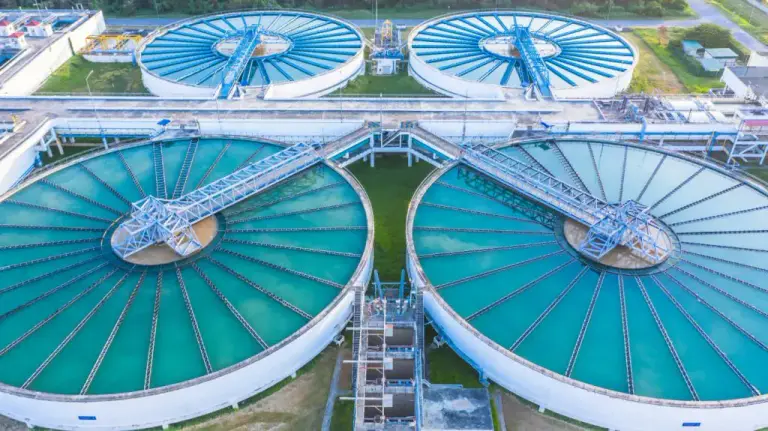
Where water is scarce or discharge is difficult, treated effluent can be polished for reuse. Membrane processes such as those compared in our guide to reverse osmosis versus ultrafiltration make reuse possible, and some sites move towards zero liquid discharge.
Common reasons factories fail their effluent standards
- Design based on average flow only. Production peaks, washdowns and batch dumps overload the plant.
- No nutrient removal. A plant designed for BOD alone will not meet 2 mg/l total nitrogen or phosphorus.
- Fats reaching the biology. Inadequate grease removal upsets biological treatment and clarification.
- Uncontrolled chemical dumps. Cleaning chemicals, regeneration brines or spent solutions shock the system.
- Weak operation and monitoring. Untrained operators, no daily log and sampling only before reporting deadlines.
Upgrading an existing plant usually starts with an audit of the current flows, loads and unit performance against the Third Schedule. It is often cheaper to fix segregation, equalisation and grease removal than to build a larger biological stage.
Frequently asked questions
How long does NEMA take to decide on an effluent discharge licence application?
Under regulation 16(2), NEMA communicates its decision, with reasons, within thirty working days of submission. If approved, the licence is issued within twenty-one days under regulation 16(3).
How often must effluent monitoring results be submitted?
At least once in every six months, unless NEMA directs otherwise, using the record format in the Sixth Schedule (regulation 14).
Do I need a NEMA licence if I discharge into the county sewer?
Discharge into an existing sewer is licensed by the county government or sewerage service provider, and the Fifth Schedule standards apply (regulation 13). Confirm any additional conditions with the sewer operator.
Can a new owner use the existing effluent discharge licence?
No. Regulation 20 states that an effluent discharge licence is not transferable. Plan a new application as part of any change of ownership.
Is sewage from staff facilities covered?
Yes, if it is discharged to the environment. Many sites combine sanitary and process effluent or treat sanitary waste in a dedicated sewage treatment plant. Our underground sewage treatment plant case study in Mombasa shows one approach for a site with limited space.
Get your effluent treatment right first time
This guide summarises the Regulations for planning purposes; it is not legal advice. Confirm the current text and any NEMA directions that apply to your site. Spenomatic's water division designs and builds effluent and sewage treatment plants for industry — see our water and effluent treatment solutions, or request a water and effluent assessment to review your flows and loads against the discharge standards.