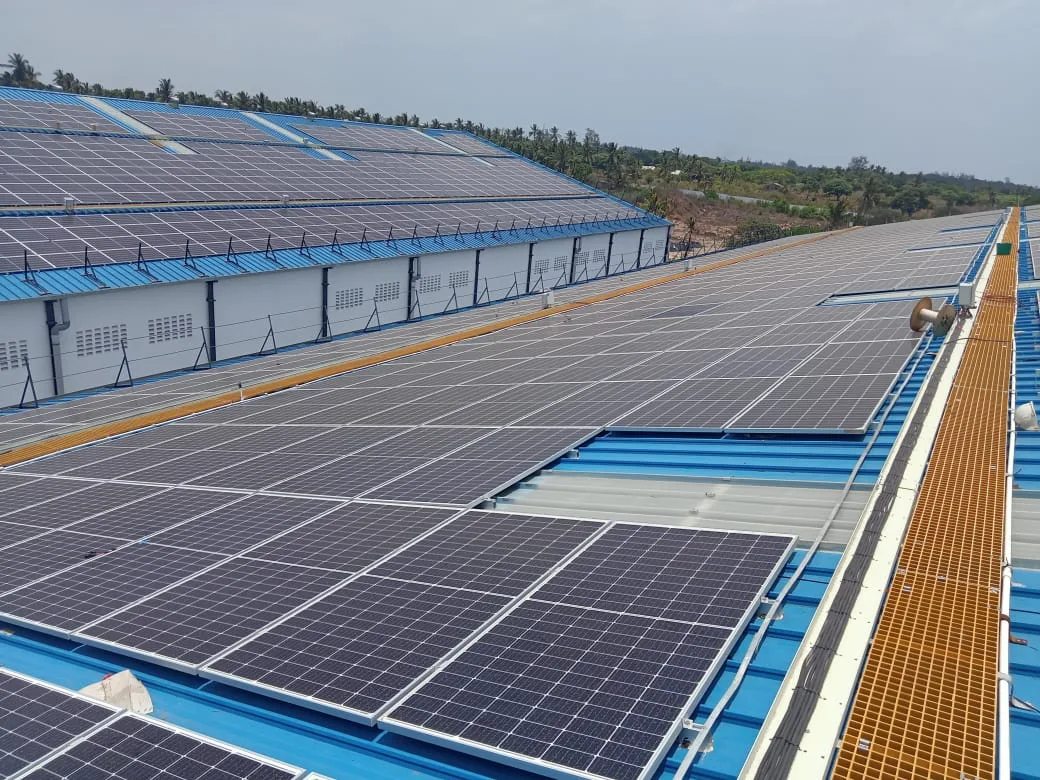
A 1,300 kW (1.3 MW) grid-tied solar PV system for a footwear manufacturer in Mombasa, and Spenomatic’s first solar project on the Kenyan coast.
Footwear manufacturing uses heavy electric loads, and the cost of power in Kenya has been rising. For a manufacturer serving the everyday Kenyan market, with simple products priced at a few hundred shillings, electricity became the major growing cost, so the client turned to solar to cut it.
Production lines for moulding, cutting, stitching and finishing typically depend on presses, compressors and ventilation that run through the working day. That daytime demand is exactly when a solar PV system produces most of its energy.
A grid-tied system works alongside the utility connection. The factory uses solar power while the sun is shining and draws from the grid when solar output is lower, so production carries on without interruption. Because the plant keeps using solar energy directly, it lowers the amount of electricity it needs to buy, which is the main lever for reducing power costs.
The project was the fourth Spenomatic had commissioned, and it came with new logistical challenges that were met head on. It also let the team build a local technical team through training and empowerment of the local workforce, adding skills on the coast that support future solar installation work.
The client has since been accredited by the Energy Management Awards 2021 for implementing renewable energy.
Mombasa’s sunny climate suits solar PV, while heat, humidity and salt-laden air are standard design and maintenance considerations for coastal industrial solar. Careful equipment selection, secure mounting and a regular maintenance routine help a system perform well for years.
Using renewable energy in a factory reduces the carbon emissions linked to grid electricity, and lower power costs help a manufacturer stay competitive in the market it serves. For employers, that supports steady production and the jobs that depend on it.
Manufacturers weighing solar can start with what businesses should really expect from commercial solar payback, then look at how solar can help with peak demand charges and net metering for commercial solar in Kenya. Our commercial and industrial solar team can assess your site.
Related projects: 2.2 MWp rooftop solar for a footwear manufacturer in Mombasa and 1.5 MWp for a food manufacturer in Mombasa.
Contact our engineering team to schedule a technical audit and feasibility assessment for your facility.
Request an Engineering Assessment ➔