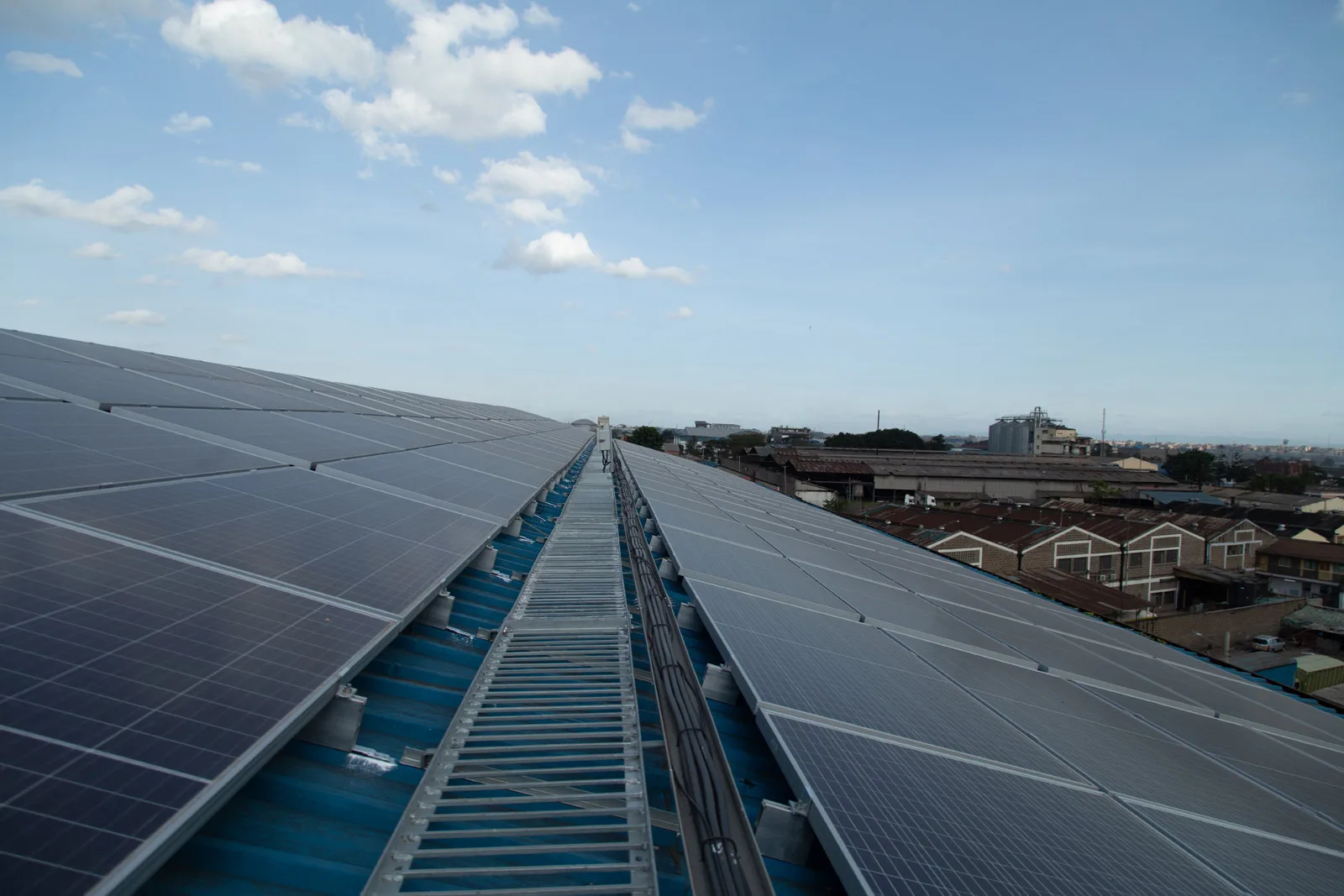
Spenomatic’s first solar PV project was also one of the largest roof-mounted systems in Kenya: a 1,400 kW (1.4 MW) rooftop solar plant for a plastics manufacturer in Nairobi. At the time, it was the largest solar PV plant in the Kenyan private sector.
Plastics manufacturing runs on electricity. Extrusion and moulding lines, chillers, compressors and cooling systems typically operate for long hours, so power is one of the largest and least flexible costs in the plant. That makes a factory like this a strong match for industrial solar: the roof offers unused space close to the load, and Nairobi’s sunshine is available when the production lines are busiest.
This roof-mounted installation put a 1.4 MW solar PV array on the factory building, so that part of the plant’s electricity is generated on site, where it is used, instead of being bought entirely from the grid.
This project marked the move from mechanical engineering into electrical and solar engineering. Building that capability meant developing a whole new skill set to execute solar projects successfully.
Winning the project in a market that already had a lot of competition showed how much trust and faith customers place in the team. The successful installation gave Spenomatic the reference and confidence to grow rapidly across Kenya and the wider region.
Solar PV turns sunlight directly into electricity with no fuel and no on-site emissions. When a factory generates part of its own power this way, it reduces the carbon emissions linked to the electricity it draws from the grid, and it takes a practical step on the renewable energy and sustainability goals that customers and export partners increasingly ask about.
Rooftop solar also brings cost predictability. Every kilowatt-hour generated on the roof is one that does not need to be purchased, which helps manufacturers manage rising power costs. For a plant with a high daytime load, it is one of the most direct ways to put green energy to work in everyday operations.
If your factory has roof space and a steady daytime load, the first step is a site assessment that looks at your power bills, roof and electrical connection. Read how commercial solar installation in Kenya works, see how commercial solar installations from 100kW to 10MW are planned, or explore our commercial and industrial solar systems.
Related projects: 1.4 MWp for an engineering manufacturer in Mombasa and 1.25 MWp for a food processor in Thika.
Contact our engineering team to schedule a technical audit and feasibility assessment for your facility.
Request an Engineering Assessment ➔