
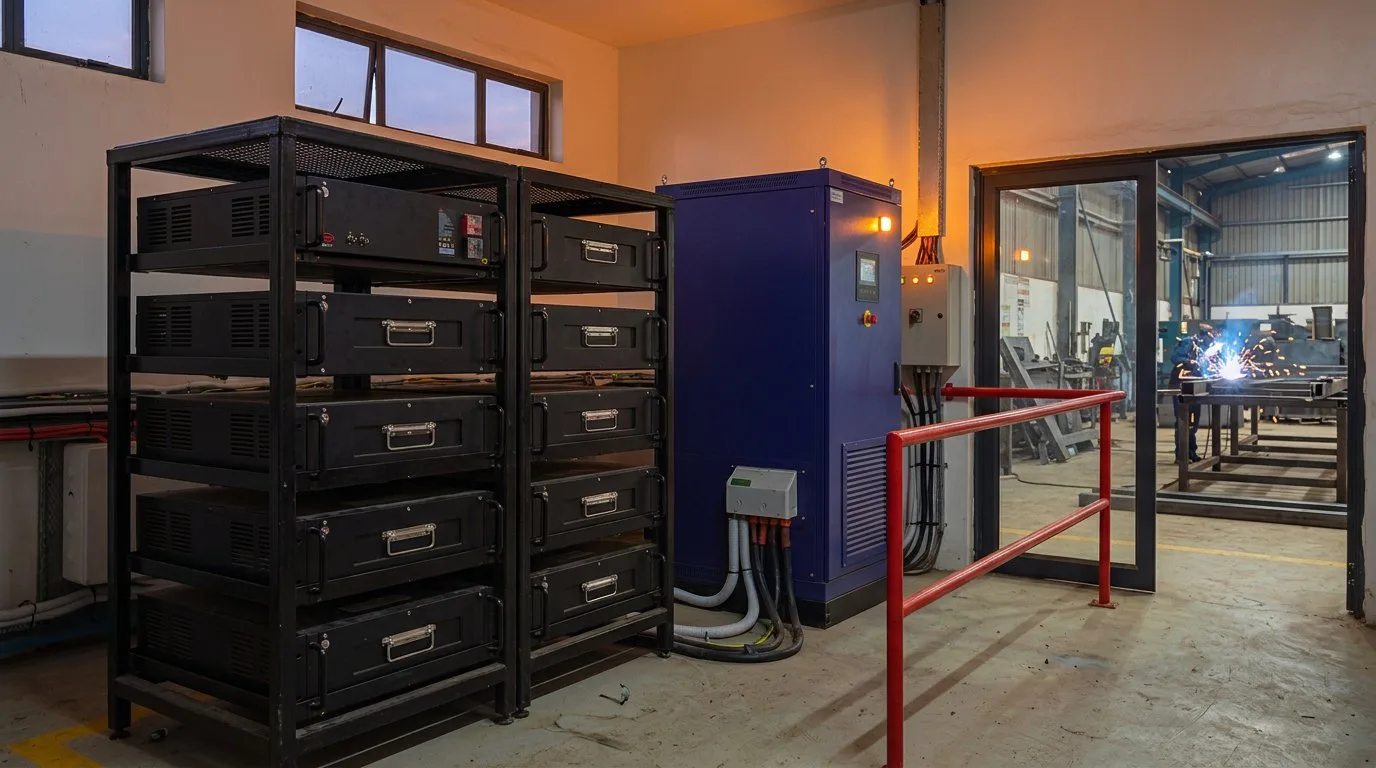
Stored electricity matters only when it can be delivered at the point your operation needs it. An industrial energy storage system holds excess electricity and supplies it during peak consumption or an outage, while its battery management system monitors battery performance and helps prevent overcharging and overheating.
For industrial and commercial sites in Kenya, that operating logic makes storage relevant to more than backup: it can coordinate with solar generation, shift when electricity is used, and support electrical loads that need continuity. This article explains how battery storage, power conversion and control fit together, how system power affects the rate electricity can be supplied, and how stored energy affects supply duration. It also covers renewable energy integration and commercial and industrial applications, giving you a practical basis for assessing system requirements against your production load profile and site priorities.
Key Takeaways
- Separate power capacity from stored energy to assess how much equipment a system can support and for how long.
- Map battery controls and power conversion to your site’s backup, operating and grid-connection requirements.
- Align storage with on-site renewable generation to increase the share of generated electricity your facility uses.
- Identify where peak shaving, consumption management or supply stability could support your operational priorities.
How do battery energy storage systems work?
A battery stores electricity while charging and releases it through power conversion when the site needs supply. Controls coordinate the battery with renewable generation and the grid to serve designated loads.
Backup Power During Grid Outages
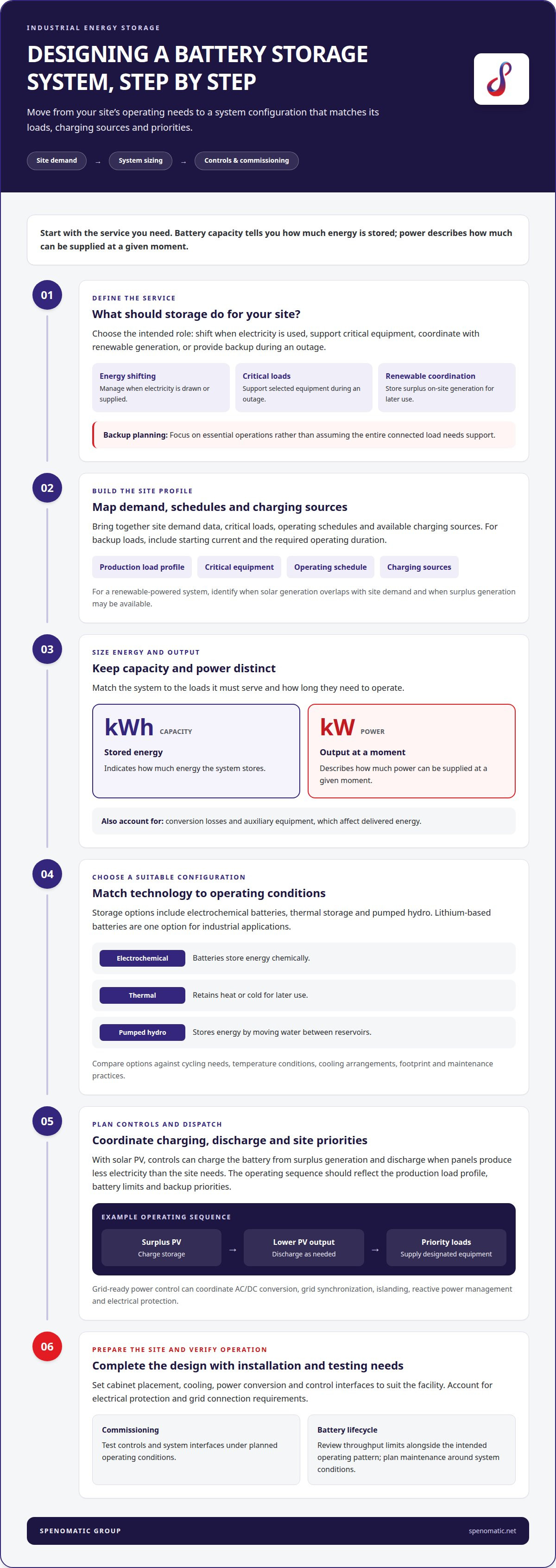
During an outage, stored electricity can supply selected critical loads through the power conversion system. When required, controls isolate the facility from the grid and prioritize equipment such as process controls, pumps or safety systems. Size backup around the production load profile, starting current and required operating duration. This ties resilience planning to essential operations rather than the facility’s entire connected load.
Renewable Energy Integration
With solar PV, batteries charge from surplus generation and discharge when panels produce less electricity than the site needs. Energy management coordinates charging, discharge, grid supply and designated loads according to operating priorities. This can increase on-site renewable energy use and reserve stored electricity for evening shifts or interruptions. Battery cycling and maintenance planning also affect how consistently the system delivers this service.
Grid-ready power control coordinates AC/DC conversion, grid synchronization, islanding, reactive power management and electrical protection. These functions help the system respond to site and grid conditions. Design reviews and acceptance testing can assess control behaviour and readiness for handover, without assuming one configuration suits every connection.
Unlike diesel generators, batteries can supply stored electricity without on-site fuel during discharge, but they still need a charging source. A grid upgrade addresses connection capacity, while storage manages when electricity is drawn or supplied. The right option depends on your load profile, outage priorities and connection constraints.
In Kenya, energy-storage integrators and installers such as Powerstack Energy Ltd supply and configure industrial systems for site requirements. Battery warranties typically include lifetime energy-throughput limits, expressed as charge-discharge cycles, so review the stated limit alongside the intended operating pattern.
Commercial and industrial battery energy storage systems
Battery installations combine storage modules, power conversion and control equipment to meet defined site requirements. The configuration depends on operating conditions, available space and the role storage plays in facility operations.
Storage Technologies and Chemistries
Options include electrochemical batteries, thermal storage and pumped hydro. Batteries store energy chemically, thermal systems retain heat or cold for later use, and pumped hydro stores energy by moving water between reservoirs. Lithium-based batteries are one option for industrial applications. Compare chemistry and technology against cycling needs, temperature conditions, cooling arrangements, footprint and maintenance practices before selecting a system.
System Design Considerations
Start system design by defining the required service, such as shifting energy use, supporting critical equipment or coordinating with renewable generation. Cabinet layout, cooling, power conversion and control interfaces must suit the facility’s operating environment. At a site with changing production schedules, controls should align charging and discharge with planned shifts while respecting the battery’s operating limits.
Capacity, Power, Efficiency, and Lifespan
Capacity, measured in kWh, indicates stored energy, while power, measured in kW, describes output at a given moment. The required values depend on the loads to be served and how long they must operate. Conversion losses and auxiliary equipment affect delivered energy. Battery lifespan is influenced by chemistry, temperature, operating pattern and throughput. Review how the system manages these conditions and schedules maintenance.
System Sizing and Installation
Engineering begins with site demand data, critical loads, operating schedules and available charging sources. The design then matches battery capacity and inverter output to the intended operating profile, while accounting for electrical protection, cabinet placement, cooling and grid connection. Commissioning should test controls and system interfaces under planned operating conditions. Battery energy storage system design brings these project requirements into a coordinated configuration.
Solar and renewable energy integration
At a Kenyan factory, solar PV generation can exceed daytime demand during low-production periods. Battery storage charges from surplus electricity, then discharges when clouds reduce output or evening shifts increase consumption. This integration moves renewable electricity from production hours into later operating periods. It can increase the share of on-site generation used at the facility.
At an on-grid site, energy controls can prioritize charging from surplus PV and schedule discharge against facility demand. The operating sequence should reflect the production load profile, battery limits and backup priorities. For example, a plant can reserve stored energy for critical controls instead of discharging the battery during a routine evening peak. This dispatch plan helps optimize renewable use while accounting for operational needs.
A standalone renewable-energy system combines on-site generation, batteries, power conversion and controls without relying on a grid connection. It must balance variable generation with changing loads, such as pumps, refrigeration or process equipment. During low solar output, stored electricity supplies selected loads; when generation returns, controls resume charging. Design should align generation, usable battery energy and discharge limits with the operating schedule.
Integration also requires coordination between electrical and process systems. Map when PV output overlaps with daytime electricity use, then identify loads that can shift without disrupting production. Thermal demand may offer another option: where process design allows, solar electricity can power heating, while thermal storage retains heat for later use. Grid-connected systems need defined controls for imports, exports and islanding. Assess site conditions and connection requirements before selecting equipment. This helps establish the project’s priority: higher self-consumption, backup power or standalone operation.
Commercial and industrial energy storage system applications
Storage applications depend on site demand, operating schedules and connection conditions. Factories, mines and commercial facilities each have different dispatch priorities.
Storage for Factories, Mines, and Commercial Facilities
No single system suits every factory, mine or commercial facility. Select capacity and output according to the loads storage must support and when they operate. A factory might prioritize a production line during peak periods; a mine could prioritize critical ventilation or pumping equipment. Commercial buildings may focus on shifting consumption or maintaining selected services. Match controls and discharge schedules to the site’s operational priorities.
Managing Peak Consumption with Energy Storage
Storage can charge when electrical demand is lower and discharge during peak consumption. This shifts some electricity use away from peak periods and can help manage the facility’s electrical load. The effect depends on the production load profile, equipment operating schedules and system controls. Map the site’s consumption profile before setting dispatch priorities. Performance depends on actual operation, not battery capacity alone.
Utility interaction adds another application. A suitably configured system can support grid services such as load balancing and frequency regulation, subject to its controls and connection arrangements. At a facility, scheduled discharge can also reduce sudden changes in grid demand when large equipment starts. Controls must coordinate the battery’s response with electrical protection and operating limits. This helps maintain stability without treating storage as a substitute for every grid upgrade.
For a practical assessment, map peak periods, critical loads and potential utility services against the facility’s production schedule. Discuss storage priorities for your facility.
Spenomatic Group: Battery Energy Storage Systems
Spenomatic Group provides Battery Energy Storage Systems for commercial and industrial sites. Start by defining what stored electricity needs to support, such as critical operations, solar self-consumption or demand management. Your production load profile and existing electrical infrastructure help determine the system’s role at the site.
For industrial facilities, project planning must coordinate battery storage with power conversion, control systems and site electrical protection. Spenomatic Group provides Engineering, Procurement, and Construction services across the project lifecycle, supporting a coordinated process from engineering and procurement through installation and commissioning. This connects the energy system to operational requirements instead of treating the battery as a standalone equipment purchase.
If a facility also needs on-site generation, consider Commercial & Industrial Solar alongside storage. Solar generation can charge batteries when production exceeds site demand, while coordinated controls determine when to use stored energy. Design should reflect your operating schedule, backup priorities and interaction with the grid.
For a smaller site, Home & Small Business Solar is another option. Grid-Tied, Hybrid & Off-Grid Solar configurations suit different supply arrangements, from grid-connected systems to standalone setups. The appropriate choice depends on site conditions, electrical loads and how you intend to use generated and stored electricity. These options are not interchangeable, so configure the system around the facility’s operating needs.
Bring your production schedule, main electrical loads and energy priorities to the initial engineering discussion. These inputs help determine whether storage, solar or a combination best meets your requirements. Spenomatic Group can align the project scope with your site’s intended use and infrastructure.
Contact Spenomatic Group to discuss your battery storage requirements.
Set a Clear Direction for Your Energy Project
Define the operating outcome your facility needs before settling on a system configuration. Assess an industrial energy storage system against your site’s electrical demand, planned renewable generation and priorities for continuity of supply. A clear design basis guides practical engineering decisions, from equipment selection to integration with existing infrastructure.
Spenomatic Group’s engineering and EPC team can align project planning with your site requirements. Its offerings include Commercial & Industrial Solar, Home & Small Business Solar, and Grid-Tied, Hybrid & Off-Grid Solar. These options suit different site types and energy arrangements, so the right project scope depends on your operational needs and intended system use.
Bring your facility’s energy priorities into the next planning discussion. Contact Spenomatic Group to discuss your energy project and identify a practical path forward for your site.
Frequently Asked Questions
What are the types of batteries used in BESS?
Industrial battery storage commonly uses lithium-ion chemistries, including lithium iron phosphate (LFP) and nickel manganese cobalt (NMC); lead-acid and flow batteries are also options. Their operating characteristics differ, so selection depends on factors such as cycling needs, available space, temperature conditions and maintenance approach. For a site with frequent charge-discharge operation, for example, assess cycle performance alongside usable capacity.
What is Round Trip Efficiency?
Round Trip Efficiency measures how much electricity a storage system returns compared with the electricity used to charge it. The calculation compares discharged energy with charged energy over the same operating cycle. Conversion losses and the system’s cooling and control loads affect the result. For an operating assessment, compare efficiency under the expected charging pattern and discharge conditions, rather than treating it as a fixed outcome for the site.
What is cell-to-cell active balancing and how does it benefit a BESS?
Cell-to-cell active balancing transfers energy between cells to reduce differences in their state of charge. This helps keep cells within operating limits, making it less likely that one imbalanced cell will restrict a module’s usable capacity. In a BESS with multiple connected modules, balancing supports consistent operation. Its effect depends on battery design and control strategy.
Which Sectors in Kenya Can Benefit from Industrial Energy Storage?
In Kenya, sectors with substantial or variable electricity demand can benefit from storage, including manufacturing, food processing, cold storage, logistics and water treatment. A food-processing facility, for example, could align stored electricity with refrigeration demand or production shifts. The useful application depends on the site’s load pattern, supply arrangement and operational priorities, not the sector name alone.
What is an industrial energy storage system and how does it work?
An industrial energy storage system stores electricity or another form of energy for later use. In a battery installation, cells store electrical energy, while control equipment directs charging and discharge according to operating priorities. For example, a site can set a control schedule to reserve stored energy for a planned production shift instead of using it for lower-priority loads.
What permits, safety standards, and regulations apply to industrial energy storage in Kenya?
Requirements in Kenya depend on the project design, grid connection and site impacts; there is no single set of approvals that fits every installation. Standards to assess can include IEC 62619, UL 9540, NFPA 855 and IEEE 1547, alongside project-specific electrical protection and environmental approvals. Early coordination with utility and permitting authorities helps identify grid studies and approval steps relevant to the site.