
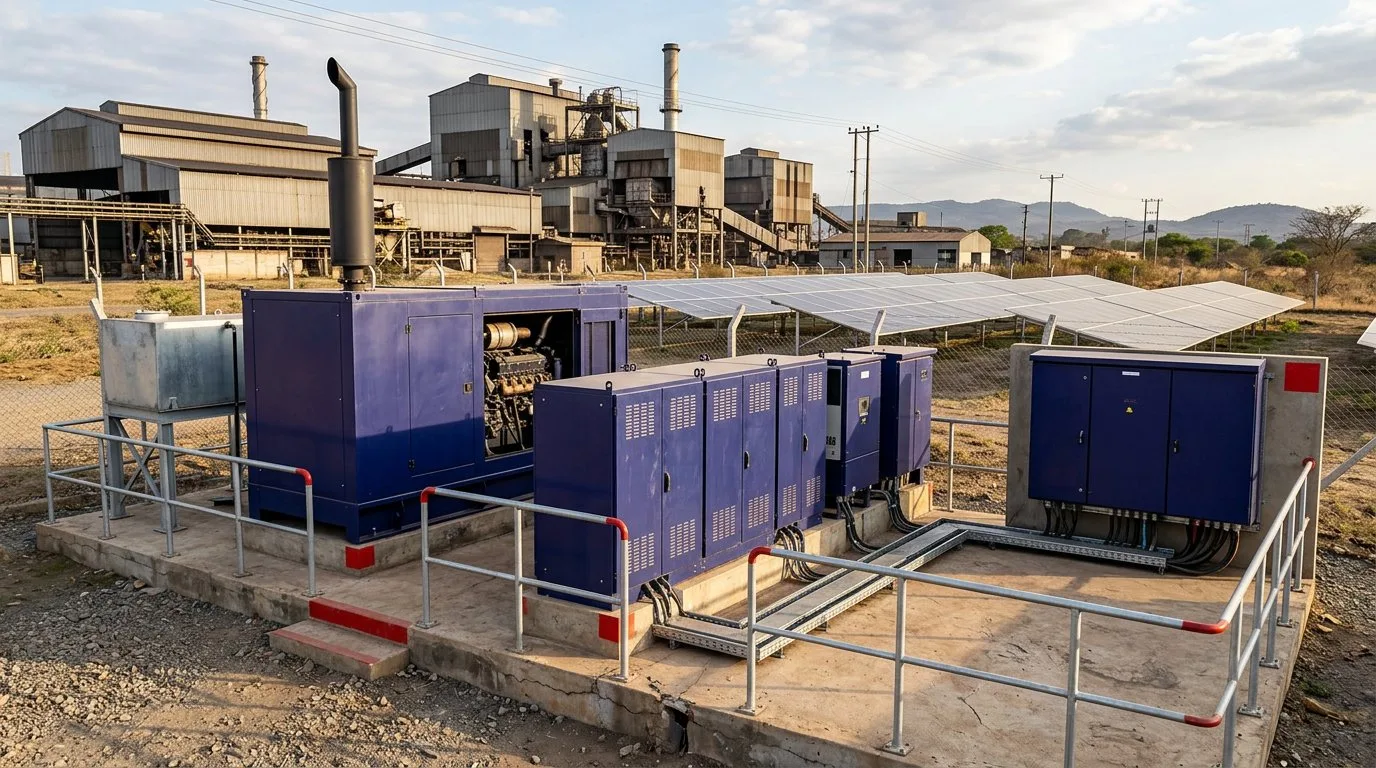
Solar can supply a factory’s daytime electrical load and reduce diesel runtime. A diesel generator provides dispatchable power when solar output is unavailable, while batteries can shift solar energy into later operating hours, depending on system sizing and load requirements. The decision is not simply solar or diesel: fuel availability, generator emissions, production schedules, backup requirements and storage needs all matter. This comparison of solar versus diesel power for factories explains how each option supports factory power supply, where storage and diesel fit, and how their emissions differ, helping you assess a configuration against your production load profile.
Key Takeaways
- Match solar capacity to your factory’s production load profile and daytime electricity use to understand how much grid or generator power it can offset.
- Assess storage against your operating hours and backup requirements; batteries can shift solar energy to periods when panels are not producing.
- Keep diesel in the plan where dispatchable backup is needed, while accounting for fuel supply, servicing, and generator emissions.
- Compare emissions using expected energy generation and diesel runtime, then assess whether a solar, hybrid, or diesel-led configuration best fits your facility.
Why Compare Solar Energy with Diesel Generators?
Compare factory power sources by how they serve production, support continuity and affect daily operations. The right role for each source depends on when electricity is needed and how supply is managed.
Diesel Generator Supply
A diesel generator converts fuel into electricity and can power equipment when solar production is unavailable. Its operation depends on fuel delivery and storage, regular maintenance and access for servicing. For example, a factory with a remote production line needs a plan for replenishing fuel and maintaining the generator without interrupting essential operations.
Solar generates electricity from sunlight rather than requiring a regular fuel supply. A useful comparison considers each source’s operating requirements, not just the equipment itself.
Solar System Configuration
A solar system generates electricity on site, with output shaped by sunlight and the factory’s demand schedule. Planning an installation means considering available area, connected equipment and how the factory will use the electricity. A mobile solar system may suit temporary operations or locations where a fixed installation is impractical.
For smaller facilities, solar systems for homes and small businesses serve a different scale of demand than factory power systems.
Factory Load Suitability
Solar suits electrical loads that operate while it is generating; diesel suits loads that need dispatchable power when sunlight is unavailable. A hybrid arrangement combines these roles, with the operating schedule and priority equipment informing the design.
In Kenya, applicable approvals, licences and tax treatment depend on the project configuration and its grid connection. These requirements are separate from the engineering decision about which loads each source will supply.
Energy Measurement per Kilowatt-Hour
Compare energy sources by measuring the electricity each supplies to the same factory loads over the same operating period. Record solar generation, generator output and the equipment served to distinguish installed capacity from delivered energy. A compressor or production line may have different demand patterns across shifts, so measurements should reflect the actual schedule.
Choose a configuration that matches operating hours, priority loads, fuel logistics and the role of solar generation. This gives you a practical basis for deciding how each source contributes to factory power supply.
Continuous power supply and energy storage
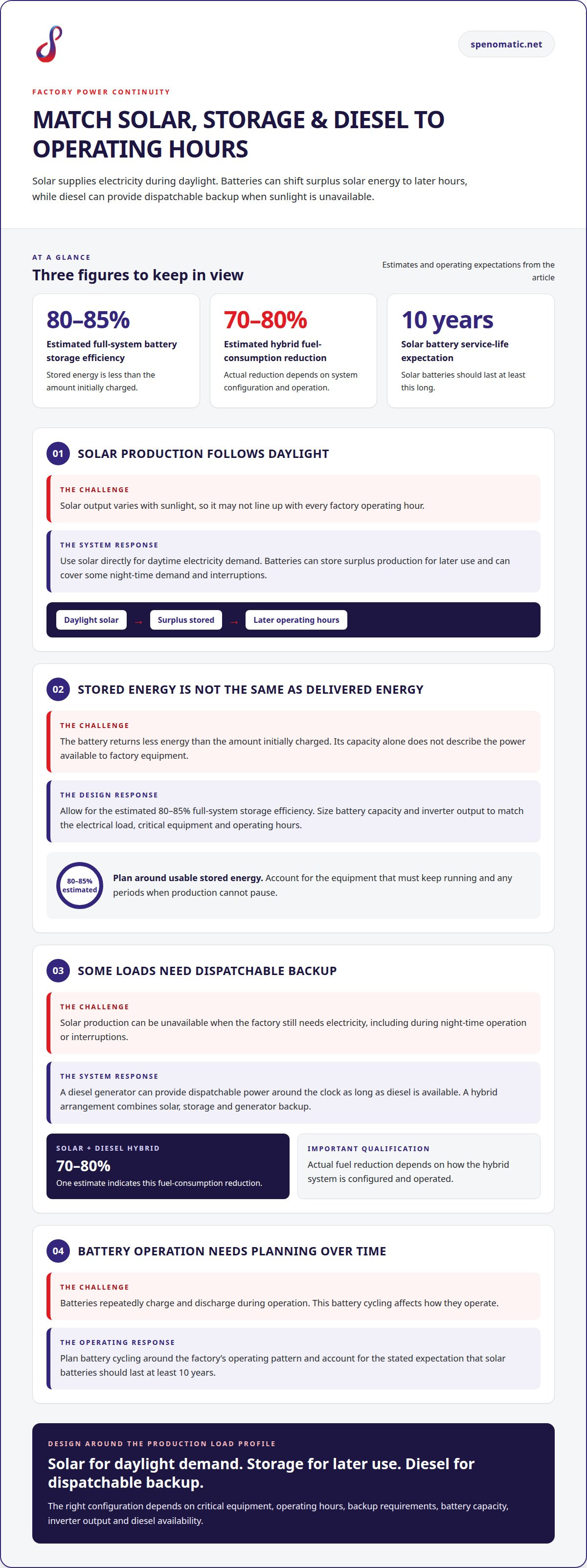
Solar panels generate electricity during daylight, while batteries store surplus production for later use. Full-system battery storage efficiency is estimated at 80-85%, so stored energy is less than the amount initially charged. For a factory, storage design must account for critical equipment, operating hours, and periods when production cannot pause. Battery capacity and inverter output must also match the electrical load.
A diesel generator can supply power continuously around the clock as long as diesel is available. Solar output varies with sunlight, so a battery-supported system can cover some night-time demand and interruptions, while a generator can provide dispatchable backup. A hybrid configuration combines both sources; one estimate indicates that it can reduce fuel consumption by 70-80%. Actual fuel reduction depends on how the system is configured and operated.
For a small business, solar energy savings depend on how much daytime electricity use coincides with solar production. A shop running refrigeration and lighting during daylight can consume generated power directly, while evening demand requires storage or another supply source. Batteries also require planned battery cycling, since repeated charging and discharging affects their operation. Solar batteries should last at least 10 years.
Surplus solar energy may be exported to the grid where the interconnection and billing arrangement allow it. Net metering is a billing arrangement that credits electricity exported to the grid under an agreement. The value of exported power depends on that agreement, so distinguish electricity consumed on site from electricity sent to the grid.
Mobile solar energy can serve temporary operations, remote work areas, or sites where a fixed installation is impractical. It can supply daytime equipment directly, with storage supporting loads after sunlight hours. Diesel remains useful where fuel delivery is dependable and continuous power is required. To assess storage against your operating pattern, review battery energy storage systems as part of the supply design.
Use cases for diesel generators
Diesel generators suit factories that need dispatchable electricity during grid interruptions, at remote sites or for emergency backup. They can also support production when solar output does not match demand. Large industrial units can produce thousands of kilowatts; the appropriate capacity depends on connected equipment and operating requirements.
Efficiency differs by conversion method. Diesel generators convert about 30-35% of fuel energy into electricity, with 65-70% lost as heat. Modern solar panels are rated at 20-22% efficiency, but this figure describes panel conversion, not the full system’s delivered output. Compare each source against the electricity it supplies to the factory’s loads.
Site planning must include noise, exhaust and physical space. Diesel generators typically operate at 70 to 100 decibels, so placement affects nearby work areas. A free-standing outdoor 7 kVA generator with an enclosure needs at least 1 m³ of space. Solar panels need an installation area exposed to sunlight, while their output varies with sunlight conditions.
Diesel units require regular servicing and produce emissions during operation. Maintenance planning should account for cleaning, filter changes and repairs, alongside the generator’s operating schedule. A regularly maintained generator will probably last up to 10 years before replacement is required. That service life makes maintenance history relevant when assessing the generator’s role in a longer-term power plan.
Use a generator when dispatchable supply is the primary requirement, for example, to back up critical production during grid outages. Solar can contribute power during daylight, while diesel covers demand that exceeds solar production or continues after dark. A combined arrangement can give each source a defined role: solar serves available daytime loads, and the generator supports required loads when solar generation falls short.
Diesel and solar emissions
For a Kenyan factory, compare emissions with the electricity each source delivers and the diesel operation it displaces. Generator runtime and solar’s contribution to factory demand shape the result.
Diesel Emissions
A 50 kW diesel generator operating eight hours per day is estimated to emit 116.5 tons of CO₂ per year. This indicative emissions estimate is a calculated estimate for that operating scenario, not a measured project result or a figure for every Kenyan factory. Actual emissions depend on generator loading, runtime and fuel use. A generator used only during outages has a different operating profile from one running throughout scheduled production hours.
Diesel generation also produces exhaust where the generator operates. Records of runtime and fuel consumption can help establish how much electricity comes from the generator and support a site-specific emissions assessment.
Solar Emissions
Solar PV generates electricity without diesel combustion at the factory. Its emissions benefit depends on whether its output displaces generator operation or another supply source. In a contextual comparison outside Kenya, a solar PV system proposed for Mbout, Mauritania, was estimated to avoid 24 tons of CO₂ annually. That case-specific estimate is not a Kenyan project result or a forecast for a Kenyan factory.
A Sub-Saharan Africa comparison estimated that an equal-value investment in a diesel plant reduced greenhouse gas emissions almost three times as effectively as an investment in solar PV. This investment comparison is not a direct factory-level emissions-per-kWh result, nor does it establish which system performs better at a particular Kenyan site.
For your factory, compare generator fuel use and operating hours with the solar electricity actually used on site. When solar output replaces diesel generation, diesel runtime and associated emissions can fall. If the generator continues operating unchanged, the emissions reduction will be limited. After commissioning, track both sources’ electricity contributions to assess the operational change.
Spenomatic Group
Spenomatic Group helps you assess factory power requirements and determine how solar, storage and diesel backup can work together. Its Commercial & Industrial Solar, Grid-Tied, Hybrid & Off-Grid Solar, and Battery Energy Storage Systems offerings support different supply configurations, from daytime generation to stored energy and backup integration.
An engineered comparison can consider your production load profile, operating schedule, backup requirements and emissions objectives. These factors can inform system sizing and the role each energy source could play without treating solar and diesel as mutually exclusive options. For smaller facilities, Home & Small Business Solar is also available.
Contact Spenomatic Group to discuss the power requirements of your facility.
Set the next step for your factory
Move from comparison to a decision brief by documenting the production constraints your power system must meet. Define acceptable interruption limits, critical process dependencies and the sequence for restarting equipment after a disruption. These operational requirements give the engineering team a clear basis for evaluating configurations without assuming one energy source suits every factory.
Discuss your facility’s requirements with Spenomatic Group and consider how its power supply should support production continuity. Bring your operating priorities and system questions to the conversation to keep the next planning step grounded in how your factory runs.
Discuss your factory’s power requirements with Spenomatic Group and move your planning forward.
Frequently Asked Questions
Paying for Fuel or Investing in Sunlight?
Solar and diesel have different operating inputs: solar generation depends on sunlight and system configuration, while a generator depends on fuel supply and servicing. When comparing solar versus diesel power for factories, weigh these operational demands against your production schedule. A facility with daytime shifts, for example, can align more equipment with solar output, while overnight production needs a separately planned power source.
How should a factory assess the long-term value of its power system?
Assess performance by tracking how much electricity each source delivers to production equipment and how often the factory relies on backup supply. Record output across representative shifts, including periods when production demand changes. This gives your operations team a practical basis for judging whether the system serves priority processes and whether its energy mix remains aligned with factory requirements.
What determines the design of industrial solar PV, battery storage and diesel generators in Kenya?
System design depends on the factory’s electrical load, production schedule, available solar area and continuity requirements. Identify which equipment must keep running during interruptions and which loads can be scheduled during solar production. Battery storage requirements depend on the loads and operating periods it must support, while generator selection depends on its backup role and site conditions.
How can a factory measure diesel use per kWh?
Measure the fuel supplied to the generator and the electricity it produces over the same operating interval. Divide fuel consumed by electrical energy delivered to calculate consumption per kWh. Record the generator’s operating period and load conditions, since changing production demand affects the result. Repeat the measurement under representative operating conditions for a useful comparison.
What determines the payback period for factory solar in Kenya?
Solar payback depends on how much generated electricity the factory uses, when demand occurs and how the system performs. A facility that consumes more solar generation on site may gain more direct operational value than one with substantial unused output. Review production schedules alongside measured solar generation to see how effectively the installation serves factory demand.
How reliable are solar and diesel systems for factories during outages and at night?
Reliability planning starts with ranking equipment by operational importance and defining which processes can tolerate interruption. The control arrangement must coordinate available generation with those priorities during a grid outage. For night operations, plan how essential equipment will be supplied and how the factory will transition between available sources, including the sequence for restoring production after an interruption.