
Industrial rooftop and ground-mounted solar can both supply large commercial loads, but they use different parts of the site and create different engineering, construction and operating constraints. The best option follows the facility's load, available space, structure, expansion plans and electrical connection.
This comparison helps manufacturers, warehouses, mines and large commercial sites decide which configuration should progress to feasibility.
Industrial rooftop solar
Rooftop solar uses an existing building surface and can place generation close to facility loads. It avoids competition for productive land and can suit factories, logistics centres and commercial buildings with large, relatively clear roofs.
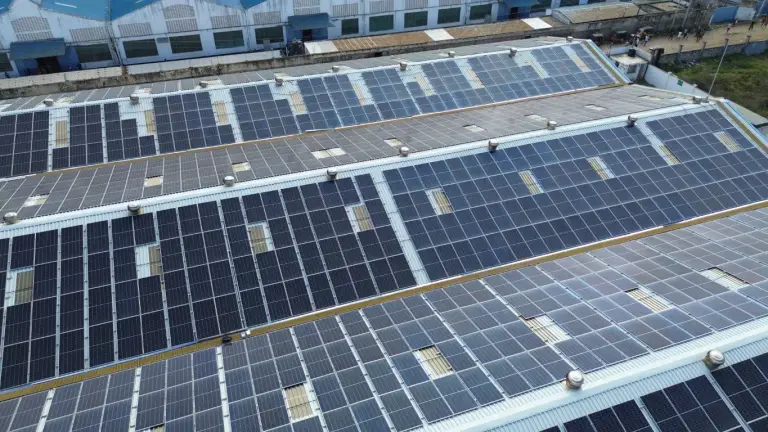
Potential advantages
- Uses existing roof area
- Can reduce long DC or AC routes when connection points are nearby
- May fit constrained urban or industrial sites
- Can be phased across suitable buildings
Questions to resolve
- Can the roof safely carry the system and construction loads?
- What is the remaining roof life?
- How will drainage, fire access and maintenance routes be protected?
- Will vents, dust or process emissions affect modules?
- How will production continue during installation?
Roof condition and structural capacity should be established before detailed layout. Mounting should also respect roof warranties and the site's long-term maintenance plan.
Ground-mounted solar
Ground-mounted solar uses available land and can support larger or more flexible layouts. It may be suitable where the roof is unsuitable, the required capacity exceeds usable roof area or the facility has land close to an appropriate electrical connection.
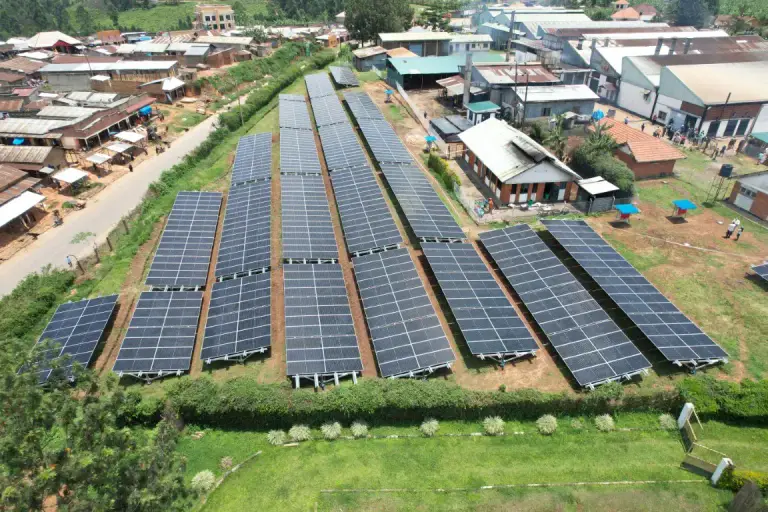
Potential advantages
- Layout is less constrained by existing roof geometry
- Access for cleaning and maintenance can be simpler
- Can support larger arrays where land and connection capacity allow
- Avoids placing equipment on an ageing or congested roof
Questions to resolve
- Is the land available for the life of the project?
- What do geotechnical, drainage and flood conditions require?
- How will the array be secured?
- Will vegetation, dust or nearby development create maintenance or shading issues?
- What cable route and electrical losses result from the connection distance?
What about solar carports?
Solar carports create a third option by using parking areas while providing shade. They require dedicated structures, foundations, vehicle clearances, drainage, lighting and collision protection. Their business case should include both energy and the value of the covered parking structure.
Comparison criteria
| Criterion | Rooftop | Ground-mounted |
|---|---|---|
| Space used | Existing building roof | Dedicated land |
| Key study | Roof and structural assessment | Land, geotechnical and drainage assessment |
| Construction interface | Building and production activity | Site civil works and access |
| Expansion | Limited by suitable roof area | Limited by land and connection capacity |
| Maintenance access | Requires safe roof access | Usually accessible from ground level |
A hybrid site layout may be best
Some industrial sites use rooftop, ground-mounted and carport arrays together. A combined layout can make better use of the site, but the electrical architecture, protection, controls and construction sequence must be coordinated as one project.
How to make the decision
- Model the facility's usable daytime demand.
- Survey all viable roofs, land and parking areas.
- Check structural, geotechnical and drainage constraints.
- Compare cable routes and points of connection.
- Review construction risk and production disruption.
- Compare energy yield, lifecycle work and expansion options.
After selecting a viable layout, compare the factors that determine commercial solar installation cost in Kenya and define acceptance evidence with the solar commissioning checklist.
Spenomatic's commercial and industrial solar installation services cover rooftop, ground-mounted and hybrid site configurations. See completed solar projects or request a site assessment.