
There is no reliable single price for commercial solar installation in Kenya. Two facilities with the same proposed capacity can have different costs because their roofs, electrical networks, operating schedules, equipment specifications, construction constraints and storage requirements differ.
This guide explains the factors that determine the cost of solar installation in Kenya for commercial and industrial facilities. It is intended to help procurement, finance and engineering teams compare complete project scopes rather than headline cost-per-kilowatt figures.
Start with usable electricity demand
The first cost decision is system capacity. A design should compare the facility's daytime demand with expected solar production. Oversizing can create energy that the site cannot use, while undersizing may leave viable savings unrealised.
Useful inputs include electricity bills, interval load data, operating hours, seasonal production, generator records, planned expansion and the loads that must remain available during an outage. Spenomatic's commercial solar installation services begin with this engineering assessment.
Main commercial solar cost components
Solar modules
Module cost depends on technology, efficiency, power rating, warranty, certification, availability and the quantity required. Higher-efficiency modules may be valuable where usable roof area is limited, but the complete system yield matters more than one component specification.
Inverters and power conversion
Inverter selection depends on array design, operating voltage, grid conditions, redundancy, monitoring and whether batteries or generators are integrated. The lowest equipment price does not necessarily produce the lowest lifecycle cost.
Mounting and structural work
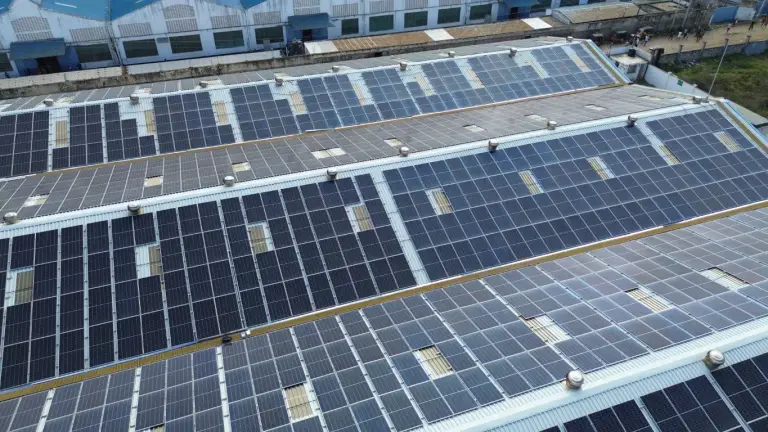
An industrial rooftop solar installation may require structural verification, reinforcement, specialised mounting or roof repairs. Ground-mounted plants require civil works, foundations, drainage, fencing and roads or access tracks. Carports add structural and vehicle-clearance requirements.
Electrical balance of system
Cables, combiner equipment, switchgear, protection, earthing, meters, transformers and connection works form a material part of the project. Existing electrical infrastructure may need modification before it can accept additional generation safely.
Battery energy storage
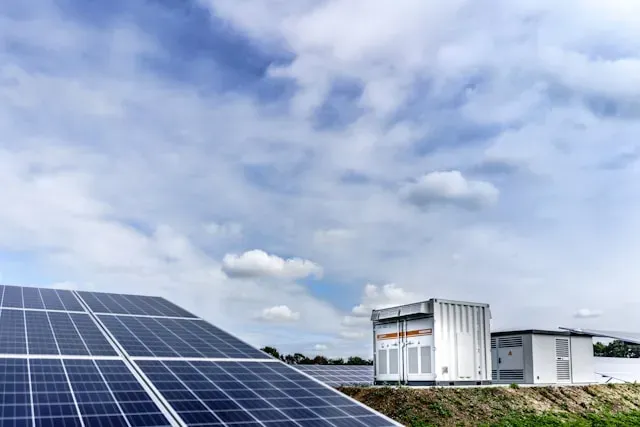
Batteries can add backup, load shifting, peak management or grid support, but they materially change project cost and controls. Storage should be sized from usable energy, required power, reserve, cycling and the value of the service it provides. See the battery energy storage service.
Engineering, approvals and project management
A turnkey scope can include feasibility, surveys, structural and electrical engineering, regulatory work, utility coordination, procurement, construction management, quality control, commissioning and documentation. These services reduce technical and delivery risk and should be visible in the proposal.
Construction conditions
Working on an operating plant may require shutdown planning, restricted access, lifting equipment, enhanced safety controls or phased construction. Location, logistics, security and weather also affect delivery.
Monitoring, operations and maintenance
Monitoring platforms, communications, inspections, cleaning, spare parts and response commitments influence lifecycle cost. A cheaper proposal can become expensive if it omits support needed to maintain generation.
Why quoted solar prices are difficult to compare
One proposal may include structural analysis, switchgear, monitoring, testing and several years of maintenance while another excludes them. A valid comparison normalises scope, technical assumptions, equipment, warranties, generation model, construction responsibilities and taxes.
Use the commercial solar proposal checklist to compare offers line by line, and review how to choose a solar installation company in Kenya before shortlisting bidders.
Cost is different from financial value
Capital cost is only one side of the decision. The financial model should consider expected self-consumed energy, tariffs, generation losses, degradation, downtime, maintenance, financing and replacement assumptions. Any claimed payback should show these inputs.
A solar project may also create operational value by reducing generator use, increasing cost predictability or supporting resilience. These benefits should be quantified separately and conservatively.
Information needed for a budget estimate
- Facility location and type
- Recent electricity bills and interval data where available
- Operating hours, production shifts and seasonal changes
- Roof drawings, roof age and available land
- Transformer, generator and main distribution information
- Outage history and critical loads
- Required ownership or financing structure
- Expansion plans and target commissioning date
How to obtain a defensible commercial solar price
Begin with a site and load assessment, agree the performance objective, compare feasible architectures and define a common scope for bidders. The comparison between industrial rooftop and ground-mounted solar can help define the buildable configuration before pricing. This produces a price tied to a real design rather than a generic industrial solar panels cost.
Request an industrial energy assessment to develop the technical basis for a commercial solar installation budget.