
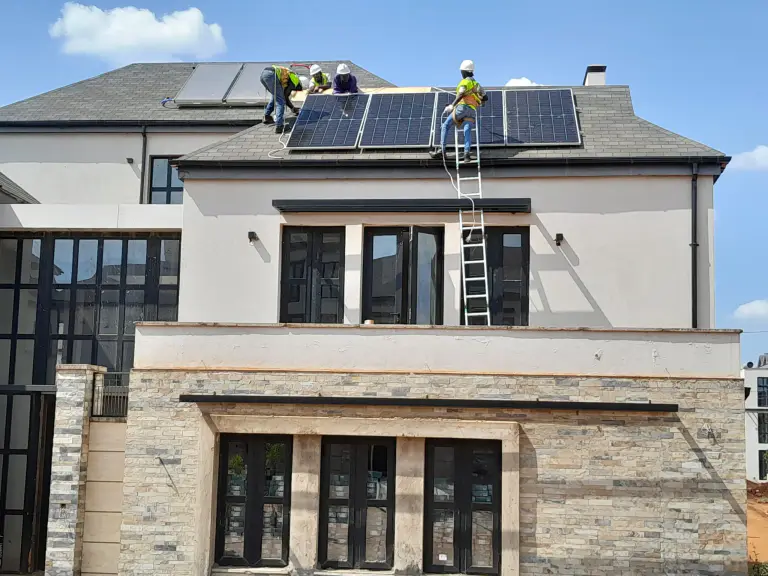
If you are building a house in Kenya, plan for solar at the design stage, even if you install the panels later. Conduits, cable routes, roof mounting points and an equipment space cost little to include during construction, and avoid chased walls, exposed trunking and extra labour later.
Key takeaways
- Design for solar before the roof and walls are finished, even if the panels come later.
- Near the equator, shading and a shallow tilt matter more than which way the roof faces.
- Most new homes combine a standard KPLC connection with a hybrid or grid-tied solar system.
- Installation must be carried out by an EPRA-licensed solar contractor.
Should I plan for solar now, or wait until the house is finished?
Plan now. Solar is cheaper and neater to install during construction because conduits, cable routes and panel mounting points can be built into the design instead of retrofitted. Waiting usually means chasing finished walls, running exposed trunking and paying more for labour.
What should I tell my architect or contractor at the design stage?
Ask them to:
- Reserve unshaded roof space. Kenya sits on the equator, so the direction a roof faces matters less than avoiding shade from trees, walls and water tanks. A shallow tilt of roughly 10–15° lets rain wash dust off the panels.
- Leave a dedicated conduit route from the roof to where the inverter and batteries will sit.
- Allocate a ventilated space near the meter and distribution board for the inverter, batteries and a solar distribution board.
- Avoid designs that make mounting difficult, such as heavily shaded roof sections or roofing that cannot carry mounting rails.
Can I get a KPLC connection and go solar at the same time?
Yes. A common route for new homes is a standard KPLC connection for grid backup alongside a grid-tied or hybrid solar system. Solar supplies the house during the day and the grid covers the rest.
Should I go off-grid, hybrid or grid-tied?
Hybrid systems, which combine the grid, solar and battery backup, are a common choice for new homes because they keep essential power on during outages. Grid-tied systems cost least but switch off during blackouts, and off-grid systems need a larger battery bank. Our guide to grid-tied, hybrid and off-grid solar systems in Kenya compares them in detail.
How do I size a system before the house is occupied?
We estimate from the house size, number of bedrooms and planned appliances, including the fridge, water heating method, pumps and air conditioning. The estimate is rough at this stage, but it is enough to plan wiring and roof space correctly. We refine the system size closer to move-in, once the appliances are confirmed.
Does solar affect my building costs or KPLC application?
Planned early, the building cost impact is small: mainly conduits and roof mounting points. The KPLC connection application is a separate process. If you later want to export surplus power to the grid, that needs a net-metering agreement with KPLC under the Energy (Net-Metering) Regulations, 2024.
Can I install the wiring and conduits now and add panels later?
Yes, and we recommend it if the budget is tight. We install the conduit and mounting infrastructure during construction, and you add the panels, inverter and batteries when ready, without breaking finished walls or roofing.
How long does it take to have solar ready by move-in?
Installation starts once the roof is on and internal wiring is roughed in. For a typical home it takes days rather than weeks; the site survey confirms the schedule for your system size. A grid-tied system that will export power also needs the KPLC net-metering process, which can take several weeks depending on the area office.
Who can legally install solar on a new house?
Under the Energy (Solar Photovoltaic Systems) Regulations, 2012, anyone who designs or installs a solar PV system in Kenya must be licensed by the Energy and Petroleum Regulatory Authority (EPRA). Ask your installer for their EPRA licence before work starts.
Frequently asked questions
When should I plan solar for a new house in Kenya?
At the design stage, before walls and roofing are finished, so conduits, roof mounting points and equipment space are built in rather than retrofitted.
Which way should solar panels face in Kenya?
Near the equator, orientation matters less than shading. Prioritise unshaded roof space and a shallow tilt of roughly 10–15° so rain keeps the panels clean.
Can I install solar conduits now and panels later?
Yes. Installing conduits and mounting infrastructure during construction lets you add panels, an inverter and batteries later without breaking finished walls or roofing.
Does a solar installer in Kenya need a licence?
Yes. The Energy (Solar Photovoltaic Systems) Regulations, 2012 require anyone designing or installing solar PV systems to be licensed by EPRA.
Planning a new home? Request a home solar assessment and we will plan the wiring, roof space and equipment room with your architect. Already living in a house connected to KPLC? Read adding solar to a home already connected to KPLC.