
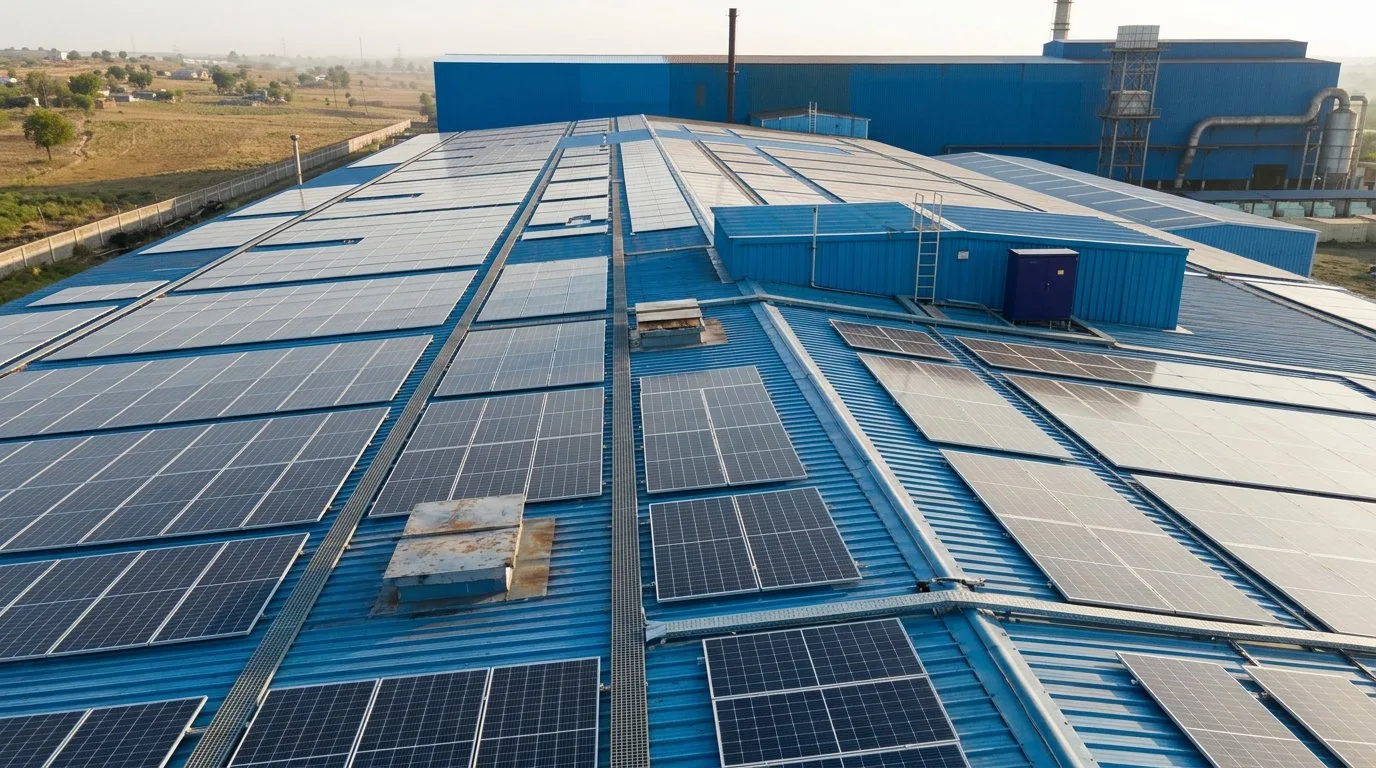
Not every commercial roof can support photovoltaic panels, and a large roof alone doesn’t establish suitability. Commercial rooftop solar is viable when the roof can accommodate the installation, enough usable area receives sunlight, and the system can be integrated with the building’s electrical supply and operating needs.
For a Kenyan business, a commercial rooftop solar assessment should consider the roof’s condition and load capacity, shading, existing equipment, and safe access for installation and maintenance. The design should also reflect when your facility uses electricity, since daytime demand affects how much solar generation can be used on site.
This guide explains how roof condition, usable space, sunlight, installation planning, and surplus electricity affect project suitability. It also covers how system design relates to your power supply, including grid connection and battery storage where appropriate.
Key Takeaways
- Assess roof condition, structural capacity, shading, and usable space together to identify whether a building can support a practical solar layout.
- Align system design with your facility’s daytime electricity use and operating schedule to make on-site generation more useful.
- Plan installation around existing rooftop equipment, drainage, fire safety, and safe maintenance access.
- Understand how grid connection, storage, and surplus generation affect the way solar power contributes to your electricity supply.
How does the solar panel installation process work?
Installation starts with a site assessment, followed by system design, mounting, electrical integration, inspection, and commissioning. At an industrial facility, every stage needs to account for the roof structure and operating loads.
Commercial and Industrial Installation Scope
Project scope covers the array, mounting, inverters, electrical protection, and connection to facility systems. The best panels, inverters, and battery options in Kenya depend on roof conditions, electrical load, production schedules, and the intended system configuration. Kenyan installers include EPC contractors and equipment suppliers; assess whether the proposed team can coordinate design, procurement, installation, and commissioning. Smaller premises may suit home and small business solar systems.
Roof Types and Solar Applications
Concrete roofs, metal sheet roofs, and roofs with existing plant equipment each need a different mounting and layout assessment. The design should account for structural capacity, drainage, shading, and clearance around mechanical units. A factory operating during the day may use solar generation differently from a warehouse with limited daytime electrical demand, so system capacity should reflect the facility’s operating pattern.
Safety, Inspections, and Commissioning
Installation planning should preserve access to mechanical units, catwalks, anchors, drains, and fire-safety systems. Before work starts, the project team identifies applicable permits, licences, and utility requirements based on the system design and connection plan. Inspection checks installed components, wiring, and electrical protection; commissioning tests system operation and its connection. Maintenance includes planned inspections, cleaning, and checks for damage or electrical faults. Warranty terms should specify the equipment and workmanship they cover.
Installation Damage and Repairs
Roof penetrations can create water-entry risks, so the installation scope should define responsibility for sealing, inspection, and repairs if damage occurs. Documenting roof condition before work begins provides a clear reference. Common risks include leaks, unsafe access, shading from overlooked equipment, and electrical faults. Before installation, define defect reporting and repair responsibilities in the project agreement, including how roof repairs will be coordinated with facility operations.
Electricity supply guarantees and surplus power
Solar generation can reduce grid electricity purchases during production hours, but it does not guarantee uninterrupted power. A grid-connected photovoltaic system may not supply electricity during an outage unless designed with suitable backup capability. Compared with diesel generation, solar can reduce reliance on fuel while generating electricity; grid power and diesel may still serve loads when solar output is unavailable. The system configuration and operating requirements determine how these sources work together.
Estimate annual generation based on system capacity, site sunlight, orientation, shading, and expected system losses. Compare this estimate with the facility’s production load profile: electricity used during solar production can offset purchases, while surplus generation needs an agreed treatment. Export arrangements depend on the utility connection and applicable agreement, so do not assume exported electricity earns a credit or payment. Net metering is a billing arrangement that credits electricity exported to the grid under an agreement.
Commercial solar payback depends on installation requirements, electricity tariffs, daytime consumption, and the share of generation used on site. If tariffs rise, avoided grid purchases may become more valuable, but actual savings still depend on generation and consumption. For leased premises, set out rooftop access, maintenance responsibility, system ownership, and any roof rent as separate contractual terms.
For a Kenyan project, assess applicable tax treatment and financing terms within its own financial model. Any incentive or financing arrangement must be relevant to the project and its participants; don’t base Kenyan returns on programs from another country. A solar PV system design can align proposed capacity and expected generation with site demand, supporting a grounded assessment of electricity savings and surplus power.
Roof condition, space, and sunlight assessment
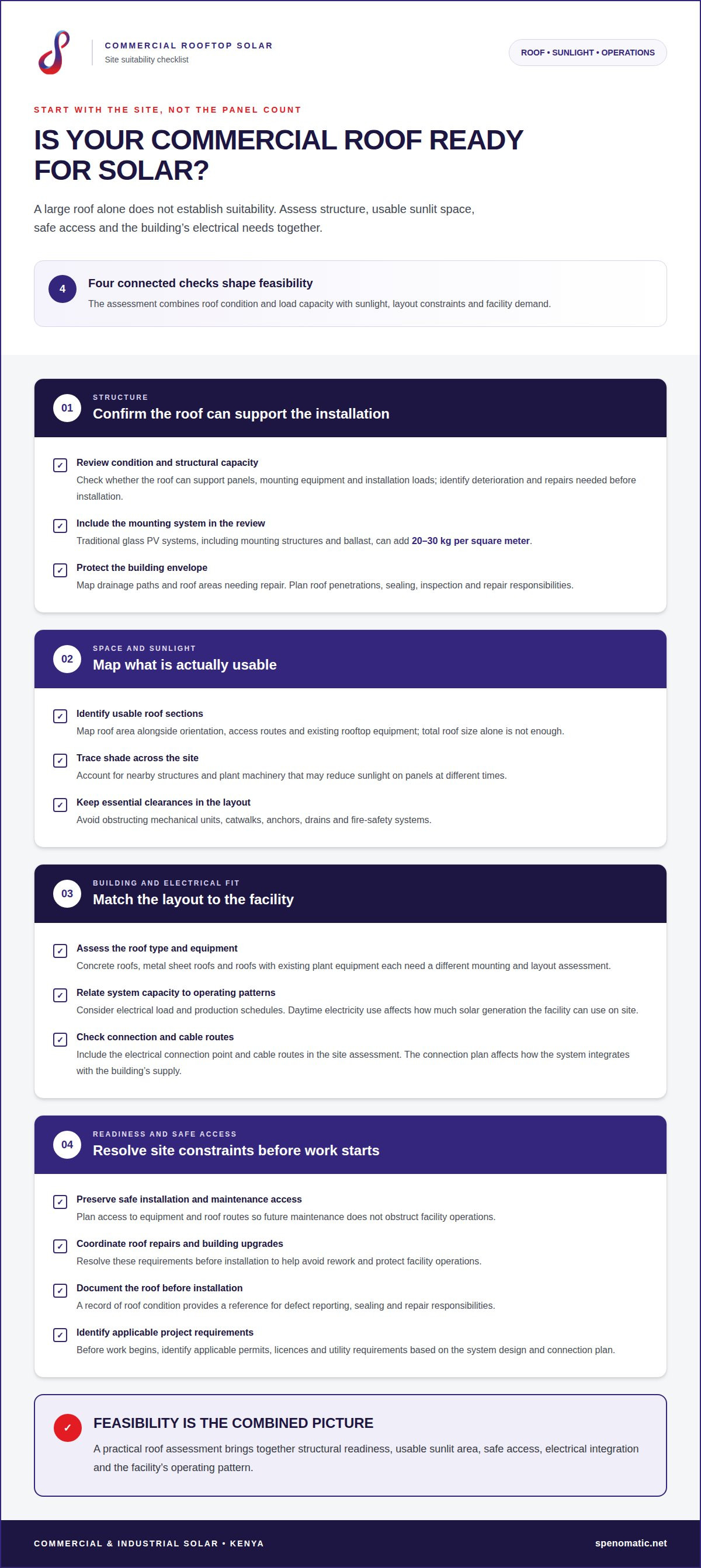
A feasibility assessment brings together roof structure, usable area, sunlight exposure, and the facility’s electrical demand. These factors show whether a PV system can fit safely and suit the business’s operations.
Roof Suitability and Structural Readiness
Structural review considers the roof’s condition and capacity to support panels, mounting equipment, and installation loads. Traditional glass PV systems, including mounting structures and ballast, can add 20-30 kg per square meter. The assessment also identifies roof deterioration, drainage paths, and areas requiring repair before installation. A suitable layout avoids obstructing access to equipment or compromising the building envelope.
Site Feasibility and Project Readiness
A site assessment maps usable roof sections, shading, orientation, access routes, and existing rooftop equipment. Nearby structures and plant machinery can reduce sunlight on panels at different times, so the layout must account for these obstructions. The assessment also considers cable routes, the electrical connection point, and maintenance access. Together, these findings show whether the proposed installation can meet the facility’s physical and operational requirements.
Readiness also depends on coordinating solar work with roof repairs or planned building upgrades. Resolving these requirements before installation helps avoid rework and protect facility operations.
Building Types and System Sizing
Factories, warehouses, offices, and other commercial buildings each have different roof layouts and electricity demand. The system size a business needs depends on its electrical load, daytime consumption, usable unshaded roof area, and structural capacity. In Kenya, compare these factors when sizing a system instead of choosing capacity based on roof area alone.
As a planning reference, 100 sq ft of shadow-free rooftop can accommodate about 1 kW of solar panels. This estimate helps frame the initial assessment, but actual capacity depends on panel layout, roof obstacles, and structural constraints. The final design must match the site’s conditions and the renewable energy technologies selected for its operating needs.
Commercial and industrial rooftop solar potential
Rooftop potential is not determined by roof area alone. A Kenyan factory may have substantial roof space but little usable area once shading, access routes, structural constraints, and existing equipment are considered. The practical opportunity is the area that can accommodate panels and generate electricity when the facility can use it.
Commercial buildings, warehouses, processing plants, and offices have different demand patterns. A factory operating during daylight may use more solar energy on site than a facility whose main electrical demand comes after production hours. Compare usable roof area with the building’s load profile and expected system generation. This makes rooftop solar potential a site-specific engineering decision, not a blanket estimate for every commercial roof.
Project potential also depends on how long the system can operate productively. Commercial rooftop PV systems are typically designed to operate for 25-30 years. Roof condition, maintenance access, and the timing of future roof work therefore matter alongside panel output. If planned repairs or building changes affect the array, include them in the project sequence before installation.
Solar energy can reduce the grid electricity a facility buys during production hours. Its environmental value depends on the electricity it displaces and the system’s actual generation, so carbon benefits should be treated as estimates unless measured. For decision-makers, the clearest assessment compares usable roof sections, expected generation, daytime demand, and operating requirements. That comparison shows whether rooftop potential supports a practical project and where constraints may limit its contribution.
Use that assessment to separate theoretical capacity from usable generation. A roof with several obstructed sections may support a smaller, better-aligned array than a simple area estimate suggests. Conversely, a facility with consistent daytime demand may make effective use of a carefully sized system. The takeaway is direct: evaluate roof, load, and operating schedule as one system before setting capacity. Plan a rooftop solar feasibility assessment around your facility’s operating requirements.
Spenomatic Group: Commercial & Industrial Solar
Spenomatic Group provides Commercial & Industrial Solar solutions for Kenyan businesses assessing rooftop generation against roof capacity, operating schedules, and electricity demand. Consider this service when you need an end-to-end EPC project that connects site conditions with system capacity and installation planning.
For facilities with different power-supply requirements, Spenomatic Group offers Grid-Tied, Hybrid & Off-Grid Solar configurations. Battery Energy Storage Systems can be included where energy storage is needed. Home & Small Business Solar serves smaller premises.
Share your facility’s roof information, electricity use, and operating priorities to start a practical project discussion. Contact Spenomatic Group to discuss your solar requirements.
Set a clear direction for your solar project
Plan commercial rooftop solar as part of your facility’s longer-term energy strategy, not as a standalone equipment purchase. Changes in production schedules, planned building upgrades, and future electrical demand can all affect how well a system serves your operation over time. Discussing these factors early helps align the design with how your business expects to operate.
Spenomatic Group’s engineering team can help turn your facility’s priorities into a project approach, coordinating system design and delivery around operational requirements. Set out your project objectives and start a focused technical discussion to give your team a practical basis for deciding how solar fits into your energy plans.
Contact Spenomatic Group to discuss your solar project and take the next step with confidence.
Frequently Asked Questions
Can All Commercial Roofs Support PV Panels?
No. A roof may be unsuitable if its structure, condition, layout, or access constraints cannot accommodate the proposed array. With commercial rooftop solar, extensive skylights or rooftop equipment can reduce usable space. A structural assessment should consider how mounting loads transfer through the roof into the building frame, not just the roof surface. Roof repairs may also need to come first.
What Are Rooftop PV Panels?
Rooftop PV panels, or photovoltaic modules, convert sunlight into direct-current electricity on a building. In commercial rooftop solar systems, an inverter converts that output into electricity compatible with facility equipment. For example, panels above a warehouse can supply connected loads while the building remains connected to its existing power supply. Output varies with sunlight, system design, and operating demand.
What Are the Structural Requirements for Rooftop PV Systems?
The roof and supporting structure must safely carry the proposed system and withstand the forces acting on the array. A structural review for commercial rooftop solar considers materials, age, condition, framing, attachment points, and load paths. It also checks for corrosion, deterioration, and existing equipment. Mounting design should avoid weakening vulnerable areas and preserve access for roof inspection and maintenance.
What is a commercial rooftop PV system and how does it work?
Commercial rooftop solar is an on-site electricity system that generates power from panels installed on a business roof. Sunlight produces direct-current electricity, which inverters convert for facility use. A grid-connected system can operate alongside the existing supply; its configuration determines how generation, storage, and loads interact. Output varies with sunlight and the building’s operating conditions.
What steps are involved in installing rooftop solar in Kenya?
Installation generally progresses from reviewing electricity records and site conditions to designing the system, coordinating approvals and grid connection, installing equipment, and testing operation. For commercial rooftop solar in Kenya, the project team coordinates the proposed connection with the relevant utility and addresses applicable design approval requirements. Installation should also be planned around facility access, production schedules, and electrical shutdowns.
What roof, structural, and electrical requirements should businesses check before installation?
Confirm roof condition, supporting structure, drainage, usable area, and safe access. An electrical assessment for commercial rooftop solar should cover the main switchboard, connection point, cable routes, earthing, protection devices, and interaction with existing generation or backup equipment. For example, a facility with a standby generator needs a system design that accounts for how it operates and which electrical loads the solar system is intended to serve.