
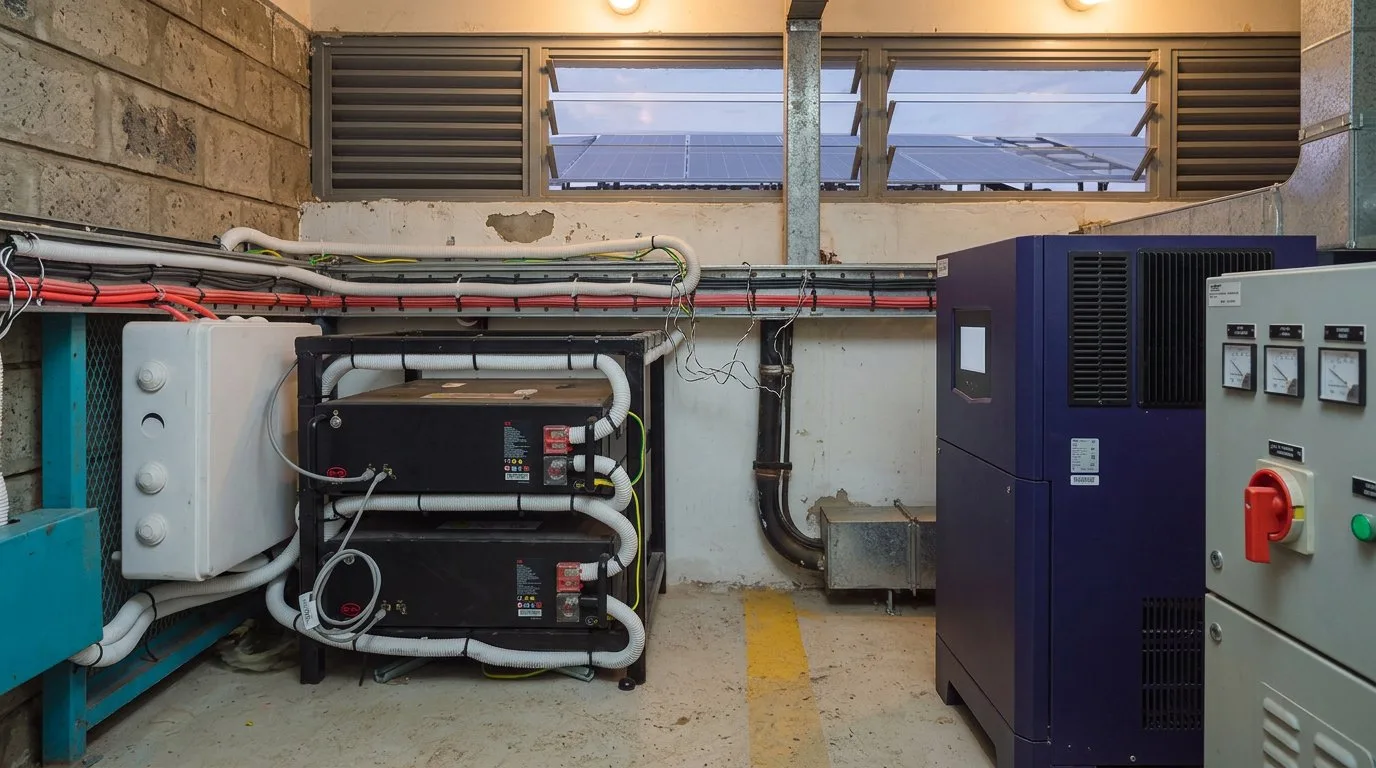
Kenya’s peak electricity demand reached 2.36 GW in August 2025, against effective supply capacity of 3 GW. That makes battery energy storage systems in Kenya relevant for storing excess electricity and releasing it when demand rises, while supporting grid stability and expanding opportunities for solar power.
Solar generation and electricity demand do not always align, so battery energy storage systems Kenya can help shift available power to the hours it is needed. This article explains how batteries can balance supply and demand, support renewable energy integration, and serve homes, businesses and industrial sites, then considers what Kenya’s energy system means for storage.
Key Takeaways
- Understand how stored electricity can help balance periods of excess generation with times of higher demand.
- See how batteries can complement solar by shifting usable power beyond the hours of production.
- Identify how a site’s electrical load and operating schedule shape the storage system’s role.
- Learn which grid, solar and operational benefits matter when assessing storage for your home, business or facility.
Why Are Energy Storage Systems Important in Kenya?
Electricity demand and available supply vary by location and operating period. Batteries can store electricity when supply exceeds immediate demand, then discharge during peak periods. This can help manage variable generation and reduce off-peak curtailment. For homes and facilities, the value depends on which loads need support and when they operate.
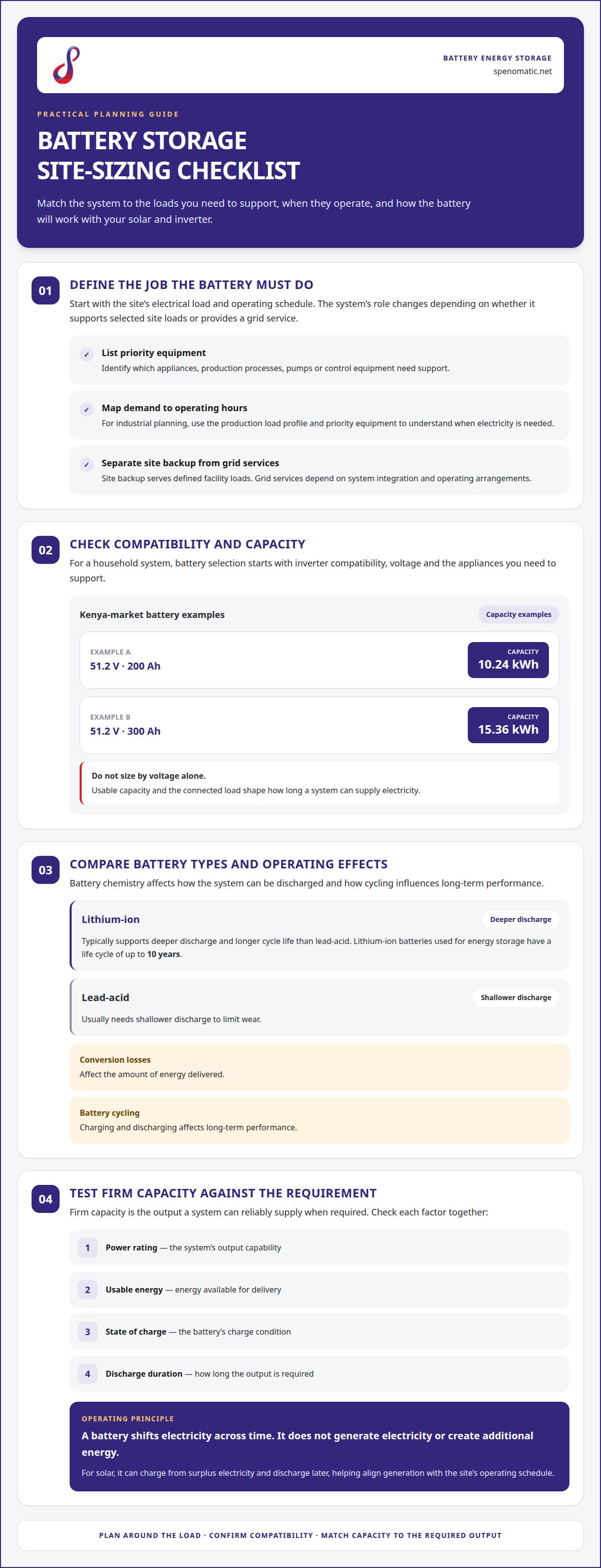
Household battery selection starts with inverter compatibility, voltage and the appliances you need to support. Kenya-market examples include a 51.2 V, 200 Ah lithium iron phosphate battery with 10.24 kWh capacity, and a 51.2 V, 300 Ah unit with 15.36 kWh capacity. Voltage alone does not define stored energy. Usable capacity and the connected load shape how long a system can supply electricity.
Lithium-ion and lead-acid batteries are both used in storage applications. Lithium-ion typically supports deeper discharge and longer cycle life, while lead-acid usually needs shallower discharge to limit wear. Lithium-ion batteries used for energy storage have a life cycle of up to 10 years. Conversion losses affect delivered energy, and battery cycling affects long-term performance.
Firm capacity is the output a system can reliably supply when required. Its contribution depends on power rating, usable energy, state of charge and discharge duration. Industrial capacity planning therefore starts with the production load profile and priority equipment. Kenya’s Feed-in-Tariff Policy 2021 covers technologies including solar, wind and hydro, but its existing procurement framework does not cover battery storage. This provides context for project planning, not a basis to assume grants or tax incentives.
KenGen was designated to implement Kenya’s planned battery storage system under the World Bank-funded Kenya Green and Resilient Expansion of Energy program. For homes and businesses, system selection and installation should account for electrical load, backup priorities, solar generation and inverter compatibility. A technical assessment can then align capacity and operating controls with the site’s requirements. The battery energy storage systems in Kenya offering addresses projects requiring this system integration.
Grid stability and electricity supply-demand balancing
Grid stability depends on balancing electricity supply with demand while keeping system conditions within operating limits. In Kenya, the variability of renewable generation makes this balance increasingly important as output changes with weather and resource availability.
Electricity Access and Power Reliability
Electricity access describes whether homes and businesses can connect to a supply network; reliability concerns the consistency of that supply. About 80% of Kenya’s rural areas are not connected to the national grid, so grid-connected battery storage cannot address every access gap. For connected users, storage can support selected loads when grid supply is disrupted. You can identify those loads by examining which household appliances or production processes must continue operating. A water-treatment facility, for example, may prioritize essential pumping and control equipment.
Renewable Generation and Supply Balancing
Renewable generation converts resources such as geothermal, wind and solar into electricity, with output varying by source and conditions. Renewable energy contributes over 80% of the power injected into Kenya’s grid, compared with less than 60% ten years ago. Renewable sources account for 92% of Kenya’s electricity-generation capacity. Those figures describe different measures: power injected is actual grid input, while capacity is the potential output of installed sources. For operators, this changing supply mix makes flexible balancing valuable.
Battery storage can absorb electricity when generation exceeds immediate demand, then discharge as demand rises or renewable output falls. It shifts supply across time, but does not generate electricity or create additional energy. Its contribution depends on charging availability, power output and discharge duration. At a facility, controls can coordinate battery discharge with production demand, reducing the amount drawn from the grid during selected operating periods.
Grid-scale storage can respond quickly to changing system conditions, while smaller systems can support selected site loads. The Energy and Petroleum Regulatory Authority is studying ancillary services to assess potential benefits from battery storage facilities. These services help maintain grid operation. For industrial planning, distinguish site backup from grid services: the first serves defined facility loads, while the second depends on system integration and operating arrangements.
Solar power and energy storage opportunities
Solar storage can shift renewable electricity from production periods into later demand periods. In Kenya, this flexibility can support stability as generation sources and operating conditions change.
Solar and Wind Intermittency
Intermittency means solar and wind output varies with sunlight and wind conditions. Solar panels produce less electricity after sunset, while wind generation changes with available wind. For a Kenyan facility, this can create a mismatch between renewable production and the hours when equipment needs power. A battery can charge from surplus solar electricity and discharge later, helping align generation with the site’s operating schedule. Storage shifts energy; it does not remove weather-related variation or generate electricity.
Storage for Grid Stability
Grid-scale battery storage can absorb excess electricity and discharge it when the grid needs additional supply. Kenya’s planned storage system is intended to store excess energy from geothermal plants and provide load-balancing power. It can help adjust when electricity is delivered, rather than add generation capacity.
A virtual power line is a coordinated group of storage resources that can supply electricity where and when the grid requires it, without building a new physical transmission line. Its contribution depends on location, stored energy and dispatch controls. For example, coordinated batteries can discharge during a local demand peak, easing pressure on the network serving that area.
Kenya’s draft Least Cost Power Development Plan proposed 250 MW of battery energy storage facilities by 2024, increasing to 450 MW by 2036. These are proposed capacity targets, not a statement of installed capacity. KenGen was designated as the implementing agency for Kenya’s battery storage system under the World Bank-funded Kenya Green and Resilient Expansion of Energy program. The Ministry of Energy study also identified a need to integrate storage into national grid infrastructure.
When planning a solar project, match storage operation to the generation profile and the hours when electricity is needed. A commercial site can prioritize evening demand or selected critical loads; grid-scale planning instead considers system balancing and network location. This distinction helps define the battery’s role before selecting its capacity and controls.
Energy storage system benefits in Kenya
For Kenyan energy users, storage can improve when and how electricity is used. A battery can charge from solar generation or the grid, then supply selected loads during a planned operating period. At a food-processing site, for example, stored energy could support controls or essential pumps during a grid interruption. The benefit depends on matching battery power and usable energy to the equipment’s demand.
Grid electricity reaches a site through the network, while a generator produces electricity from fuel when operated. A battery stores electricity and can respond without waiting for a generator to start, but its discharge duration is limited by stored energy and it must recharge. Each option serves a different need: grid supply supports routine demand, generators can provide longer backup when fuel is available, and batteries can cover defined loads or short supply gaps.
Battery energy storage systems in Kenya can serve residential, commercial, industrial and grid-scale applications. A home system may support selected household circuits; a business system can shift solar electricity into later operating hours; and a grid-scale installation can support balancing services. Configuration depends on the connection, inverter, load profile and intended operating mode, not battery capacity alone.
For commercial and industrial operators, storage can help manage demand peaks, increase the use of on-site solar electricity and maintain priority equipment during interruptions. These benefits depend on coordinated controls that determine when to charge, which loads to support and when to reserve energy. For example, a plant can prioritize its control system over non-essential loads during a supply disruption.
The practical takeaway is to define the operating problem before selecting capacity. Separate routine energy shifting from backup requirements, then identify priority loads, solar output periods and the required discharge window. This makes the transition to storage a defined engineering decision rather than an equipment-only purchase. To assess a suitable battery storage configuration, begin with your site’s load profile and operating priorities.
Spenomatic Group: Battery Energy Storage Systems
Spenomatic Group provides Battery Energy Storage Systems for homes, businesses and industrial sites considering storage alongside solar generation. Its engineering team can help define how battery capacity, operating priorities and an existing or planned solar system should work together.
Commercial and industrial facilities can consider storage alongside Commercial & Industrial Solar. Homeowners and small businesses can assess it with Home & Small Business Solar. Grid-Tied, Hybrid & Off-Grid Solar configurations offer different ways to integrate solar and storage, depending on the site’s connection and operating requirements. System design should account for electrical load, solar production and the loads you need to support.
Contact Spenomatic Group to discuss your site’s energy requirements and battery storage project.
Turn Your Storage Priorities Into a Project Brief
Start by defining the operating task storage must perform. Identify the loads that need support, when power is required, and how solar generation fits your site’s schedule. These decisions provide a practical basis for assessing battery capacity, controls and system integration.
For battery energy storage systems in Kenya, the engineering approach should match storage to the site’s electrical demand and intended operating mode. Spenomatic Group’s related offerings include Commercial & Industrial Solar, Home & Small Business Solar, and Grid-Tied, Hybrid & Off-Grid Solar. Its engineering team can help align these options with your project requirements.
Share your site’s priorities and start a focused discussion about the right configuration. Contact Spenomatic Group to take the next step toward a clearly defined energy project.
Frequently Asked Questions
What does the future hold for BESS in Kenya?
The outlook for battery energy storage systems in Kenya depends on how grid integration and market participation develop. Kenya’s 2024 Energy Regulations enable market participation, while existing grid codes do not recognize battery storage technologies. For project planners, this means the transition involves both equipment design and evolving market arrangements. Storage may serve on-site solar, priority loads or grid support, with each use requiring a suitable operating and connection design.
What regulations, permits, and standards apply to battery energy storage systems in Kenya?
Kenya’s energy regulatory framework has no distinct definition for energy storage, and its transmission and distribution grid codes do not recognize battery energy storage technologies. The Feed-in-Tariff Policy 2021 covers technologies such as solar, wind and hydro, but its existing procurement framework does not cover storage. A project’s design and approvals must account for its grid connection, electrical protection, site conditions and intended operating mode.
What are the risks, maintenance needs, lifespan, and warranties of battery storage systems in Kenya?
Battery performance can decline through repeated cycling, while poor system integration can affect how effectively stored energy serves connected loads. Maintenance should follow the equipment manufacturer’s instructions and include review of system monitoring, connections, ventilation and protection devices. Lithium-ion storage has a life cycle of up to 10 years. Warranty coverage and exclusions are defined by the specific written warranty, so review its terms alongside operating and maintenance requirements.
What battery storage capacity and duration are commonly available in Kenya?
Examples include batteries with 10.24 kWh and 15.36 kWh capacity. How long they supply power depends on usable capacity and the connected load.