
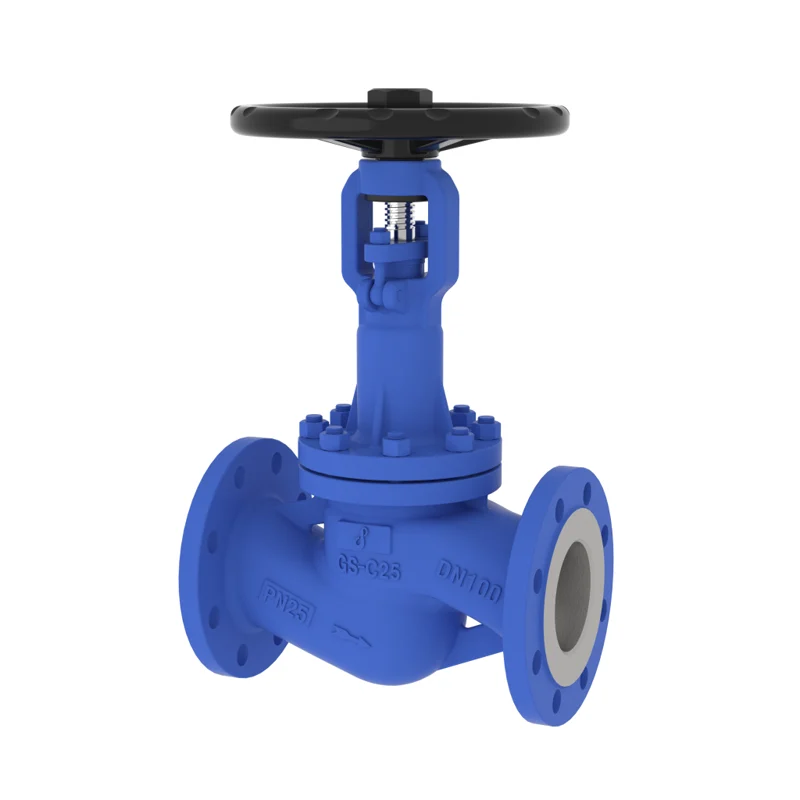
A bellows-seal valve controls stem leakage with a metal bellows between the fluid and the stem, usually with packing as a second barrier. A gland-packed valve relies on compressed packing alone, which wears and needs adjusting. Bellows-seal valves are a strong choice where stem leakage is hazardous, costly or hard to reach, including many steam and thermal oil duties.
Key takeaways
- The bellows addresses leakage along the stem, not leakage through a worn seat.
- Bellows-seal valves usually cost more to buy and can reduce gland maintenance.
- Gland-packed valves can still suit accessible, lower-risk duties.
- Check ratings, materials and bellows cycle life for the actual application.
Why does stem leakage matter?
Repeated movement and thermal cycling wear gland packing. A small steam leak wastes energy continuously and creates a burn risk. Leaking thermal oil adds fire risk and lost fluid, especially if it soaks into insulation. Each gland also needs maintenance attention, which adds up across a large plant.
How do the two designs compare?
| Factor | Bellows seal | Gland packed |
|---|---|---|
| Stem sealing | Bellows, usually with back-up packing | Compressed packing |
| Routine attention | Less gland adjustment | Periodic adjustment and repacking |
| Purchase price | Usually higher | Usually lower |
| Main limit | Bellows cycle life and rating | Packing wear and leakage |
| Good fit | Hazardous fluids, hard-to-reach valves, leakage-sensitive duties | Accessible, lower-risk duties |
Where is a bellows-seal valve worth the extra cost?
- Thermal oil circuits, where a leak creates fire risk and fluid loss.
- Steam lines in occupied or congested areas, where leaks are a burn risk.
- Valves that are hard to reach, where each gland adjustment needs access or a shutdown.
- Critical isolation points, where a repeat leak affects production or safety.
To compare the options, weigh the purchase price against labour, downtime, lost steam or fluid, and the consequence of a leak. Our steam cost calculator can put your own cost per tonne into that comparison.
What should the specification include?
- Fluid, design and operating pressure and temperature.
- Function: isolation or throttling. Globe and angle patterns are chosen on the duty and layout.
- Body and bellows materials, and any sealing options.
- Standard and end connections, such as DIN or ANSI flanges.
- Expected operating frequency, to compare with bellows cycle life.
- Installation orientation, handwheel or actuator access, and servicing space.
Frequently asked questions
Will a bellows-seal valve stop a passing valve?
No. A valve that passes when closed has a seat problem. The bellows only addresses leakage along the stem.
Are bellows-seal valves maintenance-free?
No. They need less gland attention, but the seat, back-up packing and bellows condition should still be included in maintenance plans.
Can they be used on fluids other than steam?
Yes. The family covers steam, thermal oil and other industrial fluids, subject to material and rating checks for the specific valve.
Talk to the steam accessories team
Spenomatic supplies bellows-seal valves in DIN and ANSI globe, angle and forged-steel options, plus industrial isolation valves. Explore our industrial steam systems and accessories, or request a steam system assessment for your site.