
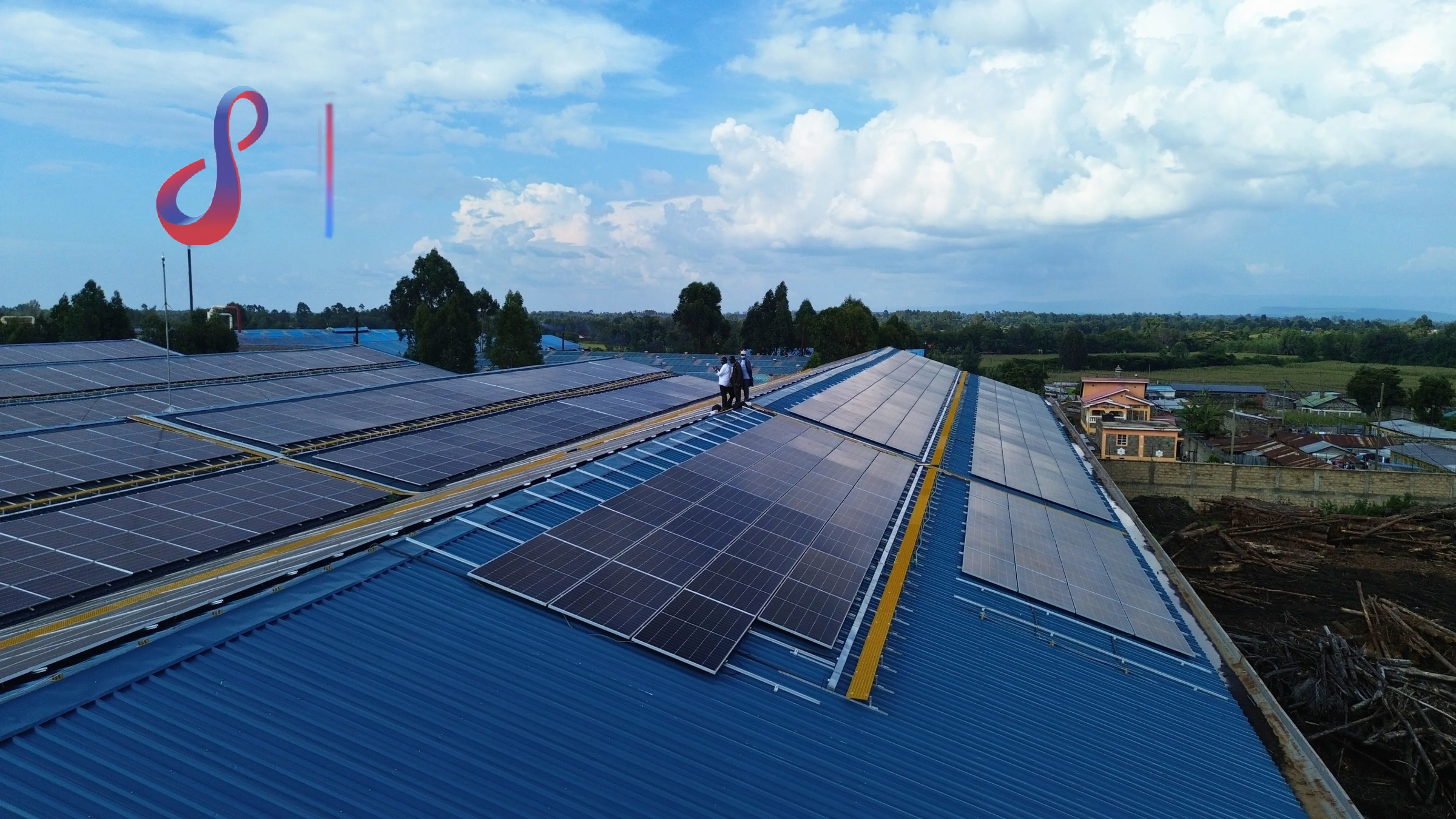
Solar backup solutions for power outages in Kenya can keep selected lights, computers, pumps and appliances running by storing electricity in batteries and supplying it when the grid fails or sunlight is low. Solar panels generate direct-current electricity; the system stores it in batteries, and an inverter converts it into alternating current for connected equipment. The battery can therefore supply power when panels produce less, but backup is limited by the stored energy and the loads selected.
Reliable backup starts with matching system capacity to essential electrical loads, expected outage duration and available solar generation. This article explains how a system captures, stores and supplies electricity, what it can support at home or at a business, and how design affects performance during grid failures and periods of low sunlight. It also explains why choosing the right loads and battery storage matters for continuity of critical equipment.
Key Takeaways
- Identify the lights, computers, pumps and appliances that must stay operational, then size backup around their combined electrical load and expected use.
- Understand how grid-tied, hybrid and off-grid configurations differ so you can assess which operating arrangement suits your site.
- Review how system design, installation and regulatory considerations affect safe, reliable backup for homes and businesses in Kenya.
- See how Spenomatic Group’s solar engineering experience and project delivery can support a backup system matched to your operational needs.
Power Outages in Kenya: The Backup Power Challenge
Kenya’s power outages have become more frequent in 2026, lasting for hours. These transmission faults interrupt household lights, business equipment, and water pumping. Low sunlight creates a different constraint. Panels generate less electricity, so stored battery energy carries more of the power supply. A hybrid system can disconnect from the grid and continue supplying backed-up circuits. Runtime then depends on battery capacity and connected electrical load.
At home, essential circuits may include lights, refrigeration, phone charging, and a water pump. Businesses may prioritize computers, controls, or process-critical equipment. Plan around typical outage duration and simultaneous appliance demand. Also assess whether daytime solar can recharge storage before another interruption. For home and small-business solar systems, a professional assessment can map these priorities to a suitable backup configuration.
A nationwide outage on 9 May 2020 lasted at least three hours. Backup planning should account for typical outage duration, the appliances running at the same time, and whether daytime solar can recharge the batteries before another interruption.
TL;DR: Solar Backup for Kenyan Homes and Businesses
Size a system around the loads that must stay powered, not every appliance on site. Record each device’s power demand and operating schedule to create a load profile, which helps determine inverter capacity and battery storage. For solar backup solutions during power outages in Kenya, keep high-demand heating appliances off essential circuits unless engineering calculations show the system can support them.
Match the configuration to how your site operates. Grid-tied systems work alongside the grid, while hybrid systems add battery backup for selected circuits. Off-grid designs require generation and storage planned around site demand. Residential backup systems in Kenya typically provide between 2 and 6 hours, depending on use.
Allow for lower solar generation during periods of low sunlight, and plan how batteries will recharge between outages. Prioritize critical equipment, decide how long it needs to run, and assess whether daytime solar generation can replenish the batteries. These considerations guide solar backup solutions for power outages in Kenya and help set realistic performance expectations.
What to Look for in a Solar Backup Company
A sound solar backup design starts with an appliance schedule and a measured electrical load, not a generic package. It should identify which circuits need backup, how long each must run, and whether devices will operate at the same time. This assessment guides inverter capacity, battery storage and circuit priorities.
For a Kenyan home, an essential-load plan might include LED lights, computers, LED TVs, fridges, phone chargers and LED security lights. EPRA-approved energy-efficiency labels can help you identify efficient household equipment. Assess a pump’s starting demand as well as the running loads of items such as lights and computers. A power backup system should separate essential circuits from nonessential appliances so selected equipment stays powered during an outage.
Appliances exceeding 1,000 W, including electric cookers, heaters, and iron boxes, should stay off backup circuits. A qualified design should state these limits and map the proposed loads before installation.
10 Sectors That Can Use Solar Backup
Backup systems can support essential loads in homes, public facilities, agricultural operations and commercial sites. The design depends on the equipment each site needs to run and its operating schedule.
Professional Sizing and Installation of Home Backup Systems
Professionals assess appliance demand, operating hours, and essential circuits before sizing a home system. Applications include homes, schools, farms, offices, retail, healthcare, telecommunications, water treatment, manufacturing, and hospitality. Outage frequency and duration vary; Kenya’s nationwide outage on 9 May 2020 lasted at least three hours. Location-specific outage rankings aren’t established here. EPRA is Kenya’s energy regulator, and installation requirements depend on system design and grid connection.
Backup Power Components
Solar panels generate electricity from sunlight, a charge controller manages battery charging, and stored energy passes through an inverter. The inverter converts direct current into alternating current for backed-up equipment. Hybrid systems can disconnect from the grid during an outage. Solar generation can offset electricity use, but bill reductions depend on daytime consumption and system output. Assess electrical protection, installation safety, and system design. When selecting an installer, assess qualifications, load analysis and delivery capability.
Spenomatic Group’s Solar Experience and Project Record
Spenomatic Group helps homes and businesses assess backup requirements and select a suitable solar configuration. Its options include grid-tied, hybrid, and off-grid systems, with battery storage where the design requires it. The portfolio includes 278 MWp of solar PV and 53.22 MWh of battery energy storage.
For industrial-scale delivery, Spenomatic completed a 17.2 MWp rooftop solar project for an integrated steel plant. The project demonstrates experience integrating solar generation at a manufacturing site, while each new system still requires design around its own electrical load and operating requirements. EPC delivery covers the project lifecycle, including quality and compliance management. Solar installations also account for safe maintenance access, which supports practical operation after commissioning.
For your project, consider site demand, the grid connection, essential loads and the access needed to carry out ongoing maintenance.
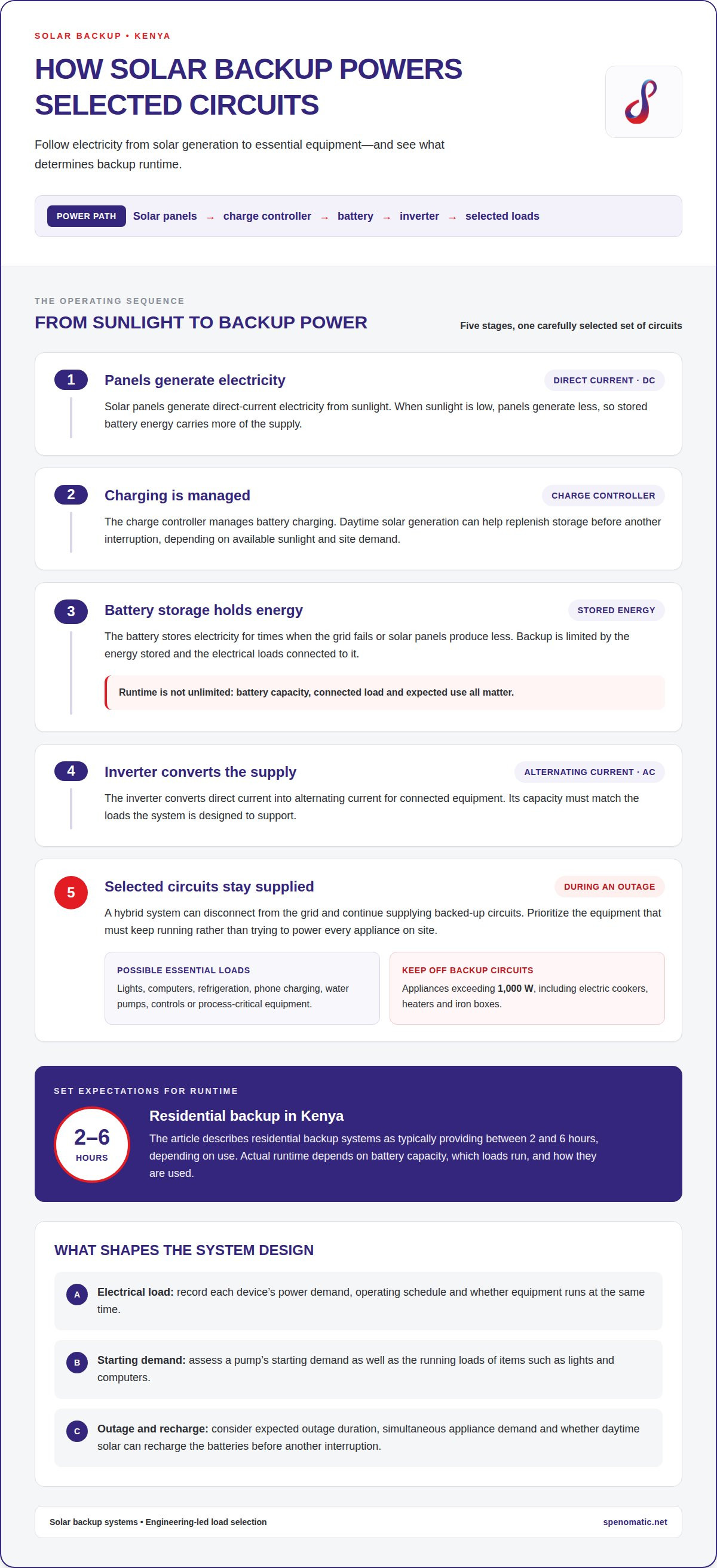
How Solar Backup Systems Work
A backup system captures solar electricity, stores it in batteries, then supplies selected devices during an outage.
Solar Backup System Components
Solar photovoltaic panels convert sunlight directly into electricity, according to the U.S. Department of Energy. A charge controller regulates charging while the battery stores energy. The inverter converts battery DC power into usable AC power for appliances and equipment.
Battery Capacity and Backup Duration
Capacity and connected demand determine how long stored energy can supply devices. A modest essential-load system may support a few hundred watts through an evening on a single 5 kWh battery. Professionals size the inverter and storage against required loads and operating periods.
Lithium-Ion and Lead-Acid Batteries
Lithium-ion and lead-acid batteries are both used in backup systems. Lithium-ion batteries can last ten years, depending on daily charging and discharging cycles. Compare battery capacity, expected cycling and system compatibility. Battery chemistry alone does not determine how long a system can provide backup.
Comparing Solar Backup System Options
Solar backup solutions for power outages in Kenya differ in how they connect to the grid and supply loads during an outage. Compare each configuration’s role with your site’s continuity requirements.
| Configuration | How it operates | Typical use |
|---|---|---|
| Grid-tied | Solar supplies daytime electricity while the site remains connected to the grid. Battery backup requires additional storage and compatible equipment. | Homes or businesses focused on using on-site solar alongside grid supply. |
| Hybrid | Combines grid connection, solar generation, and batteries. During a grid failure, it can supply designated backed-up circuits. | Sites needing solar use and backup for selected essential loads. |
| Off-grid | Operates without a grid connection, relying on solar generation and stored energy. | Remote sites without dependable grid access. |
Choose a system based on grid availability, daytime demand, essential loads and the outage coverage you need. For power outages in Kenya, solar backup solutions should match the inverter configuration and battery storage to these operating priorities.
Regulatory Requirements for Solar Backup in Kenya
EPRA is Kenya’s energy regulator. Requirements for a solar installation depend on its configuration, location and grid connection. A system supplying designated backup circuits has different grid-interface considerations from one designed to export electricity. Do not assume that every system follows the same approval process.
For a grid-connected project, a grid interconnection study assesses the technical requirements for connecting a power system to the grid. The design review should address the connection point, electrical protection, isolation, metering and operating mode. These details help determine which technical reviews and approvals apply. An off-grid installation also needs safe electrical integration suited to the equipment it supplies. Documenting the configuration and connection scope provides a clear basis for identifying applicable Kenyan requirements before installation.
EPRA is Kenya’s energy regulator, and applicable approvals and technical reviews depend on the system’s configuration, site and grid connection. Grid-connected projects may require a grid interconnection study and review of the connection point, electrical protection, isolation, metering and operating mode. Off-grid systems also need safe electrical integration suited to the equipment they supply.
Contact Spenomatic Group About Solar Backup
Solar backup planning matters when grid interruptions affect essential household services or business operations. Spenomatic Group provides Home & Small Business Solar and Commercial & Industrial Solar solutions, including grid-tied, hybrid and off-grid configurations. Battery Energy Storage Systems can be included when stored energy is part of the system design.
A useful project brief lists the equipment and circuits that need backup, their operating schedules and the impact of losing power. A home may prioritize refrigeration and security lighting; a business may need selected computers, controls or pumps to keep running. Separating essential loads from equipment that can pause helps define the system requirements.
These operating priorities, alongside the site’s grid connection and solar generation profile, provide a basis for assessing a suitable configuration.
Sources
These references identify organizations relevant to the technical and Kenyan context discussed in this article. The U.S. Department of Energy’s photovoltaic technology resource explains how solar panels convert sunlight into electricity. Kenya’s Energy and Petroleum Regulatory Authority (EPRA) is the national energy regulator referenced in relation to energy-efficiency labels and solar regulation.
- U.S. Department of Energy: photovoltaic technology and the conversion of sunlight into electricity.
- Energy and Petroleum Regulatory Authority (EPRA): Kenya’s energy regulator, relevant to solar system oversight and energy-efficiency labels.
For project decisions, distinguish general technical explanations from site-specific design requirements. Grid connection, backup circuits, equipment selection and installation details depend on the system configuration and site. The named organizations identify relevant reference bodies.
Power outages in Kenya make continuity planning an engineering decision, not just an equipment choice. Start by defining which operations must continue, which can pause and how much stored energy those priorities require. This gives the system design a clear operating brief and keeps backup capacity aligned with actual demand.
For homes, small businesses and industrial sites, Spenomatic Group provides Home & Small Business Solar and Commercial & Industrial Solar solutions in grid-tied, hybrid and off-grid configurations. These options address different site conditions and backup objectives. The right design depends on your electrical load, grid connection, solar generation and essential circuits. Planning around these factors turns power outages in Kenya into a defined system-design challenge rather than an open-ended disruption.
Set out your site’s priorities and discuss a suitable configuration with Spenomatic Group. A clear project brief is a practical starting point for a backup system built around the way you live or operate.
Frequently Asked Questions
How long will the battery last in an outage?
Battery runtime depends on stored energy and the electrical load connected during an outage. Residential backup systems in Kenya typically provide between 2 and 6 hours, depending on use. Running lights and phone chargers alone draws less energy than adding a fridge or pump. Solar generation can help replenish storage during daylight, while low sunlight increases reliance on the battery.
Can I easily charge the backup batteries at home?
Yes. Depending on its configuration, a home backup system can charge its batteries from solar panels or the utility supply. When grid power is available, an inverter charger can draw electricity from the main supply to recharge storage. Solar can also contribute when sunlight is available. The design determines how the charging sources work together and which circuits remain supplied while the batteries charge.
Does the system switch over automatically?
A hybrid solar backup system can switch to battery power automatically when the grid fails. The changeover occurs in a fraction of a second, and the system supplies the circuits configured for backup. For example, selected lighting and computer circuits may remain powered while other circuits are excluded. The equipment and electrical configuration determine which devices receive backup.
How does a professional install a solar backup system at home?
A qualified professional first assesses the home’s electrical demand and identifies which circuits need backup. The design then matches solar generation, battery capacity and inverter output to those loads. Installation integrates the equipment with the home’s distribution board and configures electrical protection. Before handover, the professional commissions the system by testing its charging and backup operation.
How long does it take to charge the batteries when utility power returns?
Recharge time depends on the battery’s remaining charge, its capacity, the inverter charger’s charging rate, and any loads operating simultaneously. Solar generation may also contribute when available. If a battery bank faces two outages in one day, allow at least 4-6 hours between them for sufficient recharging. Actual recovery varies with system configuration and use.
How long will the inverter system run when there is a power failure?
An inverter system can supply power for the period supported by its battery and connected loads. For residential backup in Kenya, typical runtime is 2 to 6 hours, depending on use. An inverter does not determine runtime by itself: a fridge, pump, and lighting operating together draw stored energy differently from essential lighting and phone charging alone.