
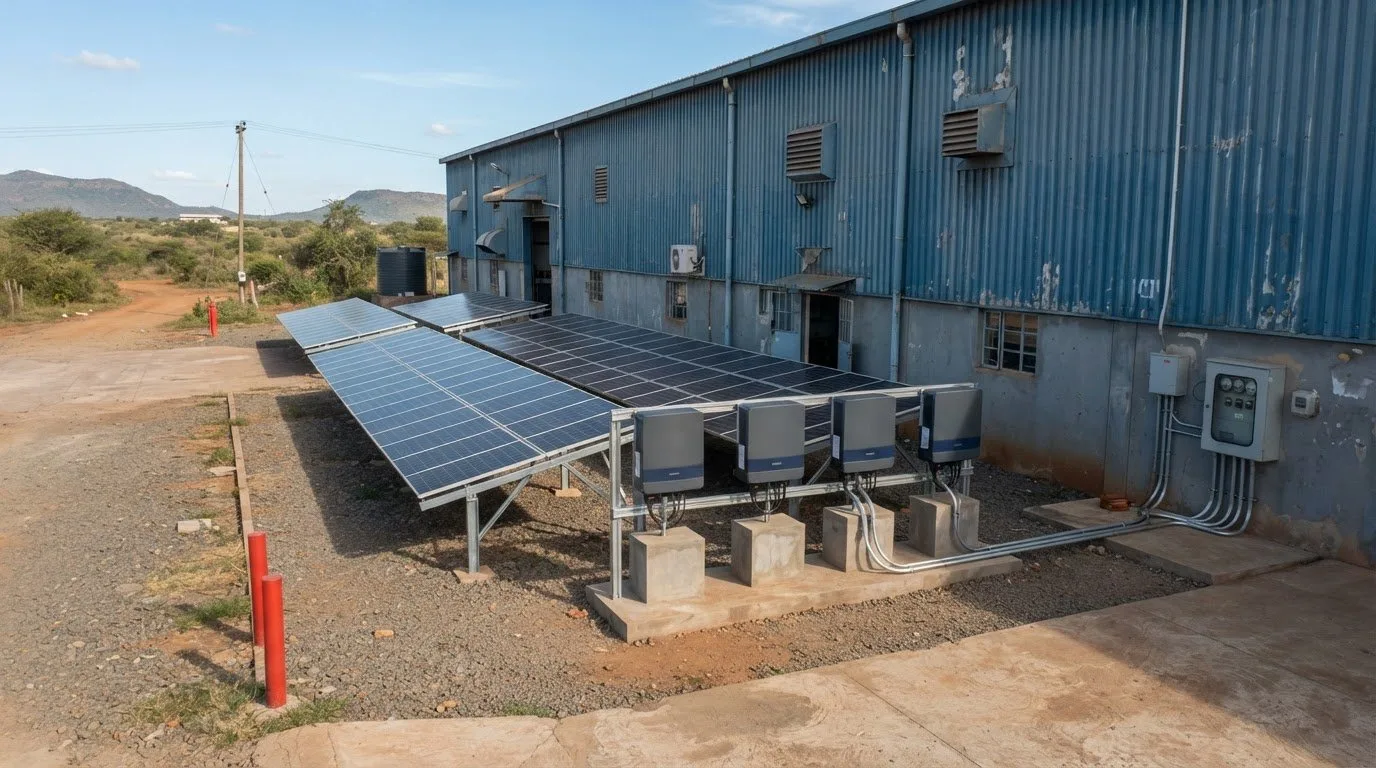
For Kenyan manufacturers, grid-tied solar for industry connects on-site photovoltaic generation to the utility grid. The system supplies the facility when sunlight is available and draws electricity from the grid when solar output is insufficient. Because it has no battery storage, its design depends on how closely solar production matches daytime electricity use and the facility’s production load profile.
Solar panels generate direct-current electricity, which an inverter converts into alternating current and synchronizes with the grid. Meters record electricity flowing between the facility and the network. Excess generation may flow to the grid under the applicable connection and billing arrangement. During a power cut, a standard grid-tied system disconnects rather than supplying the facility.
This article explains how the components work together, what grid connection means for industrial operations, and how to assess suitability based on daytime demand, site conditions and operational requirements in Kenya. It also explains how grid-tied systems differ from hybrid and off-grid solar, helping you understand the engineering choices before planning a commercial installation.
Key Takeaways
- Assess how your facility’s daytime electricity use aligns with solar generation before selecting a system configuration.
- Understand how panels, inverters and meters coordinate generation, on-site use and any electricity exported to the grid.
- Account for the grid connection and the facility’s production load profile when determining an appropriate system size.
- Compare grid-tied, hybrid and off-grid configurations against your operational requirements, including whether battery storage is needed.
What Is a Grid-Tied Solar System?
A grid-tied solar system connects on-site photovoltaic generation to the utility grid, balancing solar output with imported electricity when needed. For grid-tied solar for industry, its value depends on daytime demand, surplus generation and the terms governing grid exports.
Photovoltaic Electricity Generation
Photovoltaic cells convert sunlight into direct-current electricity as light activates electrons in their semiconductor material. Panels combine these cells to generate electricity, which an inverter converts for equipment designed to use alternating current. At an industrial site, this links available solar energy to the facility’s electrical load, making production schedules and daytime demand important design considerations.
Balancing Solar and Grid Electricity
A grid-tied system supplies solar electricity to operating equipment first, while the utility grid provides electricity when solar generation is insufficient. This arrangement balances changing solar output with facility demand rather than requiring solar generation to match every load at every moment. Compared with grid-tied solar alone, batteries can store energy for later use, while diesel generators provide another source of electricity when operated. A standard grid-tied system without storage disconnects during a power cut. Grid-tied solar for industry must account for these operating conditions.
Surplus Electricity and Net Metering
When solar generation exceeds on-site demand, the system can send surplus electricity to the utility grid. The World Health Organization describes a grid-tied system as synchronized to export electricity into the grid. Net metering is a billing arrangement that credits exported electricity under an agreement, but exports do not automatically earn a credit. The applicable arrangement determines how exported and imported electricity affect the facility’s bills.
For industrial solar in Kenya, payback and electricity-bill savings depend on system output, daytime electricity use, grid imports, export treatment and applicable tariffs. A production load profile helps show how closely solar generation can match operating demand.
Assess Kenyan incentives, taxes and financing against the project structure and applicable rules. The financial model should account for the relevant terms rather than assume a universal incentive or financing option.
For smaller commercial premises, home and small-business solar systems address a different site scale and demand pattern.
How panels, inverters and meters work together
In a grid-connected installation, panels, an inverter and metering equipment form a coordinated electrical system. Each component affects how solar generation serves facility demand and interacts with the utility grid.
Inverter Conversion and Synchronization
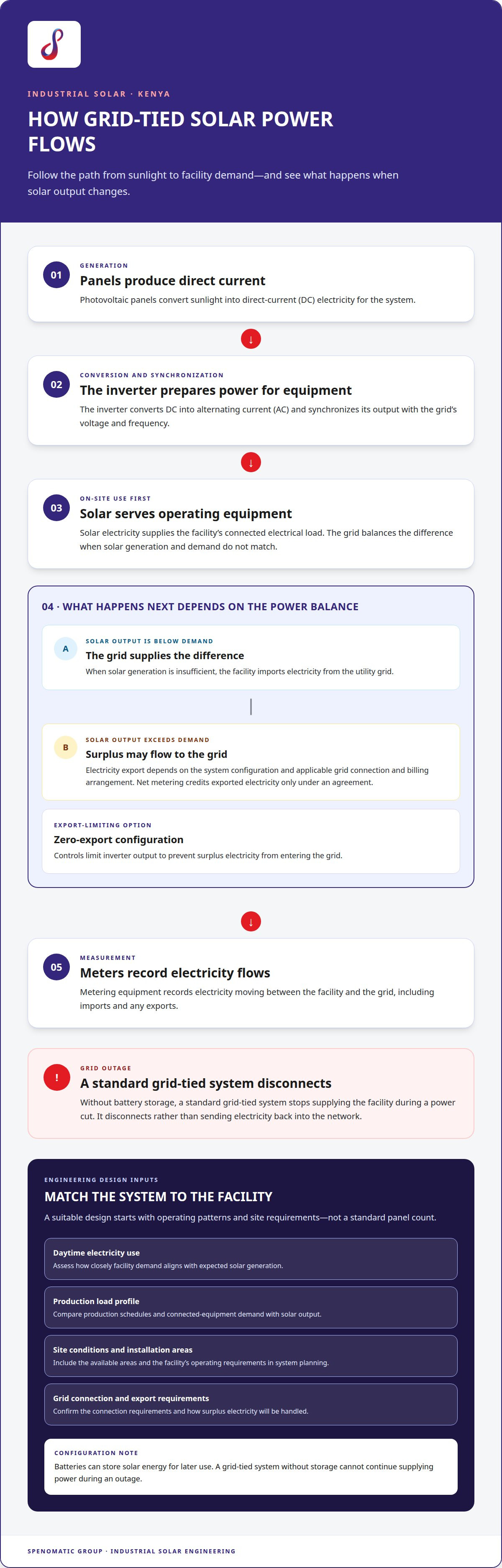
The inverter converts the panels’ direct-current electricity into alternating current for industrial equipment. It also synchronizes its output with the grid’s voltage and frequency, enabling power to flow between connected systems. This coordination ensures that the facility’s equipment and the utility network receive compatible electrical power. During a grid outage, a standard grid-tied system disconnects and stops producing power, preventing electricity from flowing back into the network.
Power Flow Through the System
Panels generate direct-current power, the inverter converts it, and meters record electricity moving between the facility and grid. Solar power serves operating loads first; when generation falls short, the grid supplies the difference. If output exceeds demand, electricity may flow to the grid, subject to the system configuration and applicable export arrangement. A zero-export system instead limits inverter output to prevent surplus electricity entering the grid. Metering shows these flows for operational and billing purposes.
For industrial sites, inverter selection and configuration must match the electrical system and intended power flows. Adding storage allows batteries to hold solar energy for later use, while a grid-tied system without storage cannot continue supplying power during an outage. These distinctions affect how the installation responds to changing production and grid conditions.
In Kenya, assess electrical faults, equipment condition, panel upkeep and the coverage terms for equipment and installation warranties. A well-maintained grid-tied inverter can last around 10 to 15 years or longer with excellent care.
Clear system design links metering, inverter operation and facility demand; solar PV system engineering can address these interfaces as one installation.
Customized grid-tied solar solutions
A suitable industrial solar design starts with the facility’s operating pattern, not a standard panel count. In Kenya, production schedules, daytime electricity use, available installation areas and grid connection requirements shape the system configuration. The objective is to align solar production with useful on-site demand while accounting for surplus generation and the facility’s operating priorities.
A factory running its main production lines during daylight, for example, may use a larger share of its solar output directly. A facility with variable shifts may have periods when generation exceeds the demand of connected equipment. Design modelling compares the production load profile with expected solar output, then assesses how to manage any surplus. Export arrangements and applicable grid requirements also influence the design.
Grid-tied systems can allow exports or use controls to limit them. A zero-export configuration may suit a building whose electricity demand closely matches solar production, or one where exports are not intended. This choice affects inverter controls and how generation is coordinated with facility demand. A grid interconnection study assesses the technical requirements for connecting a power system to the grid.
Adding battery storage changes the system’s purpose. A grid-tied system without batteries uses solar power alongside grid electricity, while a hybrid system adds storage and can provide backup during outages. Battery capacity and operating strategy should reflect which loads need backup and when stored energy is required. Adding a battery solely to capture occasional surplus may not suit every production profile.
Before choosing a configuration, define the facility’s priorities: maximize direct solar use, manage exports or maintain selected loads during outages. The engineering model can then align panel placement, inverter controls, grid connection and storage with those priorities. This is the core design principle for grid-tied solar solutions: configure the system around actual operations rather than treating every industrial site alike.
What industrial grid-tied solar system sizes are available in Kenya?
No single system size suits every industrial site in Kenya. Sizing grid-tied solar for industry depends on the facility’s electrical load, daytime demand, available installation area and grid connection requirements. A factory running production lines during daylight has a different sizing basis from a warehouse with lower daytime consumption. Rated capacity should reflect operating conditions, not roof area alone.
System modelling begins with the facility’s electricity consumption and production load profile. Engineers assess how demand changes across shifts, operating days and production cycles, then compare it with expected solar generation. A processor with steady daytime equipment loads, for example, may use more generated electricity on site. A facility with lighter daytime demand may have more surplus, making export arrangements or output controls relevant to the design.
Physical and electrical constraints also shape system capacity. Roof or ground space, shading, mounting conditions and existing electrical infrastructure affect how panels and inverters can be arranged. A grid interconnection study assesses the technical requirements for connecting a power system to the grid. Its findings inform the connection design and help determine whether the proposed configuration suits the site.
For a multi-building plant, engineers can assess separate roofs and electrical loads as parts of one project. They can model generation against each building’s demand and connection points, then determine a suitable configuration. If demand grows or operations change, the assessment can include planned equipment and revised production schedules. A grid-tied solar for industry project based only on current roof capacity may not meet future operational needs.
To determine a suitable size, establish the facility’s operating schedule, electricity demand patterns, installation areas and priorities for exported power. These inputs allow capacity to be assessed against actual site conditions rather than a generic size band. A practical design balances generation, on-site use and grid connection while accounting for operational requirements that affect system performance.
Spenomatic Group: Grid-Tied, Hybrid & Off-Grid Solar
Spenomatic Group provides grid-tied, hybrid and off-grid solar solutions for commercial and industrial facilities in Kenya. Its Commercial & Industrial Solar offering brings your production load profile, daytime electricity use and grid connection together in the system design.
A grid-tied configuration can suit facilities aiming to use solar generation alongside grid electricity. If operations also require backup during outages, hybrid solar and Battery Energy Storage Systems add storage to the system. The right approach depends on your site’s operating requirements and whether backup power is part of the brief. Home & Small Business Solar serves a different scale of energy use.
For an industrial project, bring your facility’s demand patterns, operating schedule and installation requirements to the engineering discussion. Contact Spenomatic Group to discuss your solar project.
Set a Clear Direction for Your Solar Project
The next step is to turn your facility’s operating priorities into an engineering brief. Identify key production patterns, loads that need dependable supply, and whether your project should prioritize direct solar use, export control or backup capability. This gives your engineering team a practical basis for assessing grid-tied solar for industry against your site’s actual requirements, rather than selecting a configuration by assumption.
Bring together the relevant operational and electrical information, including demand patterns, planned changes to production, and the areas available for installation. Spenomatic Group’s engineering team can use these requirements to guide project discussions and shape an appropriate solar solution. A well-defined brief helps keep technical decisions connected to operational needs from the outset. Contact Spenomatic Group today to discuss your project and take the next step with confidence.
Frequently Asked Questions
Are Grid-Tied Inverters Safe?
Grid-tied inverters are designed to work in coordination with the utility grid, and protection settings help manage abnormal electrical conditions. A standard grid-tied system disconnects during a power cut, preventing electricity from flowing back into the grid. For an industrial installation, safety depends on appropriate system design, electrical protection, correct installation and ongoing inspection of equipment and connections.
How is my solar production calculated?
Expected solar production is modelled using the proposed system capacity and site conditions, including available sunlight, panel orientation, shading and inverter performance. A roof section shaded by nearby structures, for example, may generate less than an unobstructed area. Engineers compare the estimate with your facility’s demand pattern to assess how much generation could serve operations directly and when output may exceed demand.
How does grid-tied solar work for industrial facilities?
Industrial grid-tied solar generates electricity on site alongside the facility’s utility supply. Solar can serve operating equipment while the grid supplies any shortfall; export controls or an agreement determine how surplus is handled. For a manufacturing plant, modelling should account for shifts, planned shutdowns and large equipment starting or stopping, as these patterns affect how generation matches demand.
What permits and approvals are required for grid-connected solar in Kenya?
Approval requirements depend on the project design, site and grid connection, so no single list applies to every Kenyan facility. The project team should identify applicable planning, construction, electrical and environmental approvals with the relevant authorities, alongside the utility’s connection process. Establish these requirements during feasibility and design, before finalizing procurement and installation decisions.
What are Kenya Power requirements for connecting industrial solar to the grid?
Connection requirements depend on the proposed system and the facility’s existing electrical connection. The design process should establish the technical interface, protection arrangements, metering, and whether exports are intended or limited. A grid interconnection study can identify requirements for the proposed installation. Kenya Power’s applicable approval and connection conditions should inform the final design and commissioning plan.
Are net metering or electricity export credits available to Kenyan businesses?
Exported electricity earns a credit only when an applicable agreement or billing arrangement provides for one; exporting alone does not guarantee a credit. Kenyan businesses should model projects using the terms governing their specific connection and any approved export arrangement. If the design does not rely on surplus exports, an export-limiting configuration can instead align system output with on-site electricity demand.