
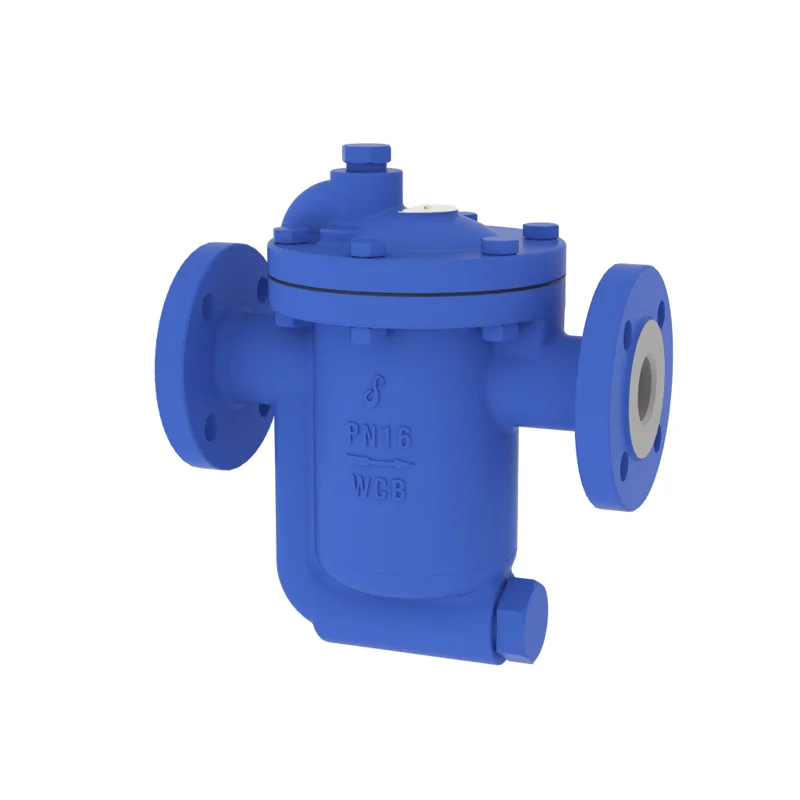
To test a steam trap, combine an ultrasonic check, which shows how the trap is cycling, with a temperature reading, which shows whether it is hot or cold. Temperature alone is not enough: steam and condensate at the same pressure share the same saturation temperature, so a trap passing live steam can read the same as a healthy one.
Key takeaways
- A trap can fail open, wasting steam, or fail closed, backing condensate up into the equipment.
- Check it in service, and compare the reading with how that trap type normally behaves.
- Keep a register with a unique tag and location for every trap.
- A survey only saves money if failed traps are repaired and retested.
How does a steam trap fail?
- Failed open (blowing): live steam passes into the return line. Signs include high return-line pressure, a steaming vent or receiver, and unexplained boiler load.
- Failed closed (blocked): condensate cannot leave. Signs include a cold trap, slow heat-up, low equipment output and a risk of water hammer.
- Leaking or rapid cycling: the trap still works but loses steam, or cycles much faster than expected. It may be worn or undersized.
Which test methods work?
| Method | What it shows | Limitation |
|---|---|---|
| Ultrasonic listening | Cycling pattern and continuous flow noise | Needs a trained operator and knowledge of the trap type |
| Surface temperature | Cold or blocked traps, and unused lines | Cannot separate steam from condensate at saturation temperature |
| Sight glass | Visible flow after the trap | Needs a fitted glass, and flash steam can be mistaken for live steam |
| Open discharge | The discharge itself, where a safe test point exists | Flash steam is easily misread; hot-discharge safety risk |
How do healthy trap types sound?
A healthy trap can seem faulty if you expect the wrong pattern. Thermodynamic traps cycle with a distinct open and close. Inverted-bucket traps also cycle. Ball-float traps can discharge continuously under steady load, so a constant sound is not automatically a failure. Thermostatic traps may discharge intermittently and run cooler. Check the manufacturer's data for the model.
How do you run a trap survey?
- Build the register. Record the tag, location, type, model, size, pressure, equipment served and access notes.
- Test under load. A trap on idle equipment gives no useful reading.
- Classify each trap. Use clear categories: working, blowing, leaking, blocked, not in service or not accessible.
- Prioritise. Put blocked traps causing a safety or process risk first, then blowing traps at the highest pressure.
- Repair and retest. Check upstream strainers and installation too, so the same fault does not return.
- Track results. Repeated failures at one location point to a selection or installation problem.
How can you estimate the cost of a blowing trap?
Estimate the flow through the trap's orifice with our steam valve and orifice calculator, then apply your own cost per tonne from the steam cost calculator. Treat the result as an upper estimate, since a leaking trap rarely passes the full orifice flow.
Frequently asked questions
How often should steam traps be tested?
Set the interval from your own failure records. Many plants survey at least once a year, and more often for high-pressure or process-critical traps.
Why is my trap cold?
It may be blocked, have a clogged strainer or closed isolation valve, or serve equipment that is out of service. Check these before replacing it.
Is a large plume from an open discharge always live steam?
No. Hot condensate flashes as its pressure falls, so normal discharge can produce a visible plume.
Talk to the steam accessories team
Spenomatic offers plant audits, equipment condition checks, repair, spare parts and preventive maintenance for steam systems. Explore our industrial steam systems and accessories, or request a steam system assessment for your site.