
Industrial solar is an infrastructure decision, not simply a panel purchase. For Kenyan manufacturers, industrial solar solutions in East Africa may involve a grid-tied, hybrid, or off-grid system, with battery storage assessed against the facility’s load profile and continuity needs. The right configuration depends on how the site uses electricity, its grid connection, and the project delivery model.
Reliable power and the effect of energy costs on operations are key concerns for businesses. The practical challenge is to align system design, procurement, construction, and commissioning with the realities of an industrial site, rather than treating equipment selection as a standalone task. This article explains how solar systems and power purchase models shape project options, how Kenya’s solar energy market compares with other East African markets, and what engineering, procurement, and construction involve. It also outlines the factors that influence feasibility and the decisions corporate teams can use to assess a project on operational grounds.
Key Takeaways
- Match a grid-tied, hybrid or off-grid configuration to the facility’s load profile, grid conditions and continuity requirements.
- Assess a power purchase model when reducing upfront capital is a priority, and understand how the arrangement changes project responsibilities.
- Compare Kenya and Tanzania by regulation, grid access and operating context before applying a regional solar strategy to a specific site.
- Structure delivery as a coordinated sequence of engineering, procurement, construction and commissioning to align the system with industrial operations.
Table of Contents
- Demand for solar home systems, Commercial and industrial solar rooftops, pumps, and mini-grids
- Solar Power purchase models that reduce upfront capital requirements
- Differences between Kenya's and Tanzania's Solar energy markets
- Solar engineering, procurement and construction
- Spenomatic Group: Commercial & Industrial Solar
Demand for solar home systems, Commercial and Industrial Solar rooftops, pumps, and mini-grids
Industrial demand spans rooftop generation, ground-mounted plants, storage, and hybrid systems. Site load, available land, grid access, and operating schedules shape the installation.
Rooftop Solar Installations
Manufacturers can use available factory and warehouse roofs to generate electricity close to operations. A power purchase structure can support rooftop supply without the manufacturer developing and operating the infrastructure itself.
For each installation, assess usable roof area, structural suitability, shading, and the facility’s daytime demand. Ground-mounted projects are an option where suitable land is available, while rooftop systems leave more ground space for production and logistics.
Industrial System Configurations
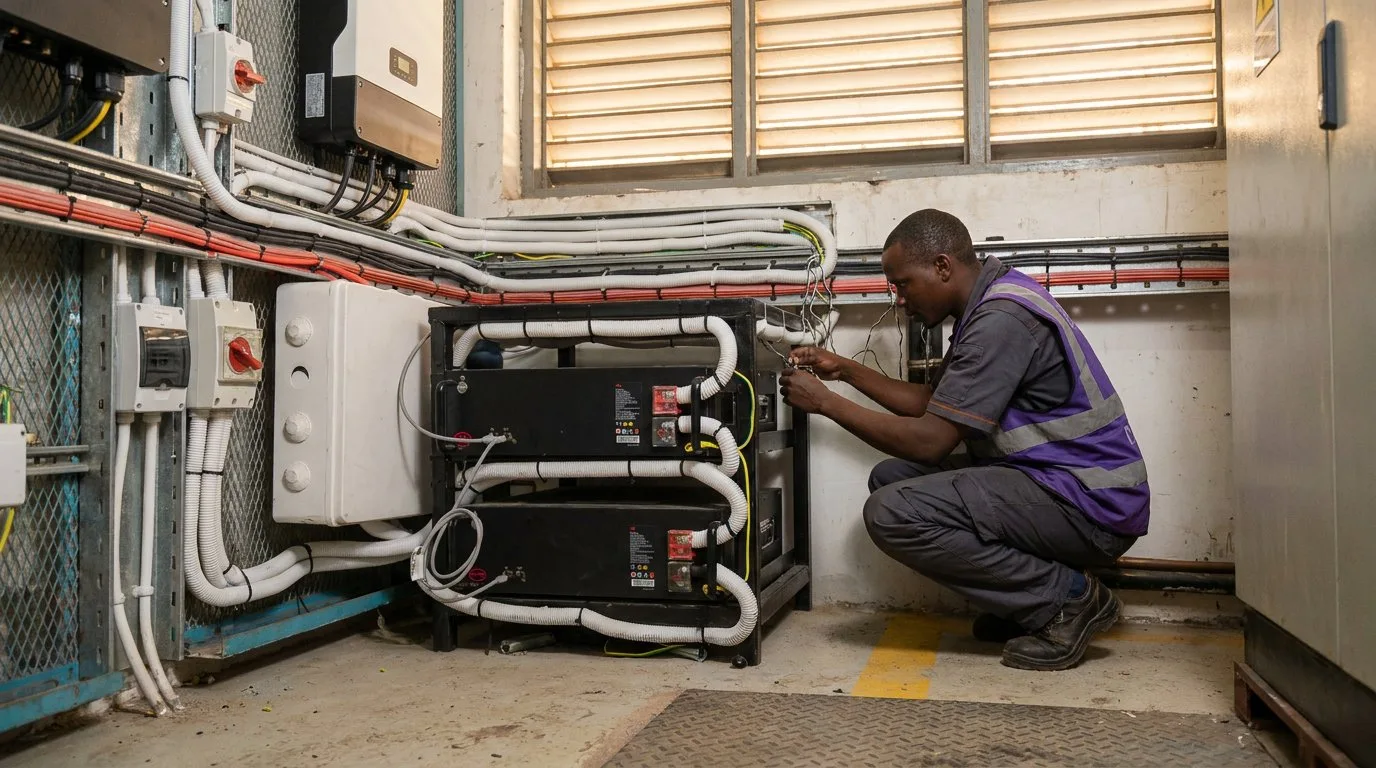
Rooftop solar uses existing roof space; ground-mounted arrays need suitable land. Solar-plus-battery systems store electricity for later use, while solar-diesel hybrids coordinate solar generation with diesel supply. A factory’s operating schedule, grid reliability, and backup needs determine which configuration best fits its load.
Permits, grid-connection approvals, net-metering arrangements, and licensing depend on the country and project structure. Industrial teams should identify the relevant authorities and utility processes during feasibility and design. Performance risks include shading, variable weather, battery degradation, grid constraints, and equipment faults. Careful design, monitoring, and maintenance help address these factors.
Industrial Solar Applications
Factories, warehouses, and commercial facilities can use rooftop or ground-mounted solar, with batteries or diesel integration where operating needs call for them. Solar also serves water pumps and mini-grids, while home systems extend access beyond industrial sites.
Spenomatic Group’s own projects show the range: 17.2MWp for steel manufacturing in Kenya, 2.4MW for tea processing and 1MWp for beverage manufacturing in Uganda. These examples help teams compare scale and application before profiling their own site.
Power purchase models that reduce upfront capital requirements
An Independent Power Producer (IPP) model lets manufacturers access solar electricity without funding infrastructure development and operation upfront. The producer takes on project delivery and operating responsibilities, while the business buys power under an agreed contract. For a Kenyan facility, review supply terms, contract duration, tariff structure, performance measures, and maintenance responsibilities before comparing this option with owning a PV system.
Solar savings and return on investment depend on how closely generation matches site demand. Profile electricity use across operating shifts, identify daytime loads, and model expected solar supply against grid purchases. A system serving consistent production demand may offset more purchased electricity than one sized without reference to the load. Reliability needs, battery requirements, grid conditions, and the cost of capital also affect project economics.
Costs per kW or MW vary across Kenya, Tanzania, Uganda, Rwanda, and Ethiopia, so there is no single figure for the region. Pricing depends on capacity, site conditions, equipment, storage, grid connection, and installation scope. Each project is priced to its requirements following a quote request.
Telecommunications sites can use solar power to reduce reliance on diesel where grid supply is constrained. Tourism facilities can assess solar against daytime demand, guest services, and remote-site logistics. In both cases, energy planning must account for backup needs and the operational impact of interruptions, not just annual electricity generation.
Structure the decision in stages: establish the load profile, compare ownership with an IPP contract, model generation and operating needs, then review supply and maintenance responsibilities. This sequence helps finance and engineering teams assess capital exposure alongside reliability. For facilities evaluating industrial solar project design, connect the commercial model to the technical scope before committing to procurement.
Differences between Kenya's and Tanzania's Solar energy markets
Kenya and Tanzania have separate regulators, utilities and approval processes, and Spenomatic Group’s direct markets include both. When planning industrial solar solutions in East Africa, assess each country’s rules alongside the site’s grid access, demand, and project requirements.
Country and Site Assessment
Start with the rules that apply in the project’s country, including grid-connection approvals, net-metering arrangements and licensing. Requirements differ between markets, so a design that works on one site cannot simply be copied across a border.
For industrial solar solutions in East Africa, assess local grid access, consumption patterns, site conditions, and the intended role of solar supply.
Solar for Kenyan Industry
Kenya’s industrial shift to solar is visible in projects serving manufacturing operations. Spenomatic Group’s work includes 2.2MWp of rooftop solar for footwear manufacturing and 700kWp for food manufacturing in Nairobi, each sized around the site’s operations.
Commercial operators can include solar in environmental and energy procurement planning. Compare expected generation with operating hours, then assess whether rooftop or ground-mounted development suits the site. Grid connection and production needs also shape system design and project delivery.
Use national conditions to frame decisions, then complete a country- and site-specific feasibility assessment. Both Kenya and Tanzania require careful attention to grid access, demand, land, and project structure.
Solar engineering, procurement and construction
Industrial solar EPC connects feasibility, design, procurement, construction, and commissioning into one delivery sequence, shaped by project scale and production requirements.
Energy Use Assessment and System Sizing
Start with a step-by-step load assessment: review electricity bills, interval data, operating shifts, and major equipment demand. Separate steady production loads from peaks, then compare daytime consumption with expected solar generation. This helps determine whether the design should prioritize direct use, storage, or grid supply.
Next, assess roof or ground availability, grid connection requirements, and expansion plans. Sizing should connect the energy model to the facility’s production profile, not just available area.
EPC, Financing, and Maintenance Providers
East African businesses typically engage an EPC partner to coordinate engineering, procurement, construction, and commissioning. An Independent Power Producer can offer a financing route when a business wants solar supply without bearing upfront infrastructure costs. Define maintenance responsibilities, performance reporting, and equipment servicing as part of the project arrangement.
EPC scope must account for generation equipment, site works, and grid integration. Spenomatic Group has 27+ years of engineering experience and has installed 278 MWp of solar PV across 150+ sites in Africa, with 53.22 MWh of battery storage deployed.
During procurement, align equipment specifications with the approved design, site conditions, and operating needs. Construction planning must coordinate site access, electrical integration, and production continuity against a defined programme.
For a facility assessing solar EPC, financing, and lifecycle support, discuss your industrial solar project and its operating requirements.
Spenomatic Group: Commercial & Industrial Solar
Spenomatic Group provides Commercial & Industrial Solar for businesses assessing on-site generation against operational demand. This service suits factories, warehouses, and commercial facilities that need a system aligned with their energy use, grid connection, and site conditions.
Project requirements may call for grid-tied, hybrid, or off-grid solar, with Battery Energy Storage Systems considered where storage supports the operating profile. Spenomatic Group also provides Home & Small Business Solar for smaller premises. The right option depends on how the site uses electricity and the role solar must play in its power supply.
For a practical next step, prepare the facility’s load information, operating schedule, and site details for a project discussion. Contact Spenomatic Group to discuss your commercial or industrial solar requirements.
Turn Your Solar Assessment Into an Operating Plan
For businesses assessing industrial solar solutions in East Africa, the next step is to turn energy priorities into a project brief. Document the facility’s operating schedule, major electrical loads, site constraints, and continuity requirements. These details provide a practical basis for discussing how solar could support production and what the project needs to accommodate.
Bring engineering and finance teams into the discussion early. Align the preferred power model with operational responsibilities, procurement decisions, and the facility’s longer-term energy plans. A clear brief gives project discussions a practical starting point and keeps the technical scope connected to business needs.
Contact Spenomatic Group to discuss your facility’s requirements and potential next steps. Contact Spenomatic Group to begin a project discussion and move your solar assessment forward.
Frequently Asked Questions
What payback periods and ROI can East African businesses expect from industrial solar?
Payback depends on how much solar generation offsets purchased electricity and other energy costs. Build a project model using the facility’s bills, expected generation, maintenance requirements, financing costs, and any contract payments. Compare projected annual savings with the initial investment or ongoing payments. If a factory plans to add shifts or production lines, model those changes separately because they can alter future electricity use and project returns.
What are the electricity tariffs, demand charges, and diesel costs affecting industrial solar economics in East Africa?
Electricity tariffs, billed demand, and diesel use all influence solar’s value, but the effect depends on the site’s billing and operating profile. Review utility invoices alongside generator fuel records, noting when demand peaks and how often backup generation runs. Then compare those costs with the timing of solar output. This analysis helps identify savings from reduced grid purchases, lower peak demand, or less diesel consumption.
What financing options are available for industrial solar in East Africa, including PPAs, leases, loans, and grants?
Businesses can assess an Independent Power Producer power purchase agreement, which provides solar electricity without requiring the manufacturer to fund infrastructure development and operation upfront. Leases and loans are other financing structures to compare with direct ownership; grant support depends on applicable programmes and eligibility. For facilities across the region, Spenomatic Group helps compare payment obligations, asset ownership, and maintenance responsibilities to find the best fit for your operations.