
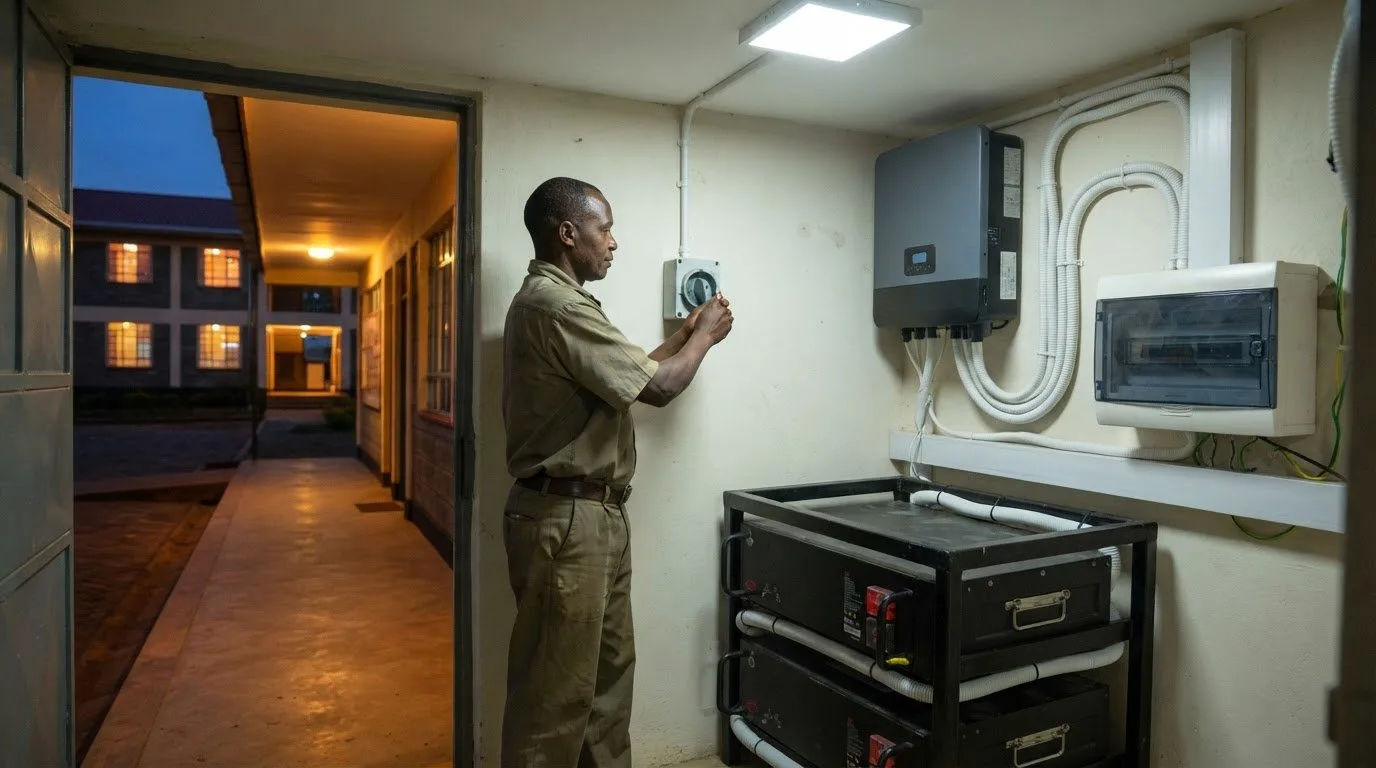
Hybrid or grid-tied solar design can matter as much as panel capacity for a boarding school, because the system must align with daytime demand and keep essential loads operating when solar generation falls. A solar power system for boarding schools in Kiambu can be scoped initially at 15-25 kW plus battery storage for a small school with fewer than 300 students, or 25-50 kW plus storage for a medium school with 300-600 students; these are indicative sizes, not a substitute for a site assessment.
Government schools need designs that fit their procurement and operating requirements, while private schools face the same need to balance grid supply, solar production and backup capacity; this article explains system sizing, installation, maintenance and the differences between hybrid and grid-tied options.
Key Takeaways
- Match panels, battery storage and backup power to the school’s operating schedule and essential loads.
- Understand how professional design, installation, commissioning and maintenance support reliable system performance.
- Use electricity demand, production patterns and generator use to inform system sizing and assess potential savings.
- Compare hybrid and grid-tied configurations to identify how each can support school operations and computer use.
Solar power options for boarding schools in Kenya
For a boarding school, solar panels turn daylight into electricity for classrooms, kitchens, administration and dormitories. Batteries can store surplus generation for evening lighting and selected equipment after solar production falls. A solar power system for boarding schools in Kiambu should therefore be designed around the school’s consumption patterns, panel output and required battery storage, rather than treating the array as a stand-alone component.
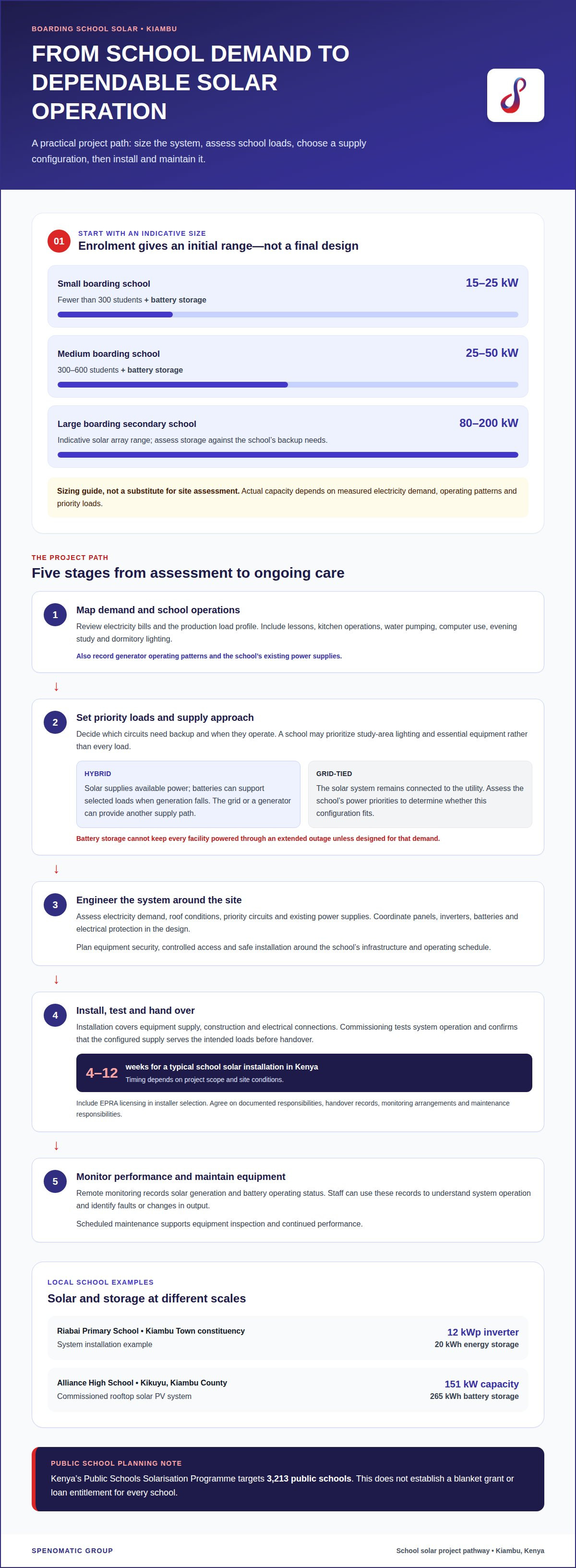
Riabai Primary School in Kiambu Town constituency is installing a system with a 12 kWp inverter and 20 kWh of energy storage. At Alliance High School in Kikuyu, Kiambu County, a commissioned rooftop solar PV system has a 151 kW capacity and is integrated with 265 kWh of battery storage. These examples show how panels and batteries can be combined at different scales to serve school infrastructure.
In a hybrid configuration, solar supplies available power, batteries support selected loads when generation drops, and the grid or generator can provide another supply path. This arrangement can keep priority circuits running during outages and support evening study, depending on system design and stored energy. The same panel-and-storage principles used in home and small-business solar systems also apply to institutional projects, with capacity and load priorities tailored to school operations.
Solar installations need to address electrical faults, equipment security and outages when generation or stored energy cannot meet demand. Safe installation, appropriate electrical protection, controlled equipment access and clearly defined backup loads help manage these risks. Batteries cannot keep every facility powered during an extended outage unless the system is designed for that level of demand.
Battery storage design depends on which circuits need backup, when they operate and how much energy they use. A school might prioritize study-area lighting and essential equipment instead of trying to back up every load. Hybrid systems coordinate solar panels, batteries and another supply source; grid-tied systems remain connected to the utility. The right configuration follows an assessment of school operations and power priorities.
Solar system design, installation, and maintenance
A school solar project in Kenya progresses from load assessment and engineering design to installation, commissioning and ongoing maintenance. Each stage needs to account for the school’s infrastructure and operating schedule.
Design and Commissioning
Design and commissioning determine how equipment is selected, installed, tested and handed over. Engineers assess the school’s electricity demand, roof conditions, priority circuits and existing power supplies. The design coordinates solar panels, inverters, batteries and electrical protection. During installation, the team secures equipment and completes electrical connections. Commissioning tests system operation and confirms that the configured supply serves the intended loads before handover.
Installation Timelines and Monitoring
Installation timelines cover site assessment, design, equipment supply, construction and commissioning. A school solar installation in Kenya typically takes 4-12 weeks, depending on project scope and site conditions. Remote monitoring records system performance, including solar generation and battery operating status, so faults or changes in output can be identified. School staff can use these records to understand system operation, while scheduled maintenance supports equipment inspection and continued performance.
Installer Selection
Installer selection means assessing technical capability, regulatory credentials and delivery experience before project work begins. Include EPRA licensing in your selection criteria, and review how the installer handles design, electrical protection, commissioning and maintenance. Alliance High School in Kikuyu, Kiambu County, provides a local rooftop example: its commissioned solar PV system has a capacity of 151 kW. For a government school or another institution, clearly documented responsibilities help coordinate installation around students and campus operations. Agree on handover records, monitoring arrangements and maintenance responsibilities as part of the project scope.
Sizing a solar system for a boarding school
For a solar power system for boarding schools in Kiambu, indicative sizing depends on enrolment and actual electricity demand. A small boarding school with fewer than 300 students may need a 15-25 kW system plus battery storage. A medium school with 300-600 students may need 25-50 kW plus storage, while a large boarding secondary school may need an 80-200 kW array. These ranges help frame an assessment; they do not replace site-specific load analysis.
Engineers review electricity bills and the production load profile, which shows demand alongside school activities. Lessons, kitchen operations, water pumping, computer use, evening study and dormitory lighting all affect when electricity is needed. Generator operating patterns can also show whether solar generation or stored energy could reduce generator use at particular times.
Potential savings depend on how much generated electricity the school uses directly, when demand occurs and how batteries are configured. Daytime solar can serve concurrent loads, while storage can shift some supply to later hours. If a generator routinely supports loads, a hybrid design may reduce its operating hours and fuel consumption. The school’s schedule and load profile determine the expected results.
Kenya’s Public Schools Solarisation Programme targets 3,213 public schools. This programme does not establish a blanket grant or loan entitlement for every school. Public institutions should distinguish programme arrangements from independent project financing, while private schools need to assess their own funding pathway.
Sizing a solar power system for boarding schools in Kiambu starts with measured consumption, priority circuits, generator use and operating hours. For example, a school with 400 students falls within the medium-school enrolment band, but its actual demand still depends on facilities and daily operations. This assessment connects panel and battery capacity to usable energy, helping school leaders assess technical suitability without oversizing equipment.
Hybrid and grid-tied solar systems for schools
For schools, the key distinction is how solar panels work with batteries and the grid. A hybrid system combines solar generation with battery storage and another supply source. A grid-tied system connects solar generation to the utility; battery backup depends on the system design.
| Consideration | Hybrid system | Grid-tied system |
|---|---|---|
| Power sources | Solar, batteries and grid or generator | Solar and utility grid |
| Outage response | Configured batteries can supply selected circuits | Backup depends on system design |
| Computer use | Can prioritize computer circuits during outages | Supports daytime computer use when solar generates |
| Operating focus | Combines generation with stored energy | Uses solar alongside grid electricity |
For computer rooms, libraries and administration blocks, start by identifying operating hours and priority circuits. Solar panels can supply electricity for daytime lessons and computer use, while a hybrid system can store energy for selected loads after generation falls. Battery capacity and backup duration should match those loads, not automatically cover every school circuit.
Grid-tied systems can serve daytime demand while the utility remains part of the supply arrangement. They suit schools whose main aim is to use solar alongside grid power. Outage operation depends on the system configuration: a grid connection alone does not provide battery backup. Reliable planning separates normal operation from the outage response the school requires.
Alliance High School in Kiambu County illustrates a different arrangement: solar is its primary power source, with generator capacity retained as standby backup. It shows how a school can integrate solar with existing backup infrastructure. For Kenya’s public schools solarisation programme, the framework expects public ownership of solar assets while schools consume the electricity. Financing and ownership arrangements can therefore shape project planning alongside technical design.
Choose a hybrid system when stored energy and defined outage loads are central requirements. Choose grid-tied solar when daytime generation is the main objective and the grid remains part of the supply. This distinction helps guide system design, computer-room continuity and the school’s reliability requirements.
How Spenomatic Group can support your school
Spenomatic Group helps boarding schools turn electricity priorities into an engineered solar project. Its Commercial & Industrial Solar service addresses school loads, while Grid-Tied, Hybrid & Off-Grid Solar options determine how generation works with the utility, batteries or another supply source. Battery Energy Storage Systems support projects that need stored electricity for selected circuits. The configuration is based on your school’s operating requirements, not a standard package.
Project planning links your consumption profile, operating schedule, existing power infrastructure and backup priorities to the system design. The engineering team can assess how solar generation may serve daytime demand, which circuits need stored energy and how the system should integrate with your school’s supply. Roof layout and safe maintenance access also inform equipment placement and future inspections.
As an EPC provider, Spenomatic Group coordinates the project lifecycle, from engineering and procurement through installation and commissioning. Its engineering expertise spans more than 27 years in Africa’s energy and environmental engineering sector. For your school, this integrated approach links equipment selection with system design, electrical protection and operational handover. Project documentation helps school leadership understand system scope and operating priorities.
Contact Spenomatic Group when your school is assessing a new installation, expanding existing solar infrastructure or considering a different grid and battery configuration. A project discussion can focus on electricity use, the school schedule, existing supply and the loads that matter most during outages. These details support a project-specific engineering assessment rather than a generic capacity estimate.
Contact Spenomatic Group to discuss solar system requirements for your school.
Frequently Asked Questions
TL;DR: Boarding school solar design depends on electricity demand, operating schedules and backup priorities. Hybrid and grid-tied configurations serve different needs, so system capacity and storage should match the school’s loads.
Do you work with government schools?
Yes. School solar projects can be designed for government institutions as well as other schools. Spenomatic Group provides commercial and industrial solar solutions for school systems. For a public school, planning should account for procurement arrangements, asset ownership, operating loads and grid connection. Kenya’s public schools solarisation programme expects solar assets to be publicly owned while schools consume the electricity.
How Long Does Installation Take?
A school solar installation in Kenya typically takes 4-12 weeks. The project period covers site assessment, engineering, procurement, installation, testing and commissioning. Roof access, electrical integration, system configuration and coordination with school operations influence the schedule. Planning work around lessons and term activities can help limit disruption to students and staff while installation teams work across the campus.
How long will the system last?
Quality solar panels can continue generating electricity for 25 years or more. Other equipment has a different service life: inverters usually last 15 or more years, while batteries and electrical components depend on operating conditions and maintenance. Treat the installation as a system of components, not one asset with a single lifespan. Keep equipment records to support maintenance and replacement planning.
What happens if equipment fails?
First identify which component or circuit has stopped operating, then have a qualified technician assess and test it. Depending on the system design, the grid or generator may continue supplying priority loads while the affected equipment is addressed. Do not open electrical enclosures or attempt live repairs. Clear fault records and commissioning documents can help the service team diagnose the issue.
What maintenance is required?
Arrange a professional annual check-up for the school solar system. The inspection should cover panel condition, mounting, electrical connections, inverter operation, battery status and electrical protection. Monitoring records can help identify changes in generation or recurring faults between inspections. Keep maintenance findings and equipment records together so technicians can track issues and plan servicing around school operations.
What solar system size is suitable for a boarding school in Kiambu County?
Indicative sizing depends on enrolment and electricity demand: a school with fewer than 300 students may need 15-25 kW plus battery storage; one with 300-600 students may need 25-50 kW plus storage. A large boarding school with 600 or more students may need an 80-200 kW array. A load assessment determines the suitable capacity for your school’s operating pattern.